This article surveys Mozart’s operatic apprenticeship from 1767 to 1775, from sacred stage pieces and school dramas to German Singspiel and Italian opera seria and opera buffa. It outlines the plots and circumstances of works such as Die Schuldigkeit des ersten Gebots, La finta semplice, Mitridate, Lucio Silla, La finta giardiniera and Il re pastore.
Introduction
Wolfgang Amadeus Mozart (1756–1791) composed 22 operas in a variety of genres, from the small-scale works of his youth to the full-length masterworks of his maturity. These operas range from opera seria (serious Italian operas) and opera buffa (Italian comic operas) to German Singspiel (operas with spoken dialogue).
Long before The Marriage of Figaro or Don Giovanni, Mozart was already experimenting with musical drama in sacred plays, pastoral comedies, and grand Italian opera seria. These youthful works—ranging from the miniature Bastien und Bastienne to the ambitious Mitridate, re di Ponto—capture the prodigy’s fascination with the human voice and his uncanny ability to shape melody, emotion, and character through music. Though written under the shadow of court politics and family travel, these early operas chart the composer’s apprenticeship in the theater: a laboratory where the teenage Mozart learned the craft that would later transform the operatic world.
Die Schuldigkeit des ersten Gebots (1767)
Mozart’s operatic career began astonishingly early. At age 11 he contributed to a staged sacred play, Die Schuldigkeit des ersten Gebots, a short geistliches Singspiel (sacred musical play) in which allegorical figures debate religious virtue. It was performed in Salzburg under the auspices of the Archbishop.
Apollo et Hyacinthus (1767)
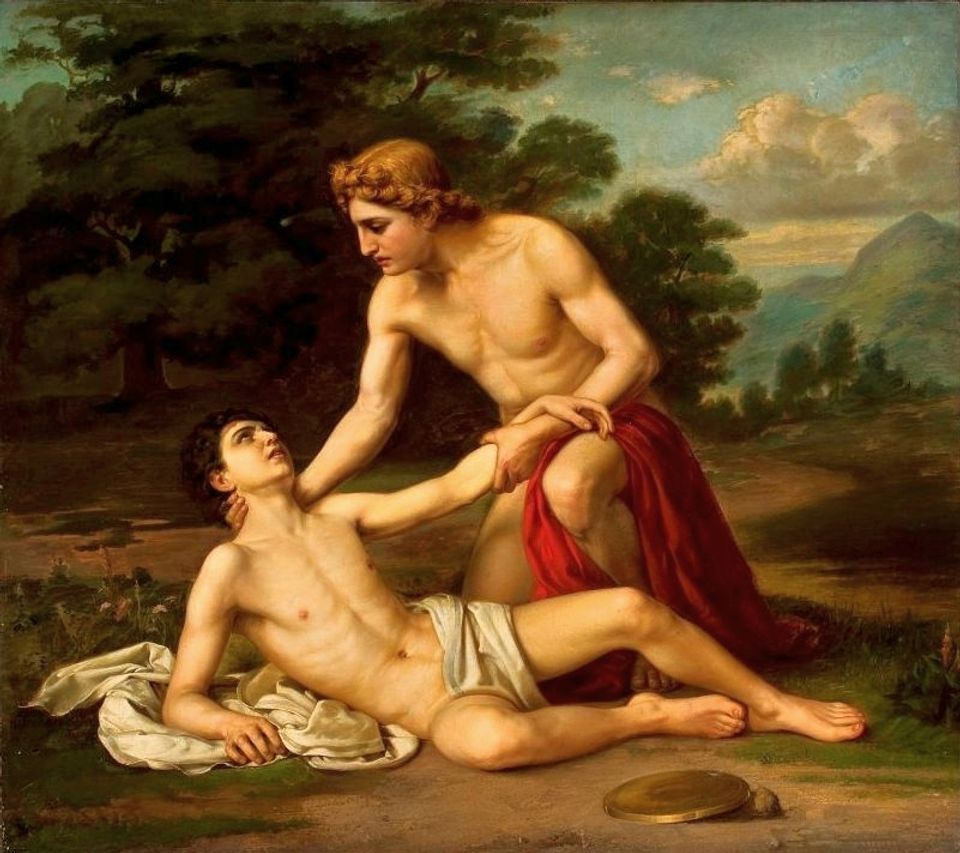
That same year young Mozart wrote Apollo et Hyacinthus, a Latin intermezzo based on a myth from Ovid’s Metamorphoses. In this school drama, the god Apollo accidentally causes the death of the youth Hyacinthus (who is transformed into a flower), providing a tragic Classical subject for the prodigy’s first operatic attempt.
Bastien und Bastienne (1768)
In 1768, Mozart composed Bastien und Bastienne, a one-act German Singspiel. This charming pastoral comedy (likely performed in a private garden theater) portrays two young lovers, Bastien and Bastienne, whose fidelity is tested and restored with the help of a humorous magician, Colas. Even at age 12, Mozart’s gift for catchy melodies and characterful music shone in this simple village love story.
La finta semplice (1768)
Also in 1768, Mozart was commissioned in Vienna to write La finta semplice (“The Feigned Simpleton”), an Italian opera buffa. This three-act comedy – about a clever woman (Rosina) who pretends to be naïve in order to outwit two foolish brothers and help her sister find love[2] – was meant to be Mozart’s breakthrough on the Viennese stage. However, intrigues and jealousy at court prevented its premiere. Theater officials doubted a 12-year-old could compose a real opera and feared embarrassment[3][2]. Leopold Mozart, Wolfgang’s father, angrily withdrew the production. La finta semplice was eventually performed the next year (1769) in Salzburg for the Prince-Archbishop, but it did not reach the Vienna stage in Mozart’s lifetime[4][5]. This episode was a painful setback for the young composer.
Mitridate, re di Ponto (1770)
Mozart’s fortunes improved during his family’s extended tours through Italy. There he received commissions to write serious Italian operas, allowing him to absorb Italian operatic style firsthand. His first full-length opera seria was Mitridate, re di Ponto (“Mithridates, King of Pontus”), composed at age 14 for Milan’s Teatro Regio Ducal. Premiered on 26 December 1770, Mitridate is a tragedy about an ancient king testing the loyalty of his sons in war and love. Mozart tirelessly wrote and rewrote arias to suit the famous Italian singers[6], and the effort paid off – the opera was a success, performed 21 times in its first run[7]. Audiences were amazed that such dramatic intensity and virtuosity could come from a teenager.
Lucio Silla (1772)
On the heels of this triumph, Mozart was asked to compose another opera for Milan: Lucio Silla. This opera seria, about the Roman dictator Silla who ultimately renounces tyranny and pardons his enemies, premiered in Milan on 26 December 1772. Despite a tedious libretto, Mozart infused Lucio Silla with emotional intensity and florid arias. The premiere was followed by around 20 performances to great acclaim[8] – a testament to Mozart’s growing stature. These Italian successes solidified the young composer’s reputation and led observers like music analyst David Cairns to marvel at Mozart’s ability to assimilate the Italian style so rapidly[9].
Ascanio in Alba (1771)
In between these major commissions, Mozart wrote smaller-scale works. Ascanio in Alba, a pastoral serenata for an Archduke’s wedding in Milan, has a mythological plot in which the shepherd Ascanio discovers his noble heritage and marries his true love, all guided by the goddess Venus.
Il sogno di Scipione (1772)
Back in Salzburg, Mozart composed Il sogno di Scipione, an allegorical one-act cantata in which the Roman general Scipio, in a dream, must choose between the goddesses of Fortune and Constancy – a work more static and intended for a private celebration.
Thamos, König in Ägypten (1773-79)
He also began Thamos, König in Ägypten, providing choruses and interludes for a play set in ancient Egypt. Though Thamos is not an opera per se, its grand choral scenes show Mozart experimenting with solemn, quasi-operatic music in a Masonic vein.
La finta giardiniera (1775)
In 1775, Mozart produced two more Italian operas that conclude his “apprentice” phase. La finta giardiniera (“The Pretend Garden-Girl”) is an opera buffa written for the Munich carnival. In this lively comedy of errors, a noblewoman (Sandrina) disguises herself as a gardener to win back her lover, Count Belfiore, leading to much romantic confusion among a tangle of aristocrats and servants. Mozart, still a teenager, delighted in setting the ensemble scenes of mistaken identities and lovers’ spats, foreshadowing the comic brilliance of his later works. La finta giardiniera had a warm reception in Munich. It was popular enough that Mozart (or others) soon adapted it into a German Singspiel (Die Gärtnerin aus Liebe), which was performed in Augsburg in 1780 and became a repertoire “stock piece” in German theaters[10].
Il re pastore (1775)
Finally, Il re pastore (“The Shepherd King”) was a light two-act serenata commissioned to honor a royal visit to Salzburg. Its story centers on a shepherd who is revealed to be a rightful king and must balance love with duty. Though conceived as a simple court entertainment, Il re pastore contains graceful arias (notably the lilting “L’amerò, sarò costante”) that showcase Mozart’s melodic elegance at age 19[11].
By the end of 1775, 19 years old Mozart had already written operas for courts and public theaters alike, mastering Italianate forms and proving himself both an “assimilator” and innovator in training[9]. These early works, while rarely performed today, contain prototypes of the vivid characters and musical brilliance that would later blossom fully.
Mozart in these years enjoyed the challenge of opera, though he faced obstacles: at times fun (as in his comic romps), at times “a temporary career setback” (as he called La finta semplice’s cancellation)[13], but always educational for the young composer.
//
Sources
Sources
[1][9][12] List of operas by Mozart
https://en-academic.com/dic.nsf/enwiki/10361044
[2][3][5]La finta semplice - Polish Opera Now - Polish Opera Now
[4][13] La finta semplice - Wikipedia
https://en.wikipedia.org/wiki/La_finta_semplice
[6] Mozart: Mitridate - Louise Kemény
https://www.louisekemeny.co.uk/diary/mozart-mitridate-4/
[7] Mitridate, re di Ponto - Wikipedia
https://en.wikipedia.org/wiki/Mitridate,_re_di_Ponto
[8] Wolfgang Amadeus Mozart – Lucio Silla Overture, K. 135
https://sofiaphilharmonic.com/en/works/wolfgang-amadeus-mozart-lucio-silla-overture-k-135/
[10] [PDF] Mozart - Walter Cosand
[11] Best Mozart operas: his 11 greatest stage works, ranked | Classical Music
https://www.classical-music.com/features/works/best-mozart-operas