- Köchel Number
- K9 38 | K6 38
- Genre
- Opera & Stage Music
- Form
- Operas & Singspiels
- Date
- 13 May 1767
- Place
- Salzburg
- Age
- 11
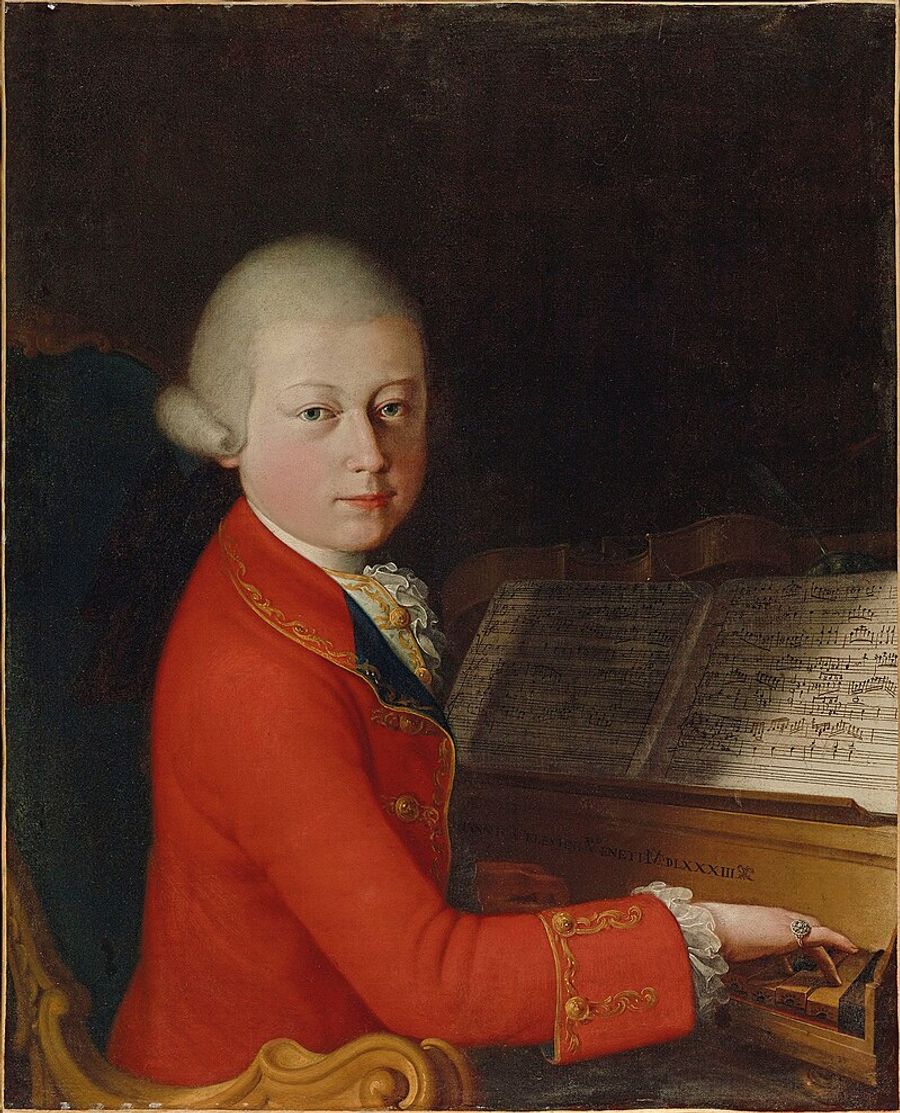
Apollo et Hyacinthus seu Hyacinthi metamorphosis (K. 38) is Mozart’s remarkable Latin “school opera,” composed in Salzburg in 1767 when he was just eleven. Written for a university drama and performed by student singers, it is often treated as Mozart’s first fully viable operatic score—already alert to characterization, pacing, and the expressive possibilities of the aria.[1][2]
Mozart's Life at the Time
In 1767 Wolfgang Amadeus Mozart (1756–1791) was back in Salzburg, an eleven-year-old composer whose European travels had already brought him into contact with Italian opera and the broader theatrical world.[1] Apollo et Hyacinthus belongs to a moment when the family was once again working within the institutions of Salzburg—cathedral, court, and (in this case) the university—rather than on the road. That setting matters: the piece was designed for an academic celebration, and its cast was shaped by the realities of an all-male school environment, with the high parts assigned to boys.[3]
Yet the result is far more than a dutiful occasion work. Even for listeners who know Mozart’s later operas, Apollo et Hyacinthus can be startling: an 11-year-old already thinking in scenes, pacing emotions, and writing vocal lines that are grateful to sing while still serving dramatic intent. It deserves attention not because it “predicts” Idomeneo or Le nozze di Figaro in miniature, but because it shows how early Mozart could absorb a genre’s conventions and then make them sound freshly alive.
Composition and Manuscript
The work was written in Salzburg in 1767 as an intermedium (a musical entertainment inserted between acts) for a Latin school drama, Clementia Croesi, mounted at the University of Salzburg.[1] The libretto was supplied by Rufinus Widl (1731–1798), a Benedictine and university teacher, who adapted the story from Ovid’s Metamorphoses—with significant moral and dramaturgical adjustments suited to a Catholic educational setting.[1][4]
The first performance took place on 13 May 1767 in the Great Hall (Aula Magna) of the University of Salzburg.[2] Modern performances typically present it as a compact three-part opera in its own right (roughly 75 minutes), which aligns with how completely the score has survived and how coherently Widl and Mozart shape its dramatic arc.[2]
Instrumentation (as scored in the surviving sources):
- Winds: 2 oboes
- Brass: 2 horns
- Strings: violins I & II, viola, cello, double bass
- Continuo: harpsichord
- Voices: soloists and mixed chorus (SATB)
This modest Salzburg orchestra is part of the work’s charm: Mozart achieves variety through texture and pacing rather than sheer sonority.[2]
Musical Character
At the level of genre, Apollo et Hyacinthus sits at a crossroads. It is “school theatre” in function, but its musical language draws on mid-18th-century Italian operatic norms: self-contained arias that crystallize a character’s stance, recitatives that move the plot, and ensembles and choruses used for ceremonial framing.[1] What distinguishes it within Mozart’s juvenilia is not merely that it is early, but that it sustains an extended dramatic situation with real theatrical timing.
Widl’s adaptation is also musically consequential. Because the original Ovidian myth centers on Apollo’s love for Hyacinthus, the librettist introduces (and elevates) Hyacinthus’ sister Melia, redirecting the plot toward a heterosexual pairing and a tidy moral resolution.[1] Mozart responds by giving Melia music of striking poise and lyrical focus—already close in spirit to the later Mozartian gift for the “serious” soprano line, where emotion is conveyed through long-breathed melody rather than vocal display alone.
Equally revealing is the way Mozart differentiates situations. Zephyrus, the jealous mover of the tragedy, tends to be written with more agitation and rhetorical edge, while Apollo’s music projects nobility and public authority rather than intimate confession.[1] In other words, even within the limits of an institutional occasion piece—Latin text, student performers, modest orchestra—Mozart is practicing the central operatic task: turning character into sound. That accomplishment, at age eleven, is precisely why Apollo et Hyacinthus remains more than a curiosity in Mozart’s catalogue.
Sheet Music
Download and print sheet music for Apollo et Hyacinthus (K. 38) — Mozart’s Salzburg School Opera from Virtual Sheet Music®.
Sources
[1] Wikipedia — overview, context as intermedium to *Clementia Croesi*, libretto by Rufinus Widl after Ovid, synopsis and background.
[2] IMSLP — catalog information (date, first performance 13 May 1767, duration), instrumentation and cast listing.
[3] Wikipedia — list of Mozart operas; notes the work as music for a Latin drama and the all-male student performance context.
[4] Wikipedia — Rufinus Widl biography; identifies him as librettist and notes the 1767 performance connection.