- Köchel Number
- K9 111 | K6 111
- Genre
- Opera & Stage Music
- Form
- Operas & Singspiels
- Date
- 17 October 1771
- Place
- Milan
- Age
- 15
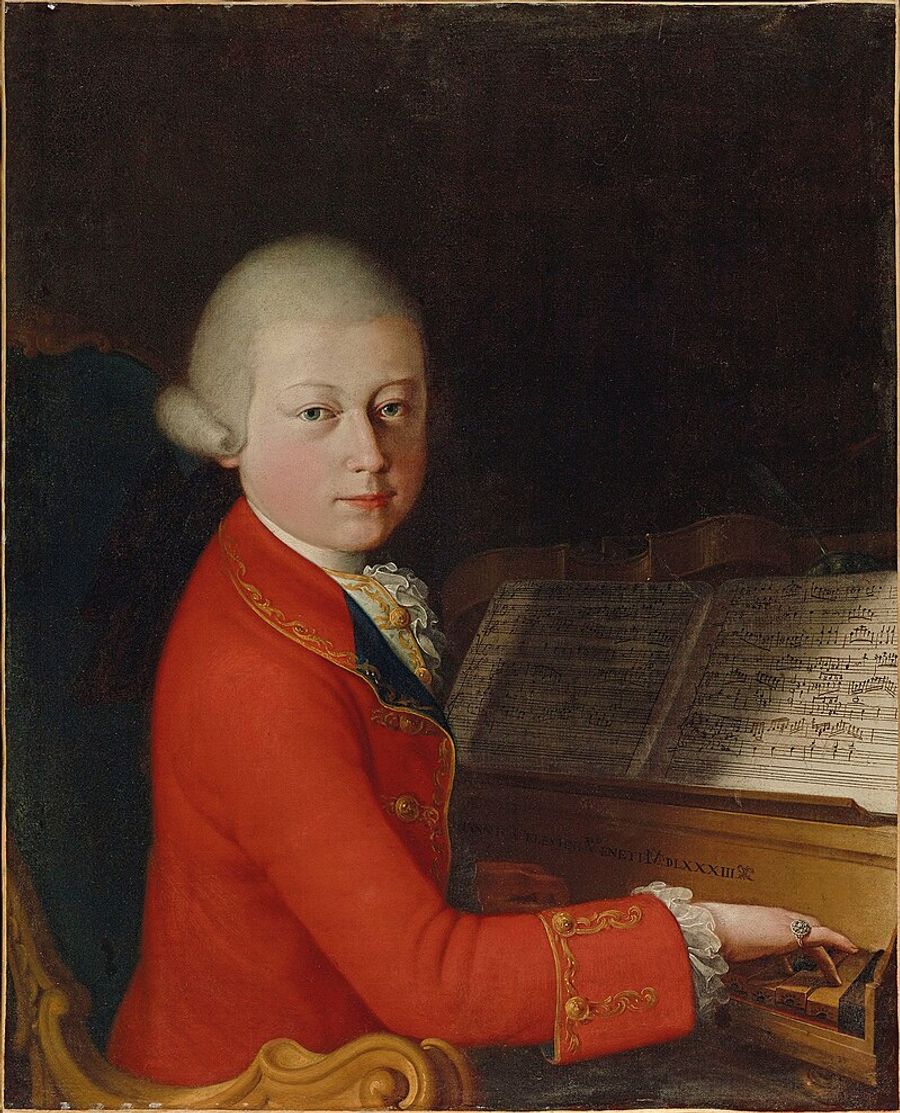
Ascanio in Alba (K. 111) is Mozart’s pastoral festa teatrale in two parts, composed in Milan in 1771 for the celebrations surrounding an imperial wedding. Written when he was only 15, it is an unusually poised courtly entertainment: ceremonial in purpose, yet already rich in melodic invention and theatrical pacing.
Background and Context
When Wolfgang Amadeus Mozart (1756–1791) returned to Milan in 1771, he did so not as a prodigy passing through but as a young professional with recent operatic credentials. His earlier Milan opera Mitridate, re di Ponto (1770) had established him as a dependable composer for the city’s leading theatre, the Teatro Regio Ducale. In that setting, Ascanio in Alba (K. 111) emerged as a court commission: a lavish, allegorical pastoral designed to honour the marriage festivities of Archduke Ferdinand of Austria and Maria Beatrice d’Este—an occasion that called for elegance, clarity, and flattery rather than high dramatic conflict.[1]
The genre label matters. A festa teatrale is not quite an opera seria and not quite a serenata in the strictest sense; it is ceremonial theatre—music, chorus, and spectacle organized around celebration. That format helps explain why Ascanio in Alba can be overlooked today: it does not advertise itself as a drama of moral crisis in the manner of Mozart’s later Idomeneo or La clemenza di Tito. Yet, in precisely this “non-tragic” framework, Mozart reveals an early mastery of characterization through melody and texture, and a striking ability to keep momentum in a work whose plot is intentionally gentle.
Composition and Commission
The commission was coordinated through Count Carlo Giuseppe di Firmian, the Habsburg governor in Milan, who oversaw the selection of poet and composer. Newly surfaced documentation publicized by MozartDocuments (with transcriptions and commentary by Dexter Edge) illuminates the administrative chain behind the serenata: Firmian advocating for Mozart, informing theatre officials, and confirming Giuseppe Parini as librettist—evidence of how deliberately this event piece was planned months in advance.[2]
Parini (1729–1799), a major literary figure in Milan, supplied an Italian libretto that turns myth into dynastic compliment. The title refers to Ascanius (Ascanio), son of Aeneas; the setting gestures toward the legendary origins of Alba Longa, thus flattering a ruling house through classical pedigree.[1] The premiere took place in Milan at the Teatro Regio Ducale on 17 October 1771—just two days after the wedding date often cited in modern summaries—placing the work directly inside the festival calendar.[1]
As is typical for such commissions, the musical forces were festive. Ascanio in Alba is scored for pairs of flutes, oboes, and bassoons, plus horns and trumpets with timpani, strings, and continuo—an orchestral palette that can sound almost “public” in its brilliance, but that Mozart also uses for intimate pastoral colouring.[1]
Libretto and Dramatic Structure
Parini’s drama is a pastoral allegory in two parts (due parti): mythological figures, nymphs, shepherds, and a benevolent goddess (Venus) guide the action toward a predetermined happy conclusion. The central device is a test. Ascanio is instructed not to reveal his identity to his betrothed, Silvia, but to observe her constancy; disguise and restraint, rather than intrigue or betrayal, generate the evening’s mild tensions.[1]
Because the outcome is never in doubt, the libretto’s task is not suspense but atmosphere and ceremonial balance—alternating solo numbers with choruses and ensembles to frame scenes of praise, tenderness, and pastoral charm. Modern listeners sometimes mistake this as “dramatic thinness,” but the work’s real interest lies in how Mozart animates a static celebratory structure. Even at 15, he differentiates voices and situations with quick stylistic shifts: one moment courtly brilliance with trumpets and drums, the next a softened woodwind halo around a lyrical line.
Musical Structure and Key Numbers
The score unfolds as an overture followed by two parts composed of individual numbers—arias, duets, choruses—rather than through-composed scenes.3(https://imslp.org/wiki/Ascanio_in_Alba%2C_K.111_%28Mozart%2C_Wolfgang_Amadeus%29 This architecture is typical of the genre, but Mozart’s handling is distinctive for its economy: many numbers are concise and sharply profiled, so that the whole can move briskly while still offering singers opportunities for display.
Three features, in particular, help Ascanio in Alba deserve more attention than its “occasion piece” label suggests:
1) A ceremonial surface with genuine lyric inwardness. Mozart repeatedly pivots from public celebration to private feeling. Silvia’s music often inhabits a more tender, pastoral sound world than the goddess Venus, whose utterances naturally take on a more authoritative brilliance.
2) Orchestral colour that is already character-aware. The score’s instrumentation—pairs of winds, festive brass, timpani—could easily result in monochrome splendour. Instead, Mozart treats the winds as agents of shading and atmosphere, not mere reinforcement, especially in lyrical numbers.[1]
3) A youthful but assured sense of pacing. In a drama without sharp conflict, pacing is everything. Mozart keeps the festival structure buoyant through contrast: chorus versus solo, ceremonial gestures versus pastoral simplicity, virtuoso display versus melodic directness.
In short, Ascanio in Alba offers a valuable snapshot of Mozart’s operatic development between Mitridate and Lucio Silla (1772): he is learning how to write for star singers, how to manage a large theatre orchestra, and—crucially—how to project character and mood in a framework designed primarily for representation and praise.
Premiere and Reception
The first performance on 17 October 1771 took place at Milan’s Teatro Regio Ducale, with a cast that included the celebrated castrato Giovanni Manzuoli in the title role of Ascanio.[1] The work’s very existence, and the documented care taken in its commissioning, indicate that Mozart was already a sought-after name for major ceremonial events in northern Italy.[2]
Reception history for such works is often less straightforward than for repertory operas: festival pieces may be praised in their moment and then set aside when the occasion passes. Yet Ascanio in Alba has remained fully extant and periodically revives, in part because it captures a particular intersection of politics, literature, and virtuoso vocal culture—and because Mozart’s music consistently exceeds the modest dramatic stakes of the libretto.3(https://imslp.org/wiki/Ascanio_in_Alba%2C_K.111_%28Mozart%2C_Wolfgang_Amadeus%29
For modern audiences, the opera’s fascination lies in hearing Mozart at fifteen writing “official” theatre music that already feels like Mozart: the melodic profile is unmistakable, the orchestral writing is alive to colour, and the ceremonial frame never prevents moments of sincere tenderness. It is not the Mozart of mature psychological drama—but it is an early Mozart with a remarkable instinct for how music can dignify ritual while still sounding human.
Sources
[1] Wikipedia: overview, premiere date and venue, commissioner and occasion, roles, and instrumentation for Mozart’s Ascanio in Alba (K. 111).
[2] MozartDocuments (Dexter Edge): report on four draft letters by Count Carlo Giuseppe di Firmian concerning the commissioning and preparation of Ascanio in Alba for the 1771 imperial wedding festivities.
[3] IMSLP: work page confirming genre/category and basic structure (overture and two parts) and providing access to score materials.