- Köchel Number
- K9 87 | K6 74a
- Genre
- Opera & Stage Music
- Form
- Operas & Singspiels
- Date
- 26 December 1770
- Place
- Bologna and Milan
- Age
- 14
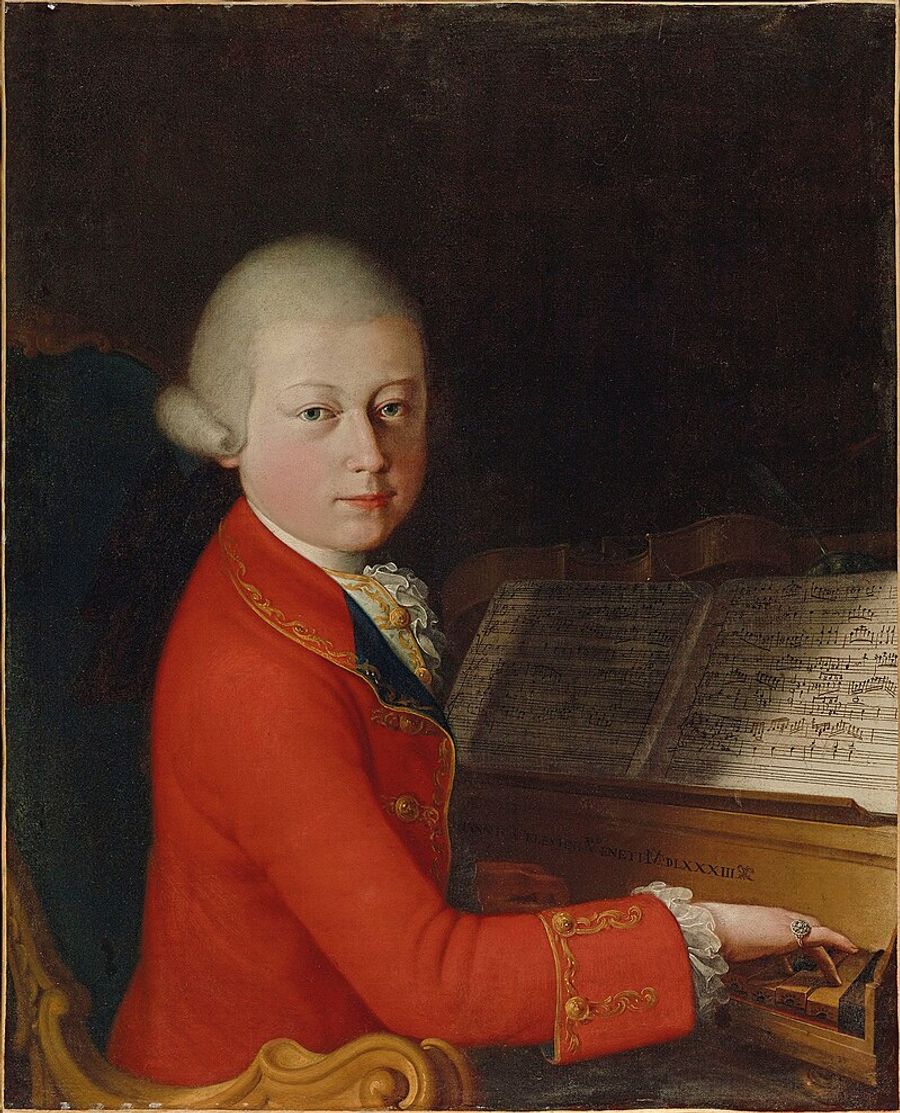
Mitridate, re di Ponto (K. 87) is a three-act opera seria completed for Milan in 1770, when Wolfgang Amadeus Mozart (1756–1791) was only fourteen. Premiered at the Teatro Regio Ducale on 26 December 1770, it proved that the “child prodigy” could master Italy’s most demanding operatic conventions—and, at moments, bend them toward a more searching dramatic voice.[1][2]
Background and Context
Mozart’s Mitridate, re di Ponto belongs to the intense Italian journeying of 1769–1773, when Leopold Mozart took his son south partly for education and prestige, and partly to test whether an Italian career—especially in opera—might be feasible. By late 1770, the fourteen-year-old had already absorbed an extraordinary amount: the manners of Italian vocal writing, the stagecraft of recitativo secco and accompagnato, and the expectations of star singers who treated arias as both character portrait and competitive display.
The commission also placed Mozart in a very specific ecosystem: Milan’s Teatro Regio Ducale (the city’s principal opera house before La Scala) and the Carnival season, a period when audiences expected novelty, virtuosity, and spectacle.[3][4] For a teenager—foreign, German-speaking, and not yet “Mozart” in the later mythic sense—success was far from guaranteed. Yet Mitridate not only reached the stage; it held it.
Why does the opera deserve attention today? Partly because it is not merely “remarkable for his age,” but because it shows Mozart learning how to dramatize with musical time: how to pace a scene through recitative, where to intensify the orchestra for a turning point, and how to shape a long evening of arias into an arc of rising emotional stakes. Even within the relatively standardized grammar of late opera seria, the score repeatedly hints at the psychological theatre Mozart would later perfect.
Composition and Commission
The work is an opera seria in three acts on a libretto by Vittorio Amedeo Cigna-Santi, based on a Mitridate tradition that ultimately derives from Jean Racine’s tragedy (Mithridate) and its Italian adaptations.[1][5] Cigna-Santi’s libretto had already been set by other composers (notably Quirino Gasparini in 1767), which meant Mozart was entering a living repertory network rather than inventing from nothing.[5]
Mozart composed the opera between Bologna and Milan (as the catalog data indicates), working in the orbit of Padre Giovanni Battista Martini’s celebrated musical circle in Bologna while also preparing for the practical realities of a major Milanese production.[1] The score was tailored to specific singers—an essential fact of opera seria production—so that composition, revision, and rehearsal formed a single continuum leading up to the premiere.[2]
In terms of Mozart’s broader output, Mitridate stands as the first full-scale opera seria to reach the stage and one of the earliest works in which he confronts the genre’s central problem: how to make a parade of aria forms feel like human drama, rather than merely an exhibition of vocal craft.[1]
Libretto and Dramatic Structure
The plot centers on King Mitridate (Mithridates VI of Pontus), his intended bride Aspasia, and his sons Sifare and Farnace, whose loyalties and desires fracture the family from within. The dramatic engine is typical of late opera seria: love entanglements intertwined with political authority, plus the ever-present threat of betrayal—public crimes mirrored by private passions.
Cigna-Santi’s handling of the Racine-derived material reflects an operatic logic: characters must be granted opportunities for self-definition in arias, and moral conflict must be staged as a sequence of emotional “states” that can be musically displayed, contrasted, and finally resolved.[5][6] That does not mean the drama is static: Mitridate repeatedly forces characters to choose between love and duty, and it does so in a way that gives Mozart unusually clear psychological profiles to work with—especially in the opera’s most intense confrontations.
Structurally, the work alternates between recitative (for plot movement and confrontation) and closed numbers (arias, ensembles, and chorus), with an overture (sinfonia) that announces the opera’s high-stakes public world. While the “number opera” format is conventional, Mozart’s instinct for pacing is already audible: he knows when to let a character speak plainly in recitative and when to suspend time for a fully shaped aria argument.
Musical Structure and Key Numbers
For listeners used to Mozart’s mature operas, the surprise of Mitridate is how assuredly it plays the opera seria game—coloratura, bravura, ornament-friendly lines—while also offering moments of inwardness that feel like more than convention. Three numbers are especially revealing.
Sifare: "Lungi da te, mio bene"
Sifare is often the opera’s moral center: loyal, self-sacrificing, and painfully aware that his love for Aspasia cannot be cleanly separated from politics. In "Lungi da te, mio bene," Mozart creates an extended lyrical space in which feeling seems to unfold rather than merely be stated—an early sign of his gift for making aria time feel psychologically lived.[2]
Aspasia: "Nel grave tormento"
Aspasia’s music is a demanding study in vocal virtuosity as drama: rapid passagework is not “decoration” but a way of representing a mind under pressure. The character’s predicament—desired, threatened, and morally cornered—invites precisely the kind of high-wire writing that opera seria prized, and Mozart meets the expectation while sharpening the emotional profile.[2]
Farnace: "Venga pur, minacci e frema"
Farnace, the morally compromised son, receives some of the opera’s most combustible music. "Venga pur, minacci e frema" exemplifies how Mozart uses rhythmic urgency and orchestral bite to render defiance as a physical energy, not just a rhetorical stance. In performance, it can feel like a prototype for later Mozartian portrayals of pride, anger, and self-justification—characters who are wrong, but vividly alive.[7]
Taken together, these numbers also show why Mitridate is not simply a youthful exercise: it is a laboratory in which Mozart practices character differentiation under strict stylistic constraints. The orchestra, too, is more than accompaniment. Even when the vocal line is the “star,” the instrumental writing often comments, amplifies, or tightens the drama—especially in heightened recitative and in arias where tension must be sustained across long spans.
Premiere and Reception
Mitridate, re di Ponto premiered in Milan at the Teatro Regio Ducale on 26 December 1770, opening the Carnival season.[1][2] Contemporary documentation situates the work as a notable success: it received a substantial run (commonly given as 21 performances), an impressive outcome for a new opera seria—and doubly so given Mozart’s youth.[2]
The opera’s early reception also mattered strategically. It strengthened Mozart’s standing in Italy and helped establish Milan as a recurring site of his early theatrical career (later Ascanio in Alba, K. 111, and Lucio Silla, K. 135, were also premiered there).[3] In retrospect, Mitridate is best heard not as an outlier before the “real” operas begin, but as a decisive apprenticeship work: Mozart mastering the professional operatic world—its singers, its public, its constraints—and already finding points where musical invention and dramatic truth converge.
For modern audiences, Mitridate offers a distinctive pleasure. It is a window into late eighteenth-century Italian stage taste, but also into a composer learning, astonishingly quickly, how to make that taste speak with an individual accent. One can hear, in the best pages, the outline of what will later blossom in Idomeneo, Le nozze di Figaro, Don Giovanni, and Così fan tutte: not simply beautiful vocal music, but drama in which melody becomes character and orchestration becomes psychology.
Sources
[1] International Mozarteum Foundation, Köchel Catalogue entry for KV 87 (*Mitridate, re di Ponto*): genre, context, and edition references.
[2] Wikipedia: overview, libretto attribution, premiere date, and early performance run.
[3] Mozart & Material Culture (King’s College London): Milan and the Teatro Regio Ducale as premiere site for Mozart’s stage works (1770–1772).
[4] Wikipedia: Teatro Regio Ducale background (Milan’s principal opera house before La Scala).
[5] Cambridge Core PDF chapter discussing Cigna-Santi/Mozart *Mitridate* within the broader libretto tradition and its literary context.
[6] Brill (book chapter PDF): discussion of Mozart’s *Mitridate* and its relationship to Racine and operatic adaptation.
[7] Mozarteum program booklet (PDF) referencing *Mitridate* (K. 87) and the aria “Venga pur, minacci e frema.”