- Köchel Number
- K9 51 | K6 46a
- Genre
- Opera & Stage Music
- Form
- Operas & Singspiels
- Date
- Early 1768
- Place
- Vienna
- Age
- 12
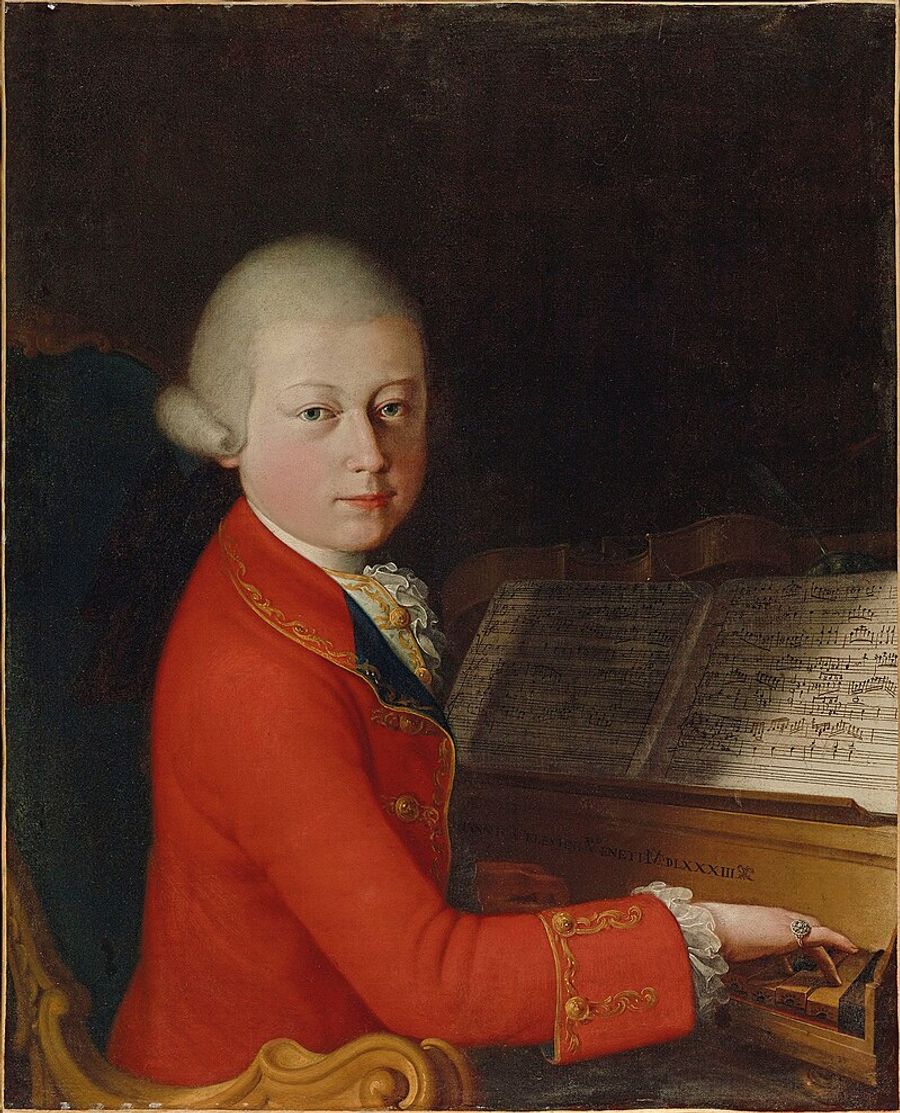
La finta semplice (K. 51) is a three-act opera buffa composed in Vienna in 1768 by Wolfgang Amadeus Mozart (1756–1791), then only twelve years old [1]. Planned for Vienna but derailed by intrigue and skepticism, it finally reached the stage in Salzburg on 1 May 1769—already hinting at the theatrical instincts that would later flower in Mozart’s mature operas [1].
Mozart’s Life at the Time
In 1768, the Mozart family was living in Vienna during the long “grand tour” years, with Leopold Mozart relentlessly promoting his son as a prodigy in both performance and composition. The twelve-year-old Wolfgang was not merely writing chamber pieces and symphonies; he was being tested against the most prestigious genre of all—Italian comic opera, the courtly and public currency of musical reputation.
The commission for La finta semplice emerged in a climate where celebrity, patronage, and professional jealousy easily collided. Leopold’s correspondence makes plain that the opera’s Vienna prospects became entangled in allegations that the music could not truly be the work of a child—an accusation serious enough that Leopold petitioned the Emperor on 21 September 1768 to defend Wolfgang’s authorship and reputation [1]. That the affair “dragged on” for months (rather than culminating in a straightforward production) is part of the opera’s story and, in a sense, part of its meaning: Mozart’s earliest operatic ambition meeting the adult world’s mistrust.
Composition and Manuscript
La finta semplice was composed in Vienna in 1768. It is an Italian opera buffa in three acts for seven singers and orchestra; the libretto is associated with Carlo Goldoni (adapted by Marco Coltellini) [1]. Although the Viennese staging was planned, it did not materialize at the time; the first documented performance took place instead in Salzburg, at the Prince-Archbishop’s palace, on 1 May 1769 [1].
A striking detail of Mozart’s workshop practice lies in the overture: material linked to Symphony No. 7 in D major, K. 45, was adapted for La finta semplice, illustrating how the young composer could recycle and reshape existing music for dramatic purposes—an instinct that would remain central to eighteenth-century operatic craft [2].
Musical Character
As an opera buffa, La finta semplice works by social misdirection: feigned innocence, romantic trickery, and ensemble-driven confusion. Even in juvenilia, Mozart shows a keen sense for pacing—alternating compact lyrical numbers with passages that push the plot forward and sharpen character contrasts.
What makes the opera deserve attention today is not the expectation of mature “late Mozart” depth, but the visibility of Mozart learning the theatre in real time. The vocal writing often favors clear, songful profiles (the kind of tune that reads instantly on stage) while still experimenting with the Italianate virtuosity expected of comic opera in the 1760s. Dramatically, the score already suggests Mozart’s lifelong gift for turning comedy into musical structure: not just a sequence of arias, but a stage mechanism in which tempo, texture, and vocal interplay articulate who is deceiving whom—and who is beginning to understand.
He would soon write further stage works in different languages and formats, but La finta semplice remains a crucial early marker: a Vienna opera conceived at the heart of imperial musical life, obstructed by politics and distrust, and ultimately realized in Salzburg—leaving posterity with a rare portrait of a prodigy confronting the practical realities of opera production as much as the art of composition itself [1].
Sources
[1] Wikipedia — overview, composition in Vienna (1768), libretto attribution, Viennese production controversy, Leopold’s petition (21 Sept 1768), and Salzburg first performance (1 May 1769).
[2] Wikipedia — Symphony No. 7 (K. 45) article noting the work’s later adaptation as the overture to *La finta semplice* and related K-number variants.