Joseph Leutgeb and Mozart’s Horn Concertos
Joseph Leutgeb asked Mozart for music, borrowed money from his father and offered him a place to stay. Their long friendship produced some of the most demanding music ever written for the natural horn.
On 27 May 1783, Mozart finished a horn concerto with an unusually rude dedication. He had taken pity, he wrote, on Leutgeb, “ass, ox and fool.” The recipient was Joseph Leutgeb, a horn player twenty-three years his senior and an acquaintance from childhood. Mozart put the insult on the manuscript of K.417, music that required considerable skill from the man he was mocking. [1]


As an Amazon Associate we earn from qualifying purchases.
The dedication is often the first thing people learn about Leutgeb. It is a poor introduction to a musician who had enjoyed an international career and whose friendship with the Mozart family lasted nearly thirty years. Their letters tell a fuller story: requests for music, unpaid loans, practical help and evenings spent together.
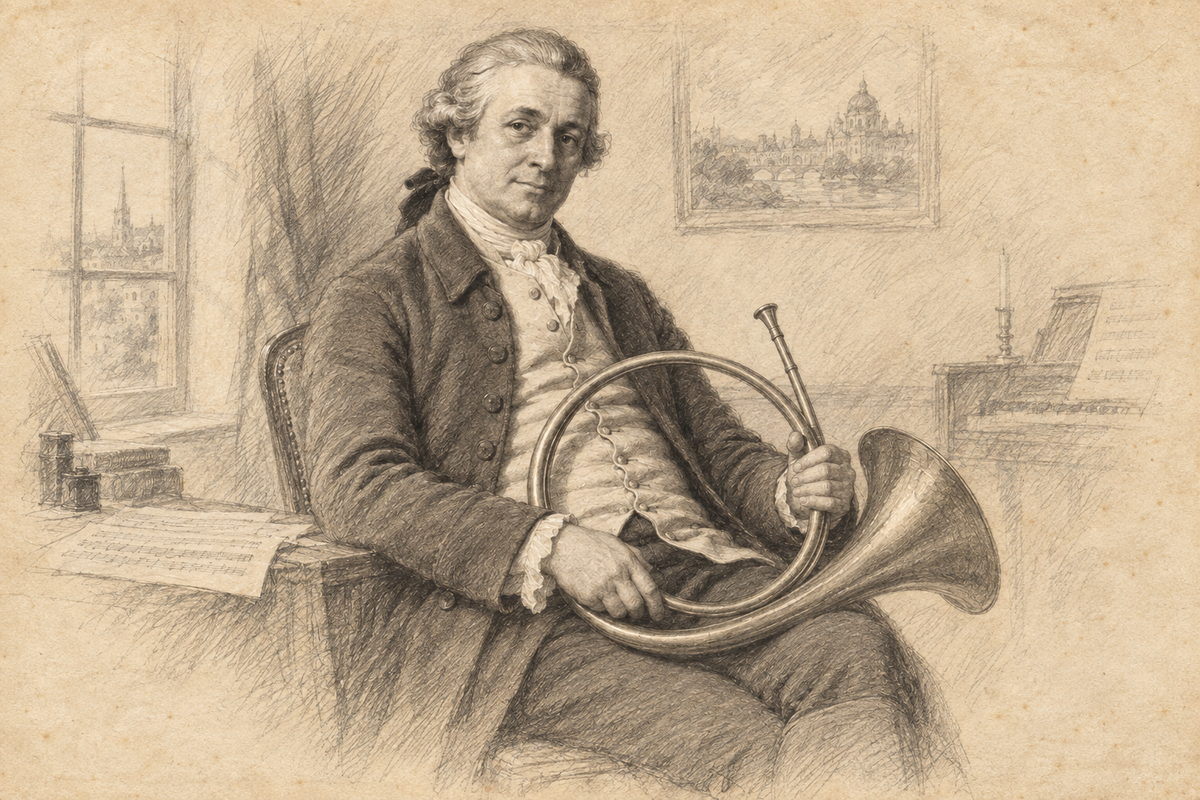
An old Salzburg acquaintance
Born near Vienna in 1732, Leutgeb was already an established soloist before joining the Salzburg court musicians in 1763. Between November 1761 and January 1763, he appeared at Vienna’s Burgtheater at least fourteen times playing horn concertos. His repertoire included a now-lost concerto by Michael Haydn. Wolfgang was seven when Leutgeb arrived in Salzburg, where Leopold Mozart was a colleague in the court ensemble. [2]
Leutgeb also travelled as a soloist. In Paris in 1770, his performances at the Concert Spirituel attracted praise, particularly for his lyrical playing. That quality helps explain Mozart’s later music for him. Alongside the quick passages and hunting calls are slow movements that ask the horn to sustain a melody with the ease of a singer. [1]
The family kept in touch with him away from Salzburg. In November 1772, while the Mozarts were in Milan, Leopold discussed possible work there for Leutgeb and offered him lodgings. Travel, introductions and a place to stay were part of a musician’s livelihood, and the Mozarts were willing to help. [3]

A request for a concerto
By 1777 Leutgeb had settled in Vienna. On 1 December, Leopold told Wolfgang that their friend had bought a small suburban house on credit. He also passed on a musical request: “from you he requested a concerto.” Leutgeb was asking for music several years before the earliest securely dated complete concerto in the familiar group. We cannot identify that request as a commission for K.417, but it shows who was taking the initiative. [2]
The house purchase helped give rise to the familiar story of Leutgeb the cheesemonger. Leopold mentioned his hopes of making money from cheese. However, Michael Lorenz’s archival research traces the family business to Leutgeb’s father-in-law; it had been sold in 1764. The records do not support the usual picture of Leutgeb running a cheese shop alongside his musical career. [2]
His debts were real enough. On 8 May 1782, Wolfgang asked Leopold to go easy on their friend: “Concerning poor Leitgeb, please be patient a little longer, I beg you.” He believed his father would sympathise if he knew the circumstances, and promised to speak to Leutgeb about repayment in instalments. [4]
This makes the dedication written a year later harder to take at face value. Mozart could be crude, but he had also intervened on Leutgeb’s behalf. We do not know how the horn player received every joke; we do know that their dealings continued for years.
Playing without valves
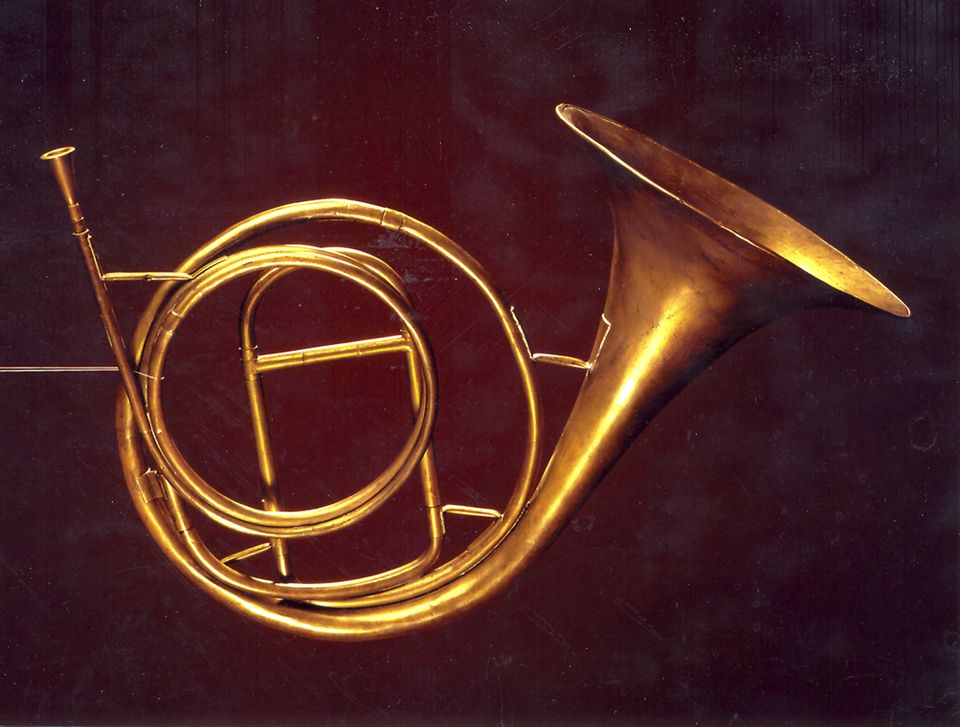
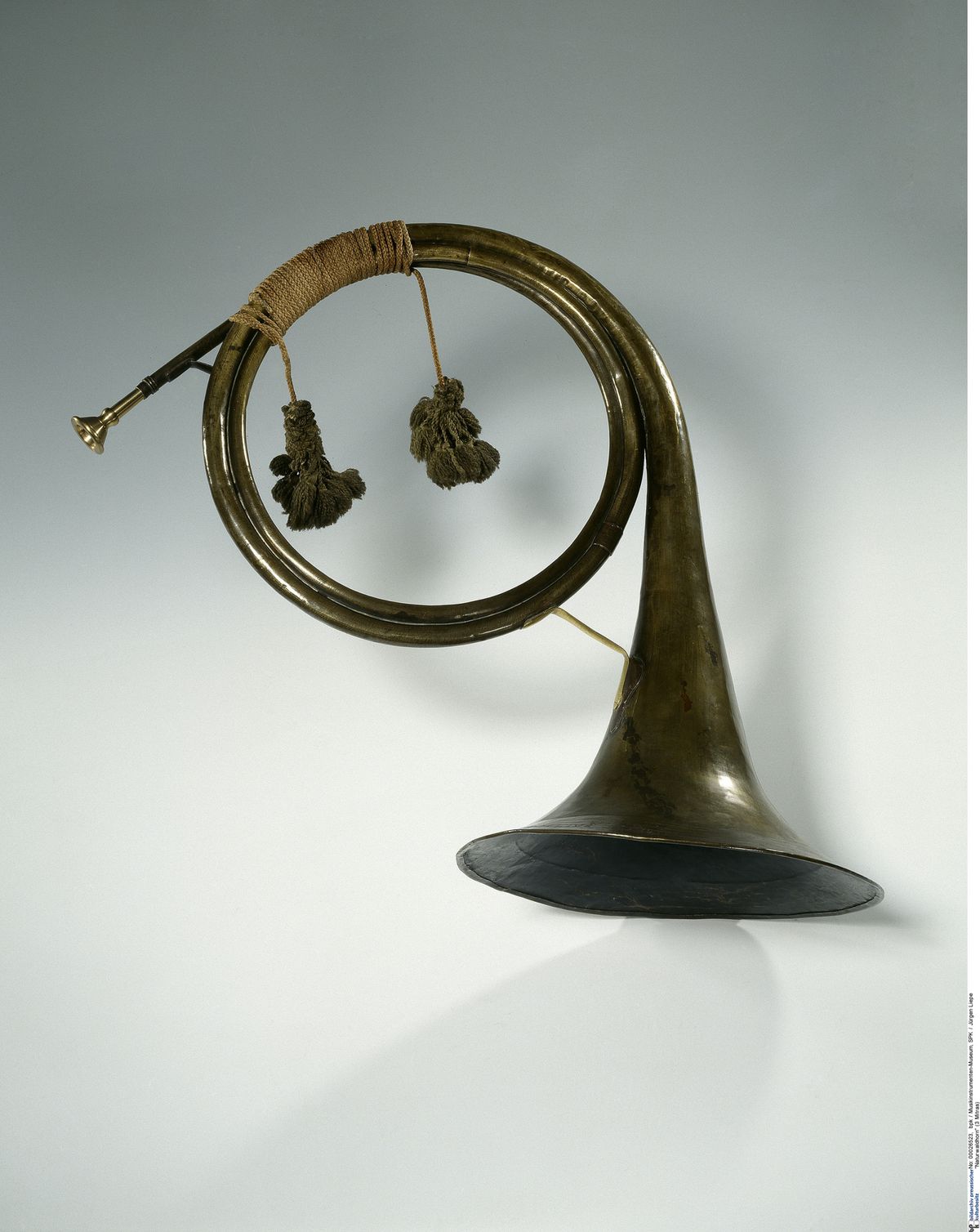
Leutgeb’s instrument demanded skills that a modern horn can partly conceal. The natural horn had no valves. Its coiled tube produced a series of natural harmonics, selected through the player’s lips and breath. Interchangeable lengths of tubing, called crooks, changed the instrument’s basic key. Changing a crook was a physical operation, not something a player could do between the notes of a fast melody. [5]


As an Amazon Associate we earn from qualifying purchases.
For notes outside that harmonic series, the player adjusted the lips and the position of the right hand inside the bell. Partially closing the bell altered pitch, but it also changed the colour and strength of the sound. A smooth phrase could therefore involve several quite different ways of producing a note. The higher harmonics lay close together, making accuracy another challenge. [5]
Listen to the slow movements with this in mind. Their apparent simplicity depends on carefully controlled changes of tone, pitch and breath. The lively finales demand a different sort of assurance: clean articulation and quick movement between notes. The horn still recalls the hunt, but Mozart asks it to do much more than sound a signal.
Music for a particular player
The Horn Quintet, K.407, generally dated to late 1782 and associated with Leutgeb, places the horn beside a violin, two violas and a cello. That unusually warm string ensemble gives the soloist room for both nimble exchanges and sustained melody. [6]
K.417 followed in 1783. Mozart explicitly identified another concerto, K.495, in his own catalogue on 26 June 1786 as a work for Leutgeb. Its manuscript uses four colours of ink. The colours are often explained as another practical joke, but their purpose remains uncertain. The music itself alternates expansive solo writing, a lyrical Romance and a brisk hunting rondo. [1]
K.447 offers a different setting: two clarinets and two bassoons join the strings around the solo horn. Its chromatic writing makes subtle demands on hand technique, while the woodwinds give the conversations a mellow sound. The manuscript is undated; the current Köchel catalogue places it between 1784 and 1787. These concertos accumulated over several years, rather than forming a set conceived together. Their composition dates should not be mistaken for documented premieres. [1] [7]
The numbering is particularly misleading for the D-major concerto, K.412, usually called No. 1. Mozart worked on it in 1791, near the end of his life. He left its rondo unfinished, with more teasing comments addressed to the player. Franz Xaver Süssmayr supplied the separate rondo known as K.514, dated 6 April 1792. The familiar performing version thus combines work by two composers. [1]
A place to stay
In June 1791, while Constanze was taking treatment in Baden, Mozart stayed at Leutgeb’s house. Writing from a small bedroom beside the garden, he reported that he had slept well and would stay another night: with the maid dismissed, home would have been unpleasantly empty. He also complained, with domestic familiarity, that Leutgeb’s wife could not tie his neckcloth as Constanze did. [8]
That October, Leutgeb wanted another visit to The Magic Flute. Mozart’s letter to Constanze records the arrangement simply: “Leitgeb asked me to take him in with me again, which I also did.” [9]



As an Amazon Associate we earn from qualifying purchases.
Image credits
Staatliches Institut für Musikforschung, Musikinstrumenten-Museum / Jürgen Liepe. CC BY-SA 4.0. Unmodified. Image source. Licence.
Attributed to Johann Nepomuk della Croce / Wikimedia Commons. Public domain. Image source. Licence.
Staatliches Institut für Musikforschung, Musikinstrumenten-Museum / Antonia Weiße. CC BY-SA 4.0. Unmodified. Image source. Licence.