- Köchel Number
- K9 514 | K6 514
- Genre
- Concertos
- Form
- Concertos for Strings & Winds
- Key
- D Major
- Date
- 1792
- Age
- 35
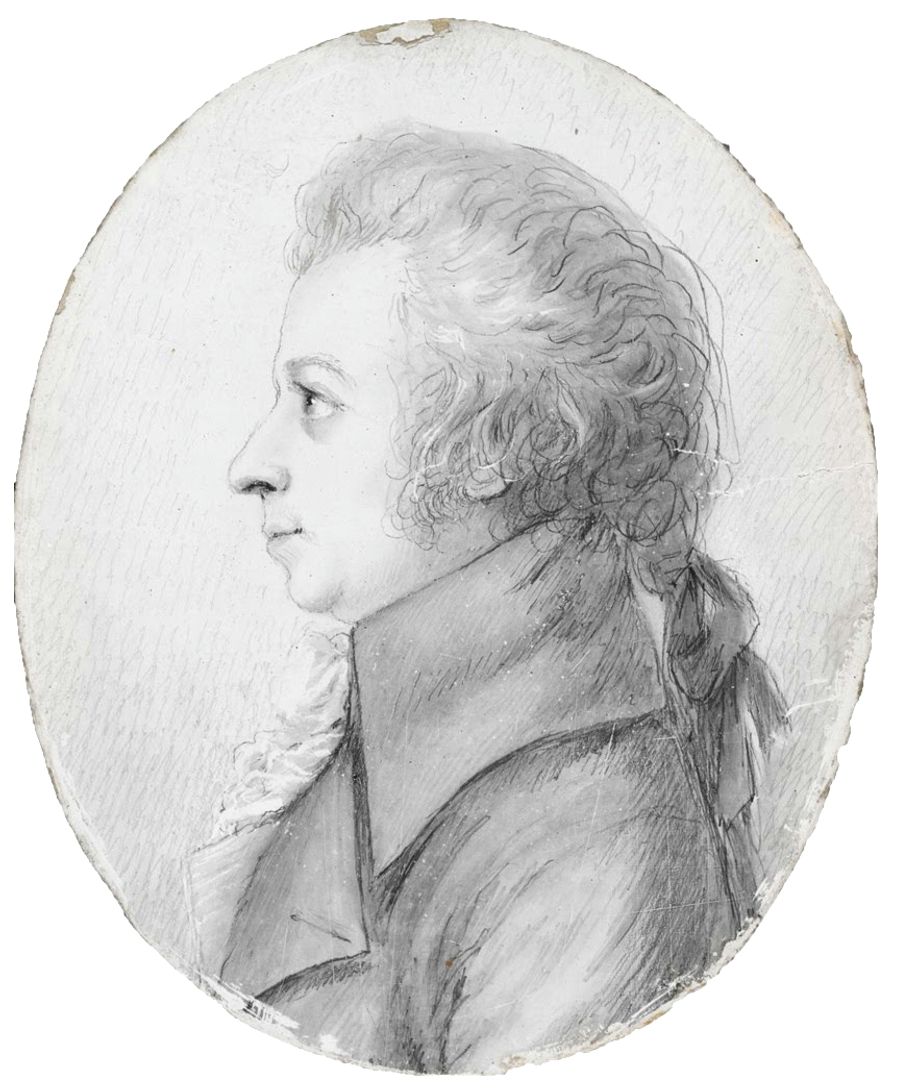
The Rondo in D major for horn and orchestra (K. 514) is a posthumous 1792 scoring by Franz Xaver Süßmayr of Mozart’s unfinished finale draft for the D-major horn concerto project associated with Joseph Leutgeb. Preserved as a completed orchestral movement in D major, it offers a late-Classical horn showpiece whose solo line appears close to Mozart’s design, even as the orchestral fabric is largely Süßmayr’s work.
Background and Context
In Mozart’s final year (1791), he began what is now commonly called Horn Concerto No. 1 in D major, leaving a finished first movement (K. 412/386b) but only an incomplete draft for the intended rondo finale. After Mozart’s death on 5 December 1791, his student and collaborator Franz Xaver Süßmayr—best known for completing the Requiem—produced a performable version of that finale.
The surviving evidence points to Süßmayr’s completed Rondo in D major being dated 6 April 1792 (place not securely documented, but connected with Vienna in the manuscript tradition). In the Mozarteum’s catalogue, the movement’s authenticity is treated as incorrectly assigned to Mozart as a whole: Mozart is credited with the “original music,” while Süßmayr is credited as composer of the completed score.[1] This is the fundamental lens through which K. 514 is best heard: a Mozartian solo conception preserved inside an arranger-completer’s orchestral realisation.
Musical Character
K. 514 is a single-movement Rondo (Allegro) in D major, conceived for natural horn virtuosity—bright open harmonics, ringing arpeggiation, and agile passagework that sits idiomatically on the instrument’s “home” notes in the key of D. The soloist’s periodic phrasing and clear cadential punctuation keep the music in the public, concerto-like sphere, while brief episodes provide contrast before the main refrain returns.
In orchestral terms, the scoring is modest and practical: solo horn, two oboes, two bassoons (apparently implied as bass-line reinforcement), and strings.[1][2] The New Mozart Edition commentary notes that, while the solo parts in Mozart’s draft and Süßmayr’s score “agree almost literally,” the accompaniment is newly shaped by Süßmayr, a distinction that can be sensed in the orchestral writing’s straightforward, serviceable support of the horn’s rhetoric rather than the more tightly motivated interplay typical of Mozart’s mature concerto finales.[2]
Place in the Catalog
Heard alongside Mozart’s fully autograph horn works—especially the late, expansive Horn Concerto No. 4 in E♭ major, K. 495—K. 514 stands as a late afterimage: a genial rondo-finale design linked to Mozart’s Vienna circle and to Leutgeb, but transmitted to us principally through Süßmayr’s 1792 completion.[1]
Sources
[1] Internationale Stiftung Mozarteum, Köchel-Verzeichnis entry: “Rondo in D for horn and orchestra” (bei 412,02) — dating (6 April 1792), status/authenticity note, and instrumentation.
[2] Digital Mozart Edition (Mozarteum): New Mozart Edition (NMA) V/14/5 Horn Concertos — English introduction/commentary discussing Süßmayr’s authorship and the relationship between Mozart’s draft and Süßmayr’s scored rondo.