Mozart’s Subscription Machine: How Vienna’s Concert Market Made Masterpieces on a Deadline
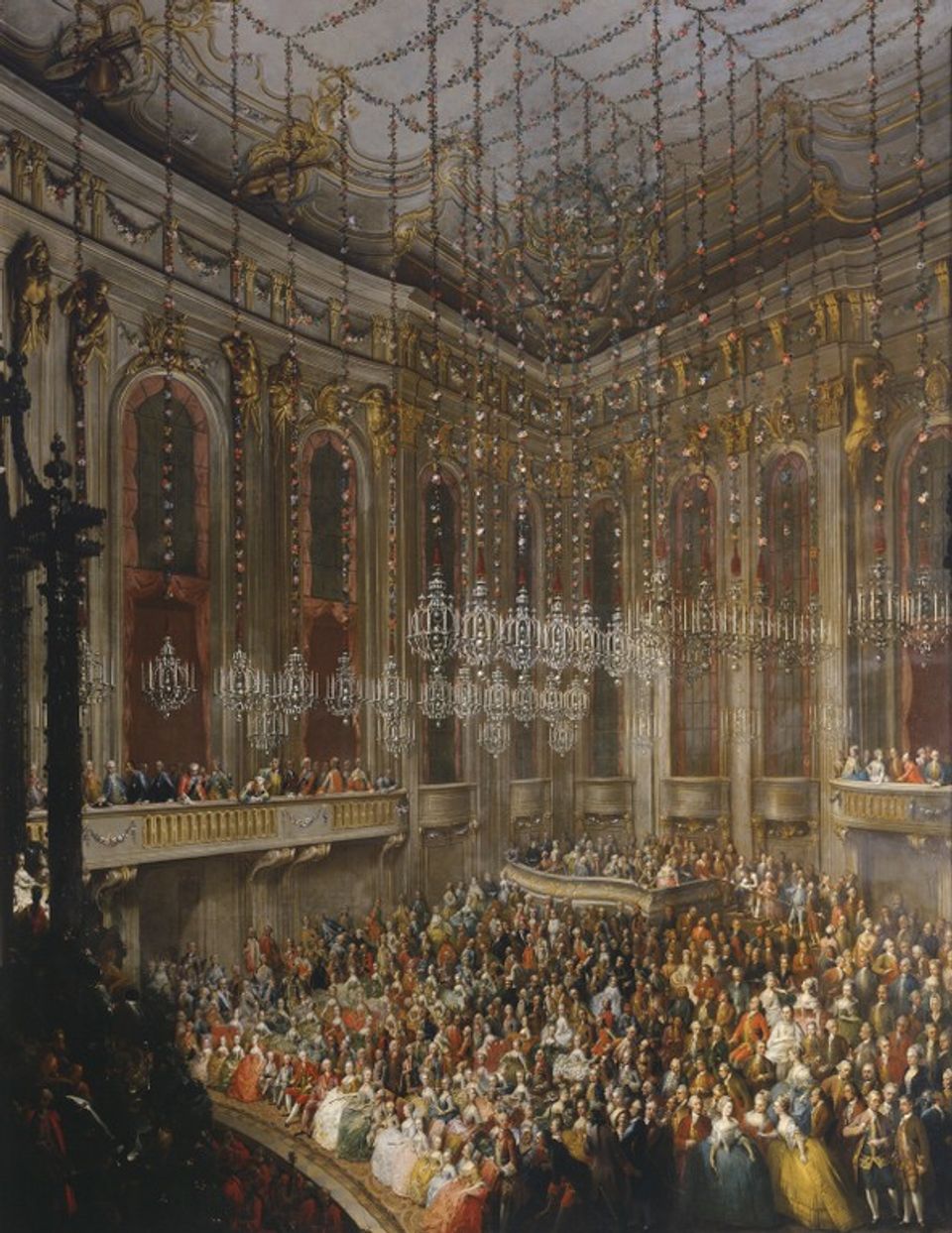
Mozart’s Viennese subscription concerts turned advance payments into deadlines. Behind some of his greatest piano concertos lay rented halls, aristocratic subscribers, hurried copyists and a fortepiano that never stayed still.
The Night the Ink Was Still Wet
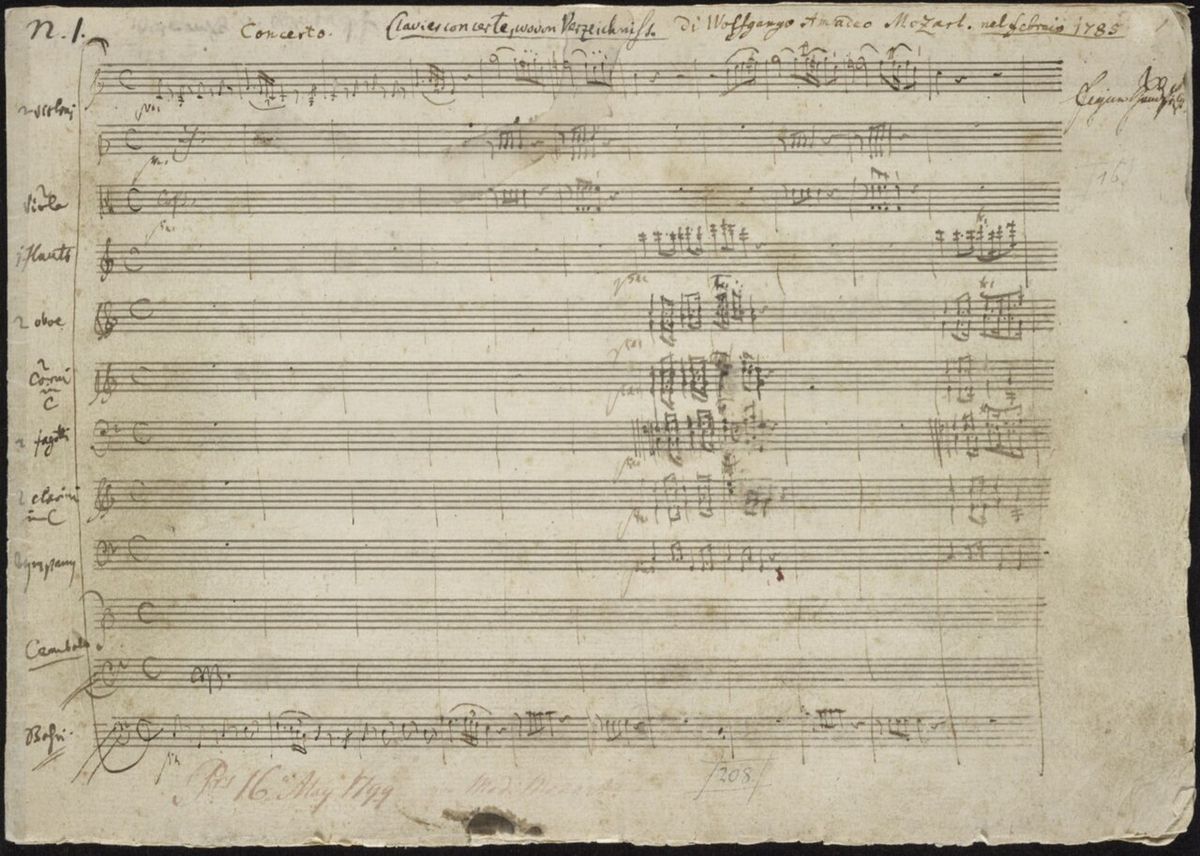
On the evening of February 11, 1785, Leopold Mozart arrived at Vienna’s Mehlgrube for the first concert in his son’s new subscription series. Six o’clock. A fashionable crowd was gathering. Leopold saw “prominent people,” an excellent orchestra, symphonies, and two operatic arias. Then came something entirely new: Wolfgang’s Piano Concerto in D minor, K.466. [1]



As an Amazon Associate we earn from qualifying purchases.
There was one problem. The music was not quite ready.
“The copyist was still working as we arrived,” Leopold reported three days later. Mozart had been supervising the preparation of the orchestral parts so late that he had not even had time to play through the concerto’s final rondo before performing it. Yet the concert went ahead, and Leopold called the evening “beyond compare.” [2]
It is an almost absurdly vivid picture of Mozart’s Viennese career at its peak: composer, pianist, impresario, rehearsal director and quality-control department, simultaneously creating the product and selling it. The subscription concert did not simply provide Mozart with income. It became a machine that generated deadlines—and some of his greatest piano concertos.
Entertainment During Lent
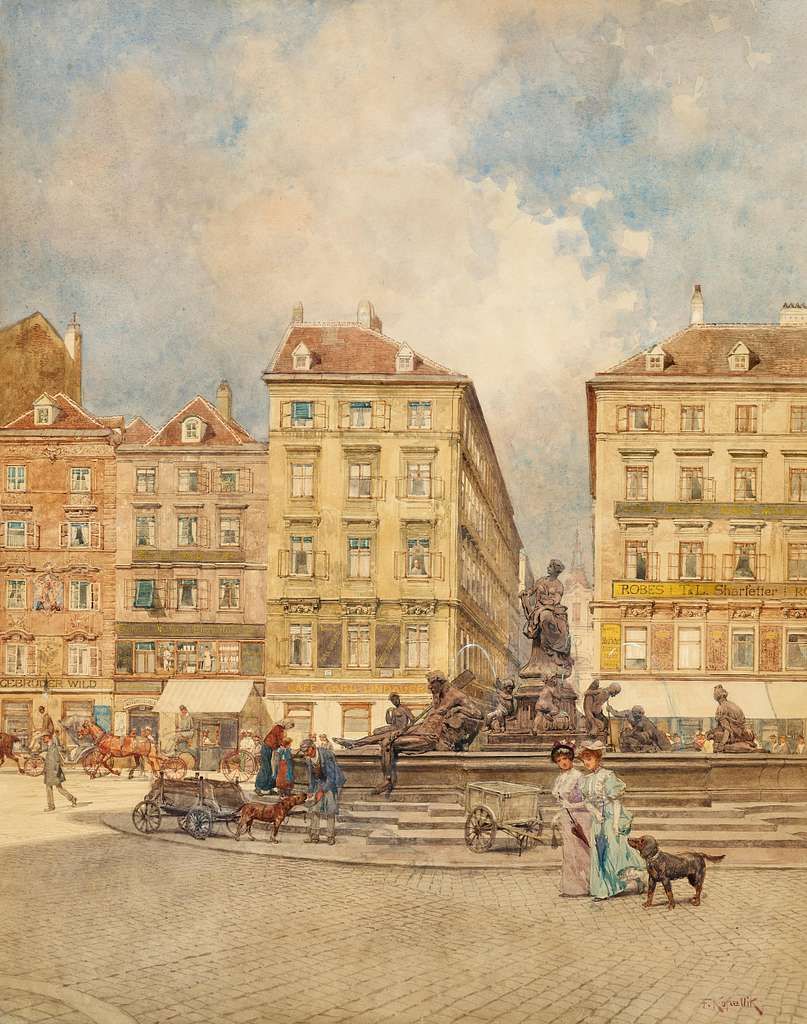
Mozart did not invent subscription concerts. Vienna already had a flourishing culture of private and semi-public “academies,” often held in aristocratic homes or rentable halls; during Lent, when theatrical performances were restricted, the large court theatres could also be used for concerts. Programmes characteristically mixed symphonies, concertos, operatic arias and improvisation rather than following the modern symphony-concert formula. [3]
Nor did the subscription mechanism arrive suddenly in Mozart’s imagination. In 1782 he was already involved with Philipp Jakob Martin’s Augarten concerts. On May 25 Mozart wrote of “our first concert” there, describing a mixed bill of symphony, song, violin concerto and a two-piano concerto played by himself and Josepha Auernhammer. Martin had organized a twelve-concert series. [4]
By 1784 Mozart was running the idea on his own terms. He scheduled three Lenten subscription concerts on successive Wednesdays in the Trattnerhof. His correspondence shows a businessman watching his market as closely as a composer watched his manuscript: he compared his subscriber numbers with those of rival keyboard players Richter and Fischer. The surviving subscriber list reads, in Cornell University’s description, like a “who’s who of the Austrian nobility.” [5]
So the innovation was not the subscription itself. It was the intensity with which Mozart fused subscription, self-promotion and new composition. His customers were not merely buying Mozart the pianist. They were buying privileged, repeated access to Mozart producing new Mozart.
What the Subscriber Bought
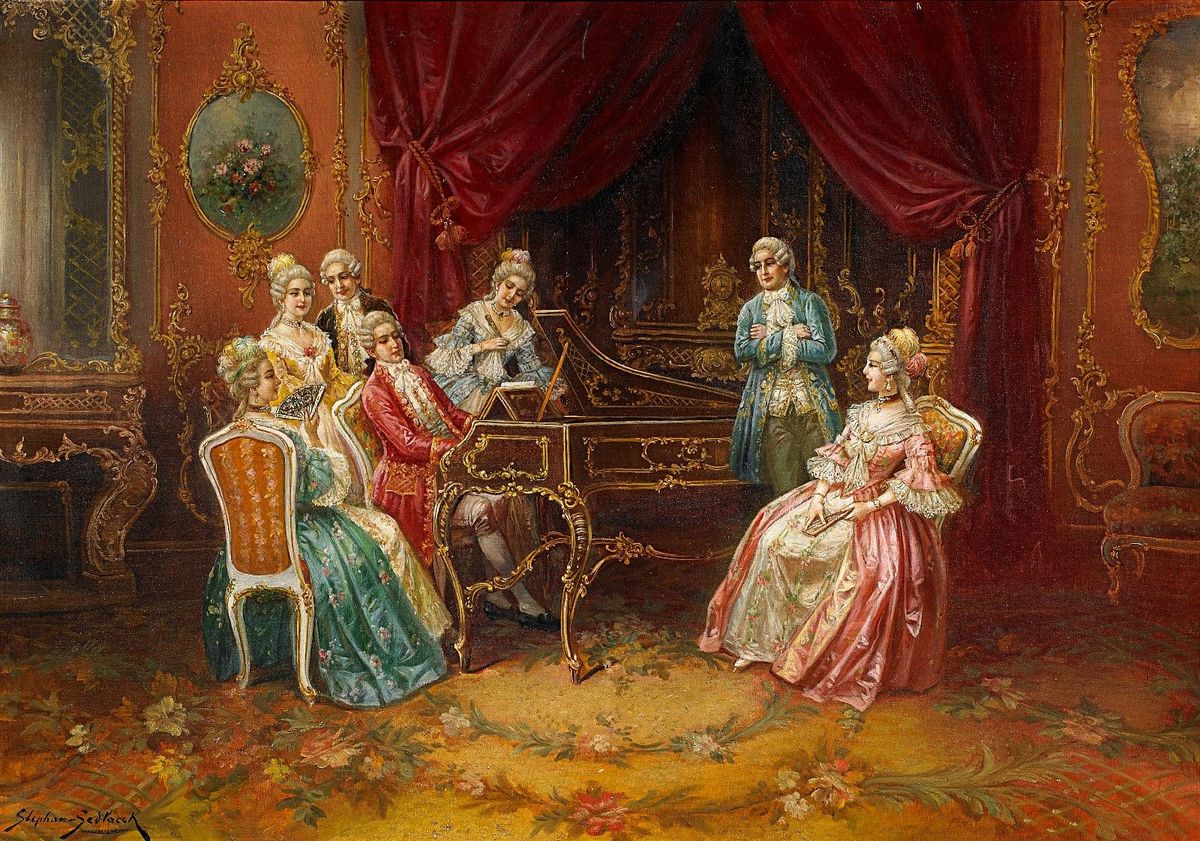
The mechanism was simple and attractive to both sides. Rather than gamble entirely on the box-office receipts of one evening, a performer could secure commitments in advance for a short series. The subscriber, in return, gained repeated access to fashionable music-making—and, in Mozart’s case, the excitement of hearing major new works from the composer’s own hands. [6]
In 1784 Mozart’s Trattnerhof concerts drew well over one hundred subscribers at six gulden each. The three concerts featured the new piano concertos K.449, K.450 and K.451. His audience was heavily aristocratic: the original subscriber list survives in Salzburg, and Mozart’s career at this point was interwoven with the salons of families such as the Zichys, Ployers and Trattners. [6]
The following Lent he expanded the scheme dramatically. Six Friday concerts at the Mehlgrube ran from February 11 to March 18, 1785. Leopold reported more than 150 subscribers, each paying one souverain d’or—three ducats, or 13½ florins—for the series. Mozart in turn paid the hall half a sovereign for each concert. [7]




As an Amazon Associate we earn from qualifying purchases.
That was entrepreneurship, eighteenth-century style: rent the room, assemble the musicians, attract the right names, promise repeated appearances—and make yourself the indispensable attraction.
What a Mozart Concert Actually Sounded Like
To imagine one of these nights, forget the modern ritual of overture, concerto, interval, symphony. Mozart’s great Burgtheater academy of March 23, 1783—technically a single academy rather than one of the later subscription series—is a superb blueprint for the musical world his subscribers knew. Mozart himself sent Leopold the running order. [8]
He opened with the first part of the new “Haffner” Symphony, K.385. His sister-in-law Aloisia Lange sang an aria from Idomeneo. Mozart then played the Piano Concerto K.415. More vocal music followed, then concertante movements from the “Posthorn” Serenade. Mozart returned for the D-major Concerto K.175 with the popular Rondo K.382. There was another operatic aria; then Mozart played alone—a fugue and improvised variations. Another new vocal rondo followed, and only at the very end did he bring back the finale of the “Haffner” Symphony. [8]
It was variety theatre for connoisseurs: opera, symphony, concerto, virtuosity and improvisation, with Mozart repeatedly re-entering the spotlight. A contemporary report said the fortepiano concertos and fantasies received the “loudest applause”; Emperor Joseph II stayed for the entire concert, unusually, and joined the acclaim. Mozart himself told his father that the theatre could hardly have been fuller. [9]
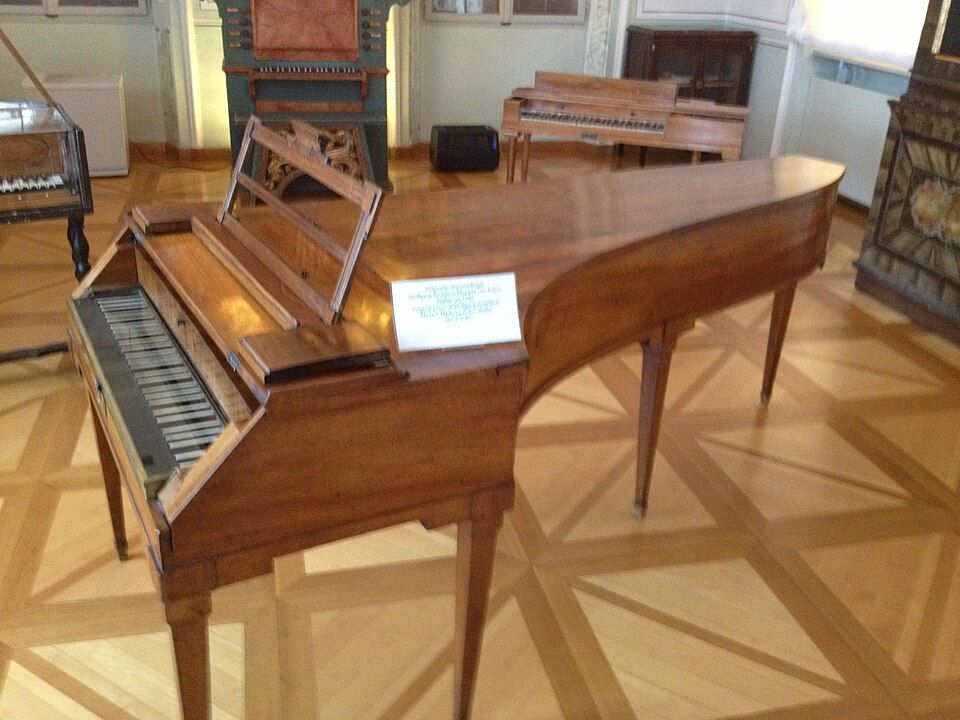
And behind the glamour was logistics. Leopold’s description of 1785 is wonderfully physical. In the few weeks he was in Vienna, Mozart’s fortepiano had been carried between his home, theatres and private houses at least twelve times. Mozart’s principal fortepiano was an instrument by the celebrated Viennese maker Anton Walter. [10]
Then there was Mozart’s extraordinary pedal instrument: a complete chromatic pedal keyboard placed beneath the fortepiano. Leopold said it projected three spans beyond the instrument and was “astonishingly heavy.” It too was hauled to the Mehlgrube every Friday, and to performances at Count Zichy’s and Prince Kaunitz’s residences. [11]
Vienna’s effortless Mozartian elegance required movers.
The Deadline Engine
Subscription transformed composition into a recurring obligation. Mozart had promised not just a performance but a series, and novelty was one of his strongest competitive advantages. The extraordinary run of piano concertos from these years belongs directly to that performing economy. The 1784 Trattnerhof sequence alone introduced K.449, K.450 and K.451 in rapid succession. [12]
The letters show the pressure building. Leopold described days of “concerts every day, constant learning, music, composing,” with the household rarely in bed before one in the morning. His exasperated question—where was he supposed to put himself amid all the commotion?—conveys something biographies can easily sanitize: masterpieces were being manufactured inside a chaotic working business. [13]
K.466 is the extreme case. Its dark D-minor drama can seem to belong to some timeless realm of inspiration. In reality, on its first night the orchestral parts were still being copied while the audience was arriving. The subscription had created a non-negotiable date. Mozart met it. [14]

As an Amazon Associate we earn from qualifying purchases.
When the Buyers Disappeared
That distinction matters when the story turns darker. Mozart’s Viennese concert market did decline, but the surviving evidence does not point to an unreliable performer who stopped delivering. In the documented peak years, he delivered under almost comically severe time pressure. What later failed was demand.
Mozart seems largely to have withdrawn from regular public concert-giving by the middle of 1786. By 1788–90 Vienna’s musical economy had also deteriorated. Joseph II’s war against the Ottoman Empire contributed to an economic downturn and weaker artistic patronage, although scholars rightly caution against making the war a single explanation: Mozart’s public-concert activity had already diminished before Austria entered the conflict. [15]
Then came the brutal measure of July 1789. Mozart attempted to circulate a list for another subscription series. After roughly two weeks, according to the surviving correspondence with Michael Puchberg, it contained one name: Baron Gottfried van Swieten. [16]
Five years earlier, Mozart had proudly measured himself against rival impresarios and filled his subscriber list with Vienna’s elite. Now a list could go around the same city and come back almost blank.
The concerts gave Mozart an income and regular opportunities to perform new piano concertos. By 1789, finding enough subscribers had become a struggle. [7] [16]
[1] Leopold Mozart to Maria Anna Mozart, 14 February 1785 (letter 847). Digital Mozart Edition.
[2] Leopold Mozart to Maria Anna Mozart, 14 February 1785 (letter 847). Digital Mozart Edition.
[3] Mozart, Wolfgang Amadeus (1756–1791). Mozart & Material Culture, King’s College London.
[4] Mozart’s Concert at the Augarten. Interlude.
[5] The Magic of Mozart: The Viennese Piano Concertos. Interlude.
[6] Mozart and the Keyboard Culture of His Time: Subscribers. Cornell University Library.
[7] Leopold Mozart to Maria Anna Mozart, 14 February 1785 (letter 847). Digital Mozart Edition.
[10] Leopold Mozart to Maria Anna Mozart, 12 March 1785 (letter 850). Digital Mozart Edition.
[11] Leopold Mozart to Maria Anna Mozart, 12 March 1785 (letter 850). Digital Mozart Edition.
[12] Mozart and the Keyboard Culture of His Time: Subscribers. Cornell University Library.
[13] Leopold Mozart to Maria Anna Mozart, 12 March 1785 (letter 850). Digital Mozart Edition.
[14] Leopold Mozart to Maria Anna Mozart, 14 February 1785 (letter 847). Digital Mozart Edition.
[15] Mozart, Wolfgang Amadeus (1756–1791). Mozart & Material Culture, King’s College London.
[16] Wolfgang Amadeus Mozart to Michael Puchberg, 12 July 1789 (letter 1105). Digital Mozart Edition.
Image credits
Main image: Martin van Meytens, concert in the Redoutensaal. Public domain. Image source.
image01.jpg: Franz Kopallik / Wikimedia Commons, public domain. Image source.
image02.jpg: Stephan Sedlaczek / Wikimedia Commons, public domain. Image source.
image03.JPG: Photo: Bapak Alex, CC BY-SA 3.0 (https://creativecommons.org/licenses/by-sa/3.0/), via Wikimedia Commons. Unmodified. Image source. Licence.
image04.jpg: Wolfgang Amadeus Mozart; The Morgan Library / Wikimedia Commons, public domain. Image source.