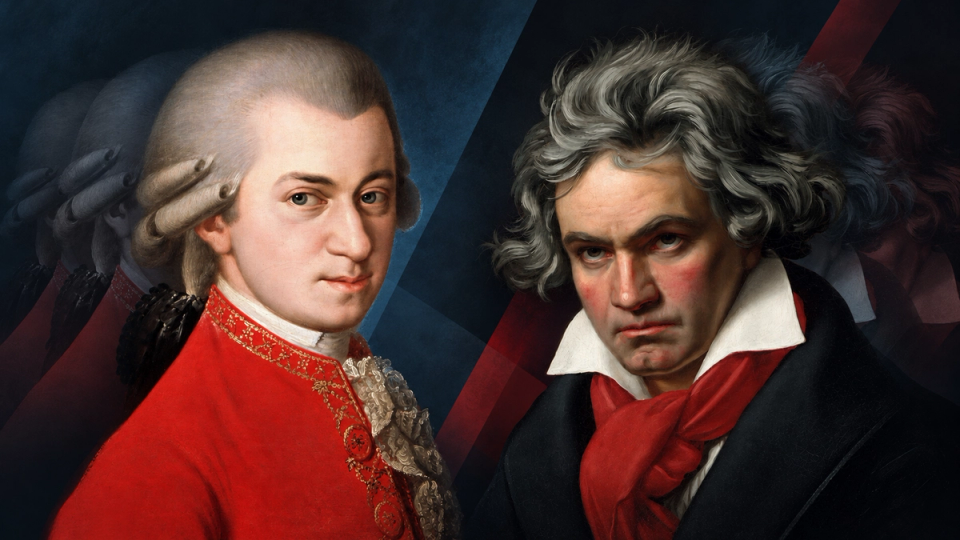
A teenage pianist, a dazzling improvisation and a prediction of greatness: the story of Mozart and Beethoven’s meeting has captivated generations. But where did it come from, and what can we discover behind it?
The story is almost too good to resist. A teenage Beethoven arrives in Vienna, plays for Mozart and receives a polite response. Then he asks for a theme to improvise on. The music changes Mozart’s mind. Turning to the people nearby, the older composer predicts that the world will one day hear of this young man.
It is the encounter we want music history to have preserved: one great composer recognising the next.
But did Mozart and Beethoven actually meet?
To follow the story, we need to begin with the journey: what brought Beethoven to Vienna, where Mozart was that winter, and how the celebrated audition found its way into print.
And there is another question behind the encounter. Before Beethoven became Beethoven, what might Mozart have known about this young musician from Bonn?
Vienna in 1787: where their paths could cross
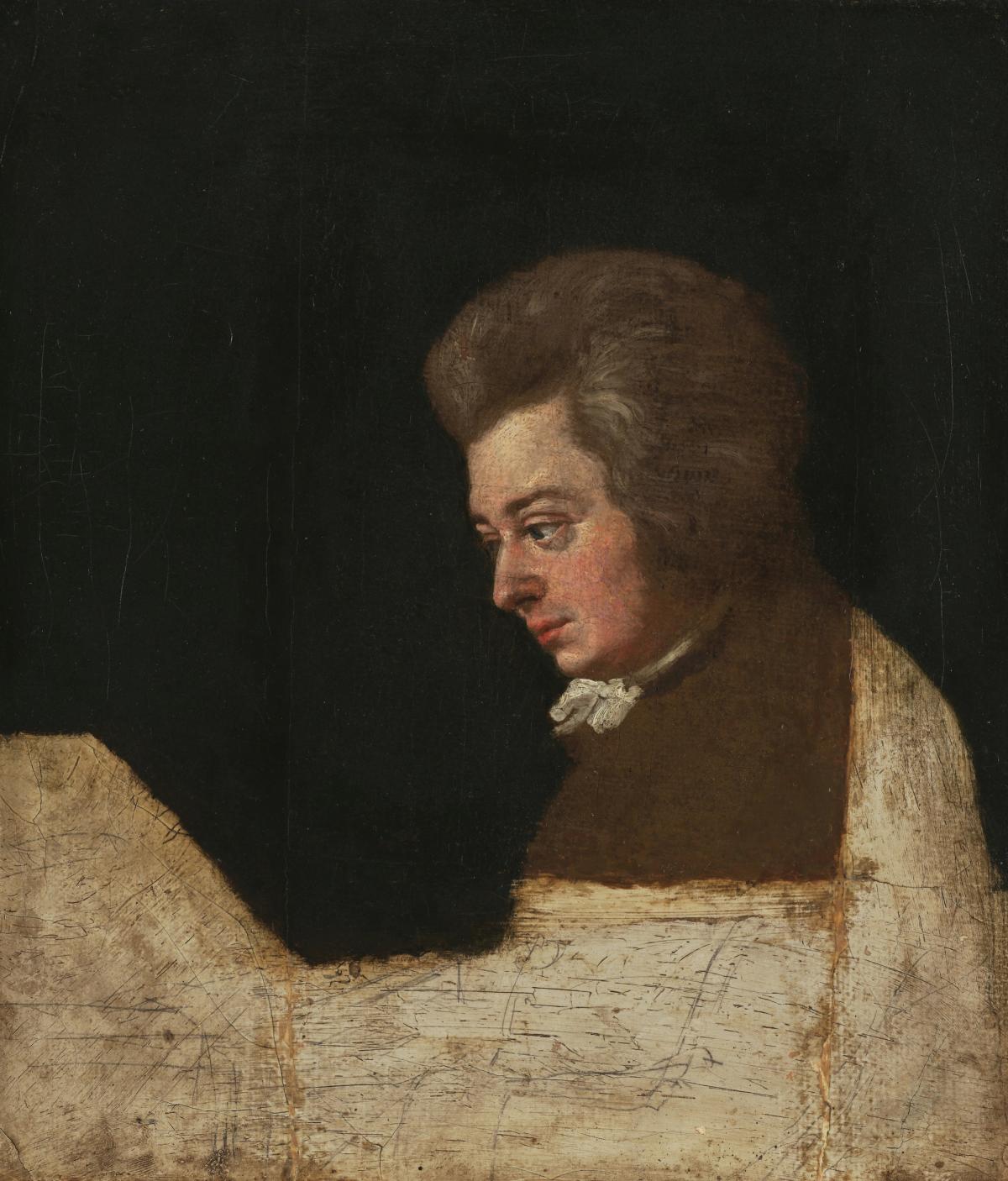
Beethoven was sixteen during his 1787 visit to Vienna. Mozart turned thirty-one that January. The younger musician came from Bonn, where he was already working in the electoral court’s musical establishment; the older was an established composer and pianist whose music travelled far beyond the city. [1]
The chronology matters because they were not necessarily in Vienna throughout the same period.
Beethoven-Haus places Beethoven’s journey at the end of 1786 and his stay in Vienna within the period from January to April 1787. Mozart, meanwhile, spent much of January and early February in Prague, where The Marriage of Figaro had become a sensation. He left Prague on 8 February and probably reached Vienna several days later; the exact return date is unknown. [1][2]
There was therefore an opportunity for their paths to cross. Mozart’s Prague visit does not rule a meeting out.
With the two musicians within reach of each other, the setting for the famous story begins to take shape. The next question is how we came to know the story at all.
Where did Mozart’s famous prediction come from?
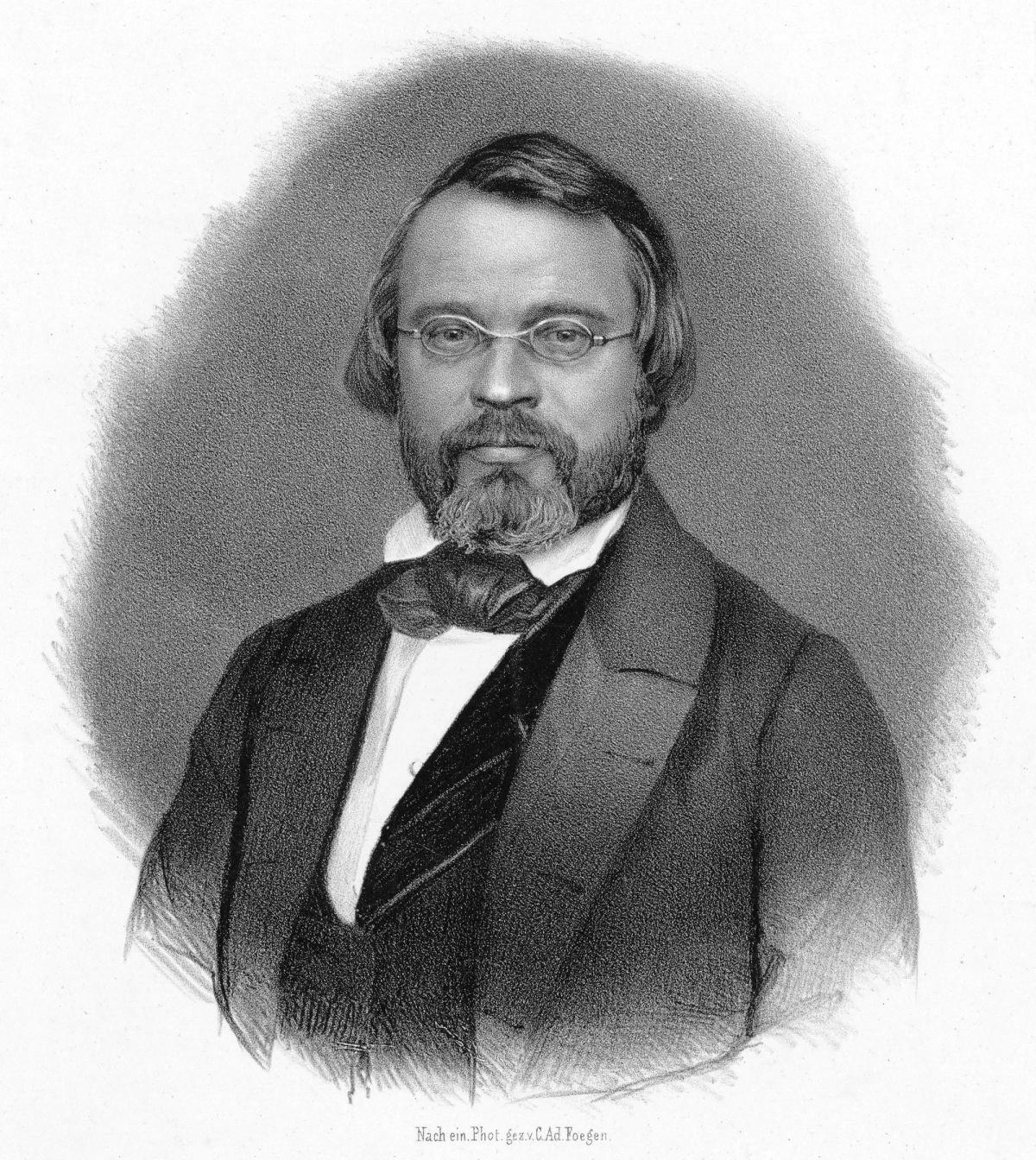
The best-known version of the audition appears in Otto Jahn’s nineteenth-century biography of Mozart. Jahn describes Beethoven playing a piece that Mozart takes to be a prepared showpiece. Beethoven then asks for an improvisation theme, captures Mozart’s attention and prompts the famous prediction. [3]
In the English translation of Jahn’s account, Mozart’s supposed words are:
“Mark that young man; he will make himself a name in the world!” [3]
Those are words attributed to Mozart in a later biography. They are not a verified quotation from Mozart himself.
Jahn’s source note is revealing. He says that the account was communicated to him in Vienna “on good authority,” but he does not identify an eyewitness to the scene. His biography began appearing in 1856, almost seventy years after Beethoven’s visit. Jahn, born in 1813, could not have witnessed the encounter. [3][4]
The story’s appeal is obvious. It turns Beethoven’s eventual greatness into something Mozart could hear in advance. It also gives us a satisfying moment of recognition between two composers whose names have become inseparable from the history of classical music.
Its appeal does not make it false. Oral tradition can preserve real events. But an unnamed source, a long interval and a beautifully shaped anecdote cannot provide the certainty of a contemporary letter.
Jahn’s text shows that the story circulated in nineteenth-century Vienna. It does not establish that the audition happened exactly as described, or that Mozart uttered those precise words.
What we lack is the next step: a letter describing an introduction, a dated recollection written in 1787, or a teaching record that places Beethoven at Mozart’s keyboard. The journey is evidence of Beethoven’s presence in Vienna. It is not, by itself, evidence of a visit to Mozart’s home. Beethoven-Haus Bonn describes a possible meeting as undocumented. [1]
The same caution applies to lessons. Beethoven-Haus describes the journey as an attempt to study with Mozart, but an intention is not proof that instruction took place. We cannot turn that hoped-for relationship into a documented apprenticeship. [1]
Had Mozart already heard of Beethoven?

It is easy to imagine Beethoven as an entirely unknown boy knocking on the door of a famous composer. The records from Bonn complicate that picture.
In March 1778, his father Johann presented him at a public concert in Cologne. The announcement advertised a six-year-old pianist, although Beethoven was actually seven. His father was trying to launch a child prodigy. The incorrect age is often treated as a calculated attempt to make him seem more extraordinary, but Beethoven-Haus notes that the family appears to have been uncertain about his age: other Bonn documents get it wrong too. [5]
By 1782, Beethoven had music in print: nine piano variations on a march by Ernst Christoph Dressler, WoO 63. Three early piano sonatas, WoO 47, followed in 1783. He was a published composer several years before travelling to Vienna. [5][6]
Then came an especially striking public endorsement. In a report published in Cramer’s Magazin der Musik on 2 March 1783, Beethoven’s teacher Christian Gottlob Neefe presented the young musician as a promising talent and suggested that, if he continued to develop, he would become a second Mozart. [6]
The distinction is crucial: this was Neefe’s opinion of Beethoven, not Mozart’s.
Mozart could conceivably have encountered Beethoven’s name, a printed work or that report. The information existed and could circulate. But we have no evidence that Mozart read Neefe’s assessment, saw the early publications or received an introduction to their composer.
“Mozart had never heard of Beethoven” would therefore be too strong. So would “Mozart already knew about Beethoven.” What Mozart actually knew remains undocumented.
Did Beethoven hear Mozart play?
There is an intriguing possibility here, but it comes through another chain of recollection.
Beethoven’s pupil Carl Czerny later passed on a comment attributed to Beethoven about Mozart’s playing. In a letter to Jahn in 1852, he described Beethoven’s assessment of a delicate but somewhat disjointed manner of playing, without legato. Legato means joining notes smoothly; the reported remark was a criticism rather than an uncomplicated tribute. [7]
Czerny could not have witnessed the 1787 visit. He was born in 1791. The evidence runs from Beethoven to Czerny to Jahn, with the written record arriving much later. [7]
Nor do the later reports fit neatly together. Jahn’s own note cites Ferdinand Ries for the claim that Beethoven received a few lessons from Mozart but never heard him play. That sits awkwardly beside Czerny’s recollection. The disagreement is another reason to resist turning these accounts into a single, confident narrative. [3]
If the recollection faithfully preserves something Beethoven said about a performance he heard, his first Vienna visit would offer a plausible setting. But the report is not a dated account of that performance. Nor does hearing a musician necessarily mean meeting him: an audience member can listen without ever being introduced.
That difference keeps the evidence pointed in the right direction. A recollection of Beethoven hearing Mozart would tell us something about Beethoven’s experience. It would not show that Mozart noticed Beethoven or heard him play.
Beethoven did not need a meeting to learn from Mozart
The strongest connection between them is not an anecdote. It is music.
Beethoven’s three piano quartets, WoO 36, written in 1785, show close relationships with Mozart’s violin sonatas. Leonardo Miucci’s study identifies models in K. 296, K. 379 and K. 380. The parallels range from keyboard figures and thematic ideas to the larger design of movements. [8]
This places Mozart’s musical example in Beethoven’s formative years in Bonn, before the Vienna journey. It does not establish exactly how Beethoven first encountered each score, but it makes the essential point tangible: Mozart’s influence did not depend on a personal introduction.
Printed music could cross the distance that separated the two men. So could teachers, performers and the tastes of patrons. Beethoven could study how Mozart built a movement without ever sitting beside him.
The relationship continued after Mozart’s death in December 1791. Beethoven’s variations for piano and violin on “Se vuol ballare” from The Marriage of Figaro, WoO 40, were published in 1793 and dedicated to Eleonore von Breuning. Here Mozart’s music is not simply a distant ideal: it is the material of a new Beethoven composition. [9]
That is a documented musical conversation, even if the conversation between the two men remains uncertain.
The Mozart prophecy we really do have

There is another prediction about Beethoven and Mozart, and this one survives in a dated document.
On 29 October 1792, as Beethoven prepared to leave Bonn for Vienna to study with Haydn, Count Ferdinand Waldstein wrote in his farewell album. Mozart had been dead for less than a year. Waldstein hoped that Beethoven would receive “Mozart’s spirit from Haydn’s hands.” [10]
The wording is symbolic, not a report of a meeting. It presents Beethoven’s future as an inheritance: Haydn would help him carry forward the artistic spirit of Mozart.
It also shows how firmly Mozart occupied the imagination of Beethoven’s own circle. Neefe had compared the boy’s promise with Mozart in 1783. Nine years later, Waldstein framed the young man’s next stage around the same example. [6][10]
This is where the documentary contrast becomes especially clear. We possess Waldstein’s written wish for Beethoven’s future. We do not possess a comparable contemporary statement in which Mozart evaluates him.
The famous prediction usually put in Mozart’s mouth is the one we cannot authenticate. The prediction we can point to on paper belongs to someone else.
So, did Mozart and Beethoven meet?
If the question is whether we can confidently say yes, the answer is no. There is no known contemporary evidence that establishes a meeting.
If the question is whether a meeting was impossible, the answer is also no. Their lives overlapped, Beethoven travelled to Vienna, and the chronology leaves room for personal contact. Later accounts may preserve a real encounter, but they cannot tell us with certainty what happened in the room. [1][3]
Mozart may have heard of Beethoven. He may even have heard him play. We cannot currently demonstrate either claim through a contemporary Mozart source.
Beethoven’s side of the relationship is much easier to trace. Mozart was a model in his musical education, a presence in his early compositions and a name through which people around him understood his promise. [6][8][10]
Perhaps the two composers met. Perhaps the most famous scene in their shared story never happened. What survives does not let us choose with confidence.
The influence is documented. The meeting is not. And what Mozart thought of the young Beethoven remains a question history has not answered.
Sources
[1] Beethoven-Haus Bonn, Chronology: Beethoven in Bonn. Entries for 1782, 1784, 1786–87 and 1792. The 1786 entry explicitly describes a possible but undocumented meeting with Mozart between January and April 1787. Source.
[2] Dexter Edge, Mozart’s entry in Kronauer’s Stammbuch, 30 March 1787, Mozart: New Documents. Commentary on Mozart’s first Prague visit: departure on 8 February 1787 and probable arrival in Vienna three or four days later. Read alongside the 18 January 1787 document on Figaro’s Prague reception. Source. Additional source.
[3] Otto Jahn, Life of Mozart, translated by Pauline D. Townsend, vol. II (London: Novello, Ewer & Co., 1882). pp. 345–346, Beethoven’s reported visit; note 76 identifies only a Viennese account communicated ‘on good authority’ and cites the conflicting Ries report. Evidence for the later anecdotal tradition, not a contemporary record of the meeting. Source.
[4] University and State Library Bonn, Otto Jahn zum 210. Geburtstag (2023). Jahn’s birth in 1813 and the publication of his Mozart biography beginning in 1856. Source.
[5] Beethoven-Haus Bonn, Beethoven: A Life in Pictures, selected and captioned by Julia Ronge. Items 8 (1778 concert announcement and uncertainty over Beethoven’s age), 11 (Dressler variations), 14 (early sonatas), 16 (Neesen silhouette), 19 (Waldstein album entry). Source.
[6] Beethoven-Haus Bonn, Nine Variations on a March by Ernst Christoph Dressler, WoO 63. Work commentary by J. R.; first publication in 1782 and Neefe’s report in Cramer’s Magazin der Musik, 2 March 1783, including the prediction that Beethoven might become a second Mozart. Source.
[7] Richard Traeger, Texture and Playing Style in Classic Keyboard Music, Harpsichord & Fortepiano 16, no. 2 (Spring 2012), pp. 27–32. Opening discussion, p. 27: Czerny’s 1852 letter to Jahn and the comment attributed to Beethoven. Used as a scholarly discussion of the later transmission, not as a contemporary eyewitness account. Source.
[8] Leonardo Miucci, Beethoven’s Piano Quartets WoO 36: Conservatism and Evolution, pp. 156–175, DOI 10.26045/kp64-6180-008. Especially pp. 156–157 and 162–166: the Bonn context, Neefe, the 1785 quartets and models in Mozart’s violin sonatas K. 296, K. 379 and K. 380. Source.
[9] Beethoven-Haus Bonn, Variations on ‘Se vuol ballare’ from Mozart’s Le nozze di Figaro, WoO 40, original edition, Artaria, plate 437. Original printed edition; title page and dedication to Eleonore von Breuning. Read with A Life in Pictures, item 13, which dates the dedication to 1793. Source.
[10] Ferdinand Ernst von Waldstein, album entry for Ludwig van Beethoven, Bonn, 29 October 1792; Beethoven-Haus Bonn, B 130/b. Catalogue entry for the reproduced autograph. Full transcription and English translation in Beethoven-Haus, A Life in Pictures, item 19. Source. Additional source.
Image credits
Editorial composition: Mozart Portal. Source portraits: Barbara Krafft and Joseph Karl Stieler / Wikimedia Commons. Public domain. Image source. Second portrait source. Licence for source image. Public-domain status refers to the source portraits; this editorial composition was made for Mozart Portal.
Joseph Lange / Wikimedia Commons. Public domain. Mozart Museum, Salzburg. Image source. Licence for source image.
C. Ad. Foegen / Bibliothèque nationale de France, Gallica / Wikimedia Commons. Public domain. Image source. Licence for source image.
Becker brothers after Joseph Neesen; digitisation: Staatsbibliothek zu Berlin; retouched reproduction: ElioPrrl / Wikimedia Commons. Credited under CC BY-SA 4.0; original scan attributed under CC BY 4.0. Unmodified here. Image source. Licence for source image. Source scan licence. Commons page also declares Public Domain Mark, while structured metadata lists CC BY-SA 4.0 and the source scan is CC BY 4.0. Both attribution requirements are retained.
Ferdinand Ernst von Waldstein / Wikimedia Commons. Public domain. Historic facsimile reproduction. Image source. Licence for source image.