- Köchel Number
- K9 52 | K6 46c
- Genre
- Vocal Music
- Form
- Lieder
- Key
- A Major
- Date
- Summer 1768
- Place
- Vienna
- Age
- 12
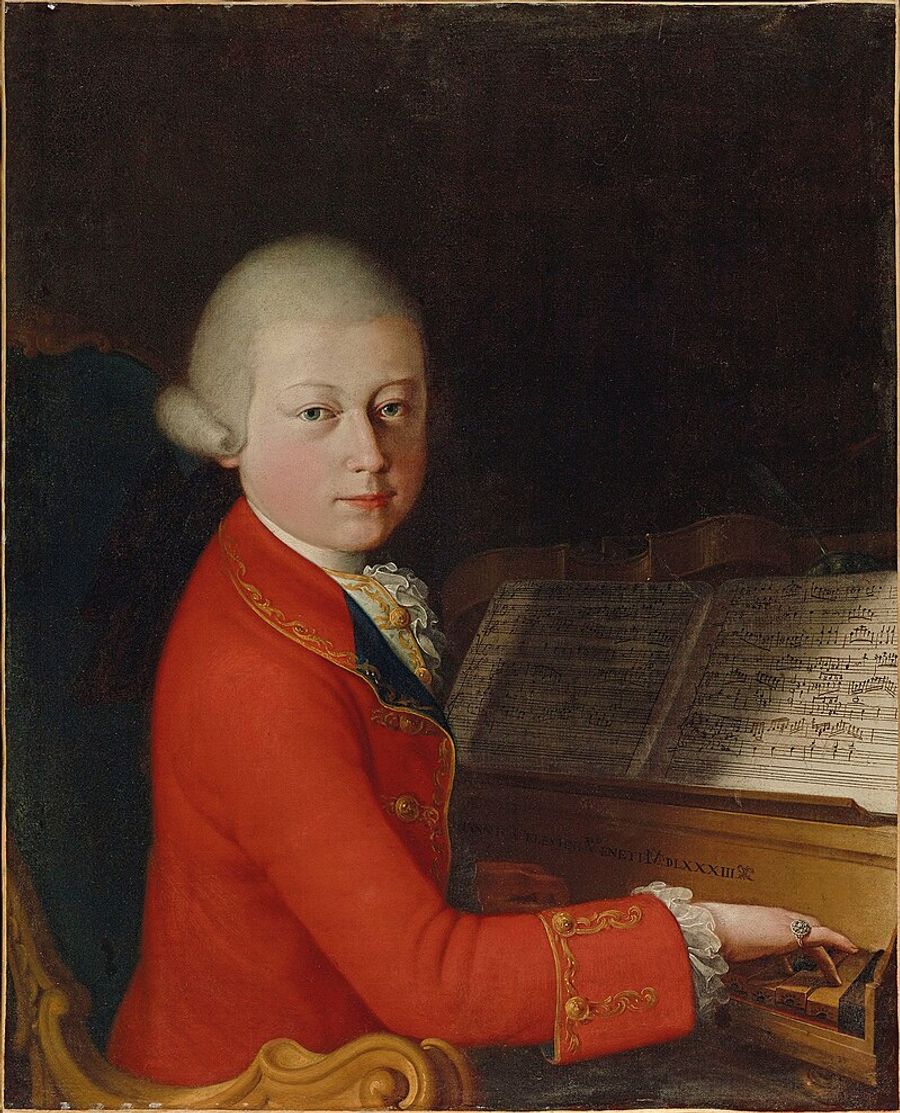
“Daphne, deine Rosenwangen” (K. 52) is a brief German Lied for voice and keyboard, associated with Mozart’s Vienna years of childhood travel and dated in the Köchel-Verzeichnis to January 1769 (Vienna) [1]. Closely connected with Bastien und Bastienne (K. 50), it preserves the atmosphere of Mozart’s early Singspiel writing in miniature [2].
Mozart's Life at the Time
In 1768–69, the twelve-year-old Wolfgang Amadeus Mozart was in Vienna, writing stage works and smaller occasional pieces while the family sought commissions and wider recognition at the imperial capital [1]. “Daphne, deine Rosenwangen” belongs to this milieu: a compact domestic song for voice with keyboard that could circulate easily among amateurs and in print.
Musical Character
The song is in A major and is transmitted as a Lied for solo voice with clavier accompaniment [1]. Standard catalog notes and later editions link it to Bastien und Bastienne—often described as a reduction or adaptation from that Singspiel—suggesting Mozart (or his circle) repurposed theatre melody into a strophic, singable salon format [2]. On the page, the keyboard writing largely supports the vocal line rather than competing with it: a clear sign of Mozart’s early instinct for vocal projection, text intelligibility, and graceful, uncomplicated phrase structure.
Sources
[1] International Mozarteum Foundation (Köchel-Verzeichnis): entry for KV 52 with dating, key, instrumentation, and publication/transmission notes.
[2] IMSLP work page for “Daphne, deine Rosenwangen,” K. 52/46c: key, scoring, and relation to *Bastien und Bastienne* (incl. reduction/adaptation notes).