- Köchel Number
- K9 53 | K6 47e
- Genre
- Vocal Music
- Form
- Lieder
- Key
- F Major
- Date
- November 1768
- Place
- Vienna
- Age
- 12
Mozart’s An die Freude (K. 53) is a compact German song in F major, written in Vienna in November 1768, when he was twelve. A strophic setting for voice and keyboard, it belongs to the earliest surviving layer of his Lieder—and it is entirely separate from Schiller’s later “Ode to Joy.”
Mozart's Life at the Time
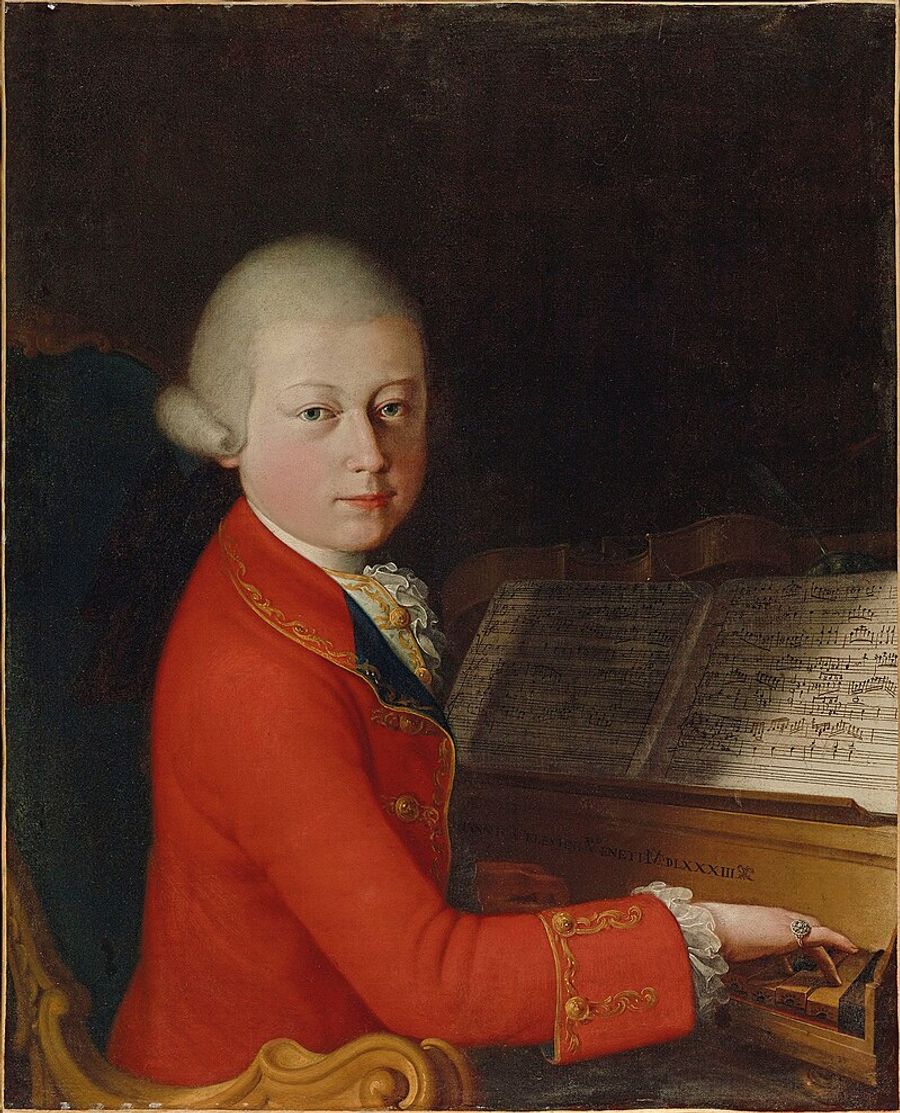
Wolfgang Amadé Mozart (1756–1791) composed An die Freude (K. 53) in Vienna in November 1768, during the family’s extended stay in the imperial capital, when he was twelve years old.[1] The work survives in sources close enough to Mozart’s lifetime to preserve the basic performing forces—solo voice with keyboard (clav)—suggesting a domestic, pedagogical, or salon use rather than a public occasion.[1]
Musical Character
The song is marked Mässig (“moderate”) and is laid out as a straightforward, singable strophic Lied: a single melodic design meant to carry multiple stanzas.[2] Mozart’s vocal line moves largely by step with small ornamental turns, while the keyboard part provides a clear harmonic scaffolding—often in simple, regular rhythms that keep the text moving.[2] The poem begins “Freude, Königin der Weisen” (“Joy, queen of the wise”), and the text is generally attributed to Johann Peter Uz (1720–1796), although older transmissions circulated without naming an author.[1][3] In miniature, the piece already shows Mozart aligning grammatical cadence with musical cadence—an early sign of the text-sensitivity that would later animate his mature songs and operatic arias.
Sources
[1] Köchel-Verzeichnis (International Mozarteum Foundation): KV 53 entry with dating (Vienna, 11/1768), key, instrumentation, and transmission notes.
[2] Score (PDF) via IMSLP: *An die Freude*, K. 53 (K. 47e), showing tempo marking (*Mässig*), vocal line and keyboard accompaniment, and strophic layout.
[3] IMSLP work page: general work data (K. 53/47e), key, year, forces, and attribution of text to Johann Peter Uz.