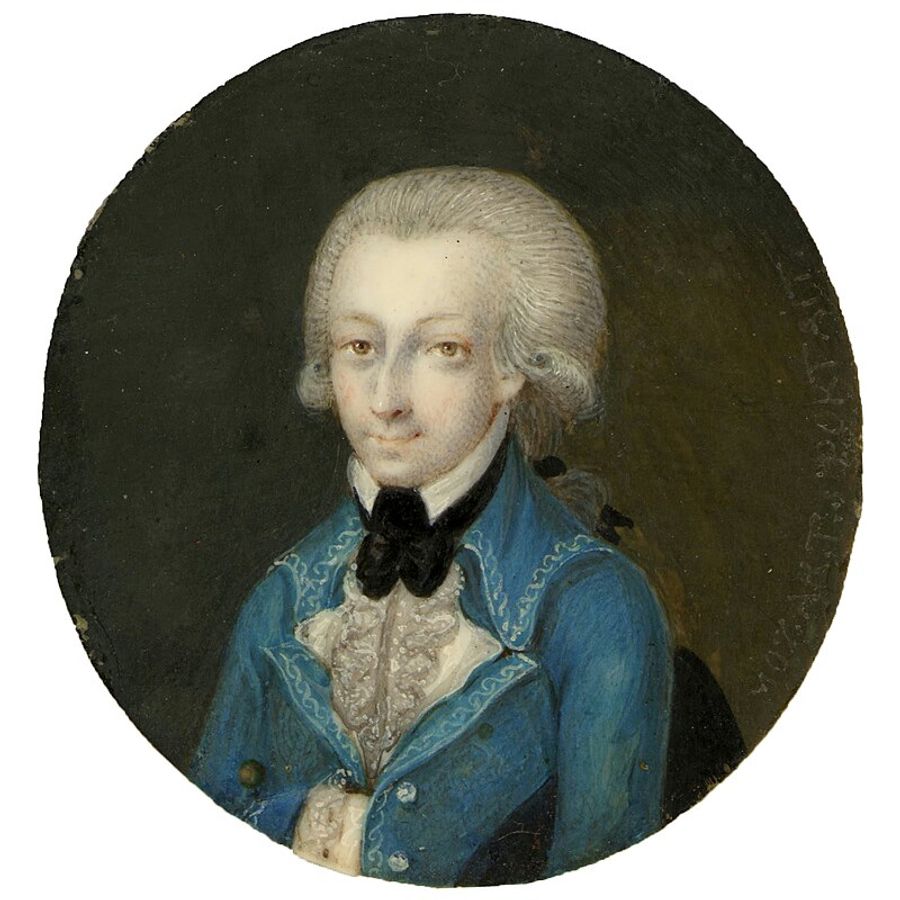
- Köchel Number
- K9 138 | K6 125c
- Genre
- Orchestral Music
- Form
- Serenades, Cassations & Divertimenti
- Key
- F Major
- Date
- Early 1772
- Place
- Salzburg
- Age
- 16
Mozart’s Divertimento in F major, K. 138 (1772) is the final work in the celebrated trio K. 136–138—three compact, string-only pieces from Salzburg that often sound less like background entertainment than like “mini-symphonies.” Written when Wolfgang Amadeus Mozart was just sixteen, it condenses symphonic energy, Italianate lyricism, and brisk theatrical timing into three movements that can be played either as chamber music or by a small string orchestra.
Background and Context
In early 1772, Wolfgang Amadeus Mozart (1756–1791) was back in Salzburg after extensive Italian travel with his father, Leopold Mozart. Those tours had immersed him in opera and in the streamlined, melody-forward idiom associated with the Italian sinfonia and the emerging Classical style. Salzburg, however, remained a court city with practical musical needs: liturgical music for the cathedral and archbishop, and plentiful secular music for social occasions.
The three works K. 136–138 were labeled Divertimento in Mozart’s autograph and dated “Salisburgo 1772,” yet they are unusual divertimenti: concise, three-movement structures without minuets, and with an unmistakably symphonic profile—especially in their outer movements.[1] Because of this, they have long been nicknamed the “Salzburg Symphonies,” an informal tag that hints at their double identity as cassation/divertimento music and as small-scale symphonies for strings.
K. 138, the F-major member of the set, is sometimes treated as the most extrovert and “public” of the three—music that can fill a room (or an outdoor courtyard) with a bright, buoyant sonority while still repaying close listening for its tight motivic work and crisp pacing.
Composition and Premiere
Mozart composed Divertimento in F major, K. 138 in Salzburg in 1772, at the age of sixteen.[1][2] (The Köchel catalogue groups K. 136–138 together and preserves Mozart’s own Salzburg dating for the set.)
No definitive premiere is documented. This is typical for functional court music of the period: such pieces could be used flexibly—played by a quartet in private, by a small string band in a noble household, or adapted to whatever forces were available. Modern performance tradition reflects that flexibility, presenting K. 138 either as chamber music or as repertoire for string orchestra.[1]
Instrumentation
The scoring is fundamentally a string quartet texture—readily expandable to string orchestra:
- Strings: 2 violins, viola, cello (often with double bass reinforcing the bass line in orchestral performance)
IMSLP catalogs the work’s core instrumentation as 2 violins, viola, and cello, reflecting the quartet-origin view that coexists with the “string orchestra” tradition.[3])
This lean scoring is part of the divertimento’s appeal: without winds or timpani to supply coloristic contrast, Mozart creates variety through register, articulation, dynamic shading, and quick alternation between tutti-like unisons and more conversational passagework.
Form and Musical Character
K. 138 follows a fast–slow–fast plan—three movements that feel like a compressed symphony.
- I. Allegro (F major)
- II. Andante (C major)
- III. Presto (F major)[4]
I. Allegro
The opening is bright and forward-moving, with a confident, public-facing tone—exactly the kind of “good weather” F-major character associated with many 18th-century orchestral openings. Yet what makes the movement distinctive is its economy. Rather than luxuriating in long orchestral paragraphs, Mozart tends to present a gesture, turn it, answer it, and move on. The effect is closer to the theater than to the ballroom: quick cues, clean transitions, and an ear for timing.
Listeners may also notice how Mozart writes “bigger” than the forces might suggest. Even in a four-part texture, he implies orchestral weight by doubling lines at the octave, pushing the first violin into a higher register for brilliance, and using emphatic rhythmic profiles that read clearly in a larger space.
II. Andante
The slow movement, in the dominant key of C major, shifts to a more vocal, Italianate lyricism—music that seems to “sing” even without text. The writing often favors a clear melodic thread in the upper strings supported by unobtrusive accompaniment figures below, a texture reminiscent of operatic aria practice and the slow movements of contemporary sinfonias.
What deserves attention here is Mozart’s restraint. He does not thicken the texture for sentimentality; instead, he sustains interest through small inflections—cadential delays, gentle suspensions (dissonances resolving by step), and subtle changes in voicing. In performance, this movement can sound like an intimate string serenade placed at the center of a miniature symphony.
III. Presto
The finale is quicksilver and concise, with a sense of witty propulsion. Its brisk tempo and tight phrase-structure make it feel like a closing curtain: the music doesn’t merely end, it exits. In that sense, K. 138 points forward to Mozart’s mature gift for finales—movements that combine velocity with clarity, and exuberance with formal control.
In a broader 1770s context, this kind of finale also reflects the period’s taste for energetic closing movements that balance “learned” contrapuntal display with immediate audience appeal. Mozart achieves sparkle not through complexity for its own sake, but through the nimble deployment of simple materials.
Reception and Legacy
Although K. 138 is not as heavily discussed as Mozart’s late symphonies, it has remained a staple for string ensembles precisely because it operates on multiple levels: it can function as light occasion music, but it is also a sharply made Classical design in miniature. Modern editions continue to emphasize the set’s ambiguous identity—divertimenti by title, but often approached as compact “symphonies” for strings.[1]
For listeners exploring Mozart’s development, K. 138 offers a particularly instructive snapshot. At sixteen, Mozart could already write music that sounds effortless while being carefully proportioned—music that travels well from salon to concert hall. Its distinctive virtue is not grand ambition, but a kind of youthful mastery: the ability to make a small ensemble sound orchestral, and to make a brief work feel complete.
Sheet Music
Download and print sheet music for Divertimento in F major, “Salzburg Symphony No. 3” (K. 138) from Virtual Sheet Music®.
Sources
[1] G. Henle Verlag: critical/practical overview of the “Salzburger Divertimenti” K. 136–138 (dating, context, genre).
[2] Köchel-Verzeichnis (Mozarteum): catalogue context for the Salzburg divertimenti (K. 136–138) and Salzburg dating (1772).
[3] IMSLP work page for Divertimento in F major, K. 138/125c: basic work data and core instrumentation listing.
[4] Apple Music Classical album metadata confirming the standard three-movement layout (Allegro–Andante–Presto).