- Köchel Number
- K9 139 | K6 47a
- Genre
- Sacred Music
- Form
- Masses & Requiem
- Key
- C Minor
- Date
- 1768–mid-1769
- Place
- Vienna
- Age
- 12
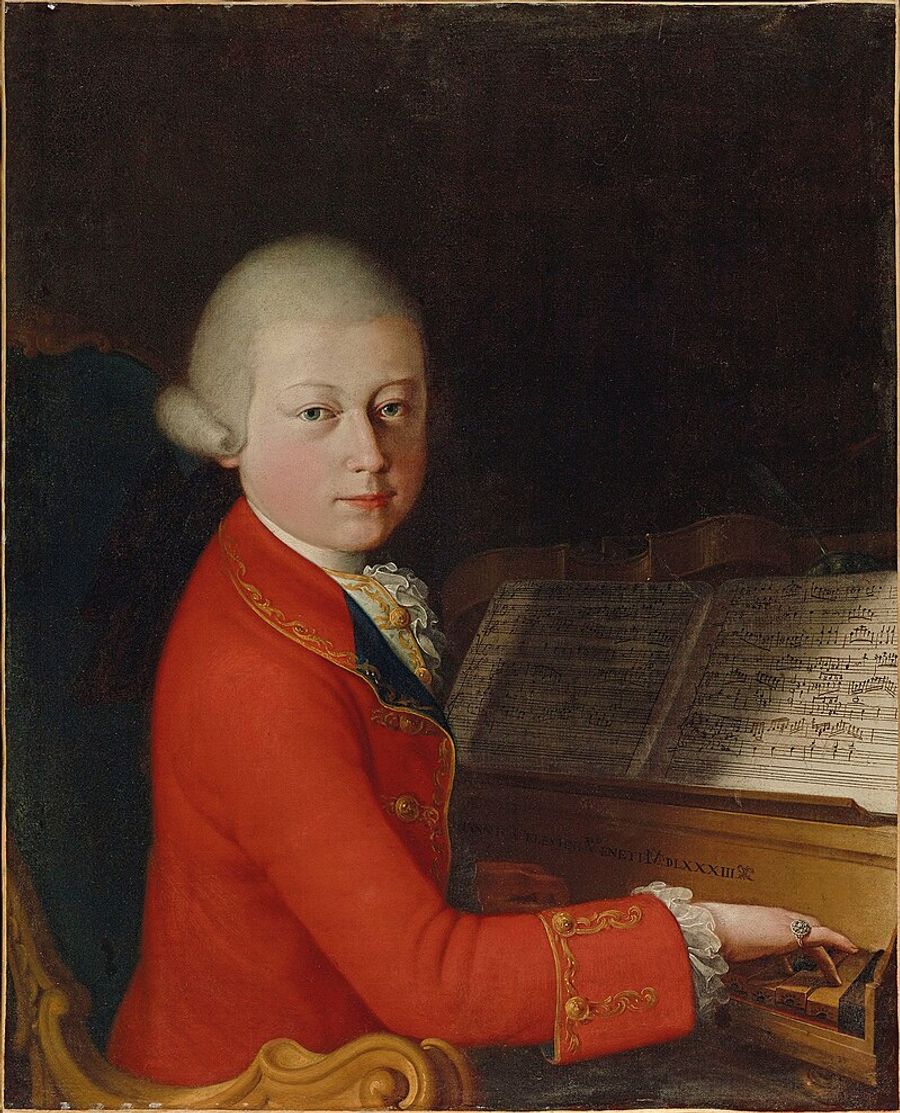
Mozart’s Missa solemnis in C minor, “Waisenhausmesse” (K. 139), was written in Vienna in 1768, when the composer was only twelve. Created for a high-profile church consecration, it is an early sacred work of striking public ambition—already testing the boundaries between liturgy and theatrical expression.
Mozart's Life at the Time
In 1768 Wolfgang Amadeus Mozart (1756–1791) was living with his family in Vienna, a city whose musical life offered both opportunity and intense competition. At twelve, he was already known at court as a prodigy, and Vienna’s ceremonial culture—where major religious feasts and civic-religious events demanded large, brilliant music—provided the ideal stage for a young composer eager to prove he could handle “adult” public genres.
The Waisenhausmesse belongs to a crucial Viennese moment: it is not a Salzburg missa brevis designed for routine services, but a festive, representative Mass intended to impress. Contemporary accounts link the first performance with the consecration of the orphanage church (the Waisenhauskirche) on the Rennweg, an event attended by the imperial court, including Empress Maria Theresa, and associated with Mozart’s public success as conductor and composer [1] [2].
Composition and Manuscript
The work is securely attributed to Mozart and survives complete. It is generally dated to 1768 in Vienna and is associated with the consecration service on 7 December 1768 [2] [3]. Older catalogues sometimes list it under alternate Köchel identifiers (notably K. 47a), reflecting earlier uncertainties in Mozart cataloguing rather than any doubt about authorship [3].
Scored on a missa solemnis scale—soloists, choir, and an orchestra with prominent brass—the Mass is unusually expansive for a twelve-year-old. A modern publisher’s synopsis aptly stresses its ceremonial character: this is likely Mozart’s first full contribution to the festive missa solemnis type “with brass,” cultivated for especially representative occasions, and its duration (around forty minutes) confirms the work’s intention as a public statement rather than a liturgical miniature [4].
Instrumentation (typical scoring) [4] [5]
- Vocal: SATB soloists; SATB choir
- Winds: 2 oboes
- Brass: trumpets (including high clarino writing); 3 trombones (colla parte, reinforcing choral lines)
- Percussion: timpani
- Strings: violins I & II, violas
- Continuo: basso continuo
Musical Character
The Waisenhausmesse follows the Ordinary in six large panels—Kyrie, Gloria, Credo, Sanctus, Benedictus, Agnus Dei—but its most memorable feature is how boldly Mozart dramatizes the text. Even within a church setting, the young composer reaches for vivid contrasts of tempo, texture, and affect: solemn introductions yield to quick, bright choral writing; minor-mode gravity is counterweighted by festive C-major brilliance; and the brass-and-timpani sonority lends the whole structure a ceremonial “public” profile [3].
Carus’s editorial overview highlights something especially revealing for Mozart’s development: in movements such as the Kyrie and Agnus Dei, the music can draw on overtly theatrical expressive strategies—an early sign of the composer’s instinct to treat sacred text not only as ritual formula but as drama, with sharply characterized sections and heightened rhetoric [4].
Why does this juvenilium deserve attention today? Precisely because it complicates the usual narrative that Mozart’s early sacred music is merely “practice” for later masterpieces. K. 139 is already a work of architectural reach: long-spanned paragraphs, ceremonial orchestration, and a confident sense of public pacing. Heard alongside the later unfinished Great Mass in C minor, K. 427, it suggests continuity rather than rupture—Mozart’s lifelong fascination with C minor as a heightened expressive space, and his recurring impulse to fuse liturgical tradition with the theatrical instincts of an operatic mind, present astonishingly early here.
Sheet Music
Download and print sheet music for Missa solemnis in C minor, “Waisenhaus” (K. 139) from Virtual Sheet Music®.
Sources
[1] Bärenreiter (UK), preface PDF for “Waisenhausmesse” (includes first-performance date and court attendance context)
[2] Köchel-Verzeichnis (Internationale Stiftung Mozarteum), work entry for K. 139 “Waisenhaus-Messe”
[3] Wikipedia: Mass in C minor, K. 139 “Waisenhaus” (date, occasion, outline, and commonly cited scoring)
[4] Carus-Verlag work page (scoring details, duration estimate, and editorial overview of style/character)
[5] IMSLP: Missa solemnis in C minor, K. 139 (access to scores and publication/edition metadata)