- Köchel Number
- K9 137 | K6 125b
- Genre
- Orchestral Music
- Form
- Serenades, Cassations & Divertimenti
- Key
- B Flat Major
- Date
- Early 1772
- Place
- Salzburg
- Age
- 16
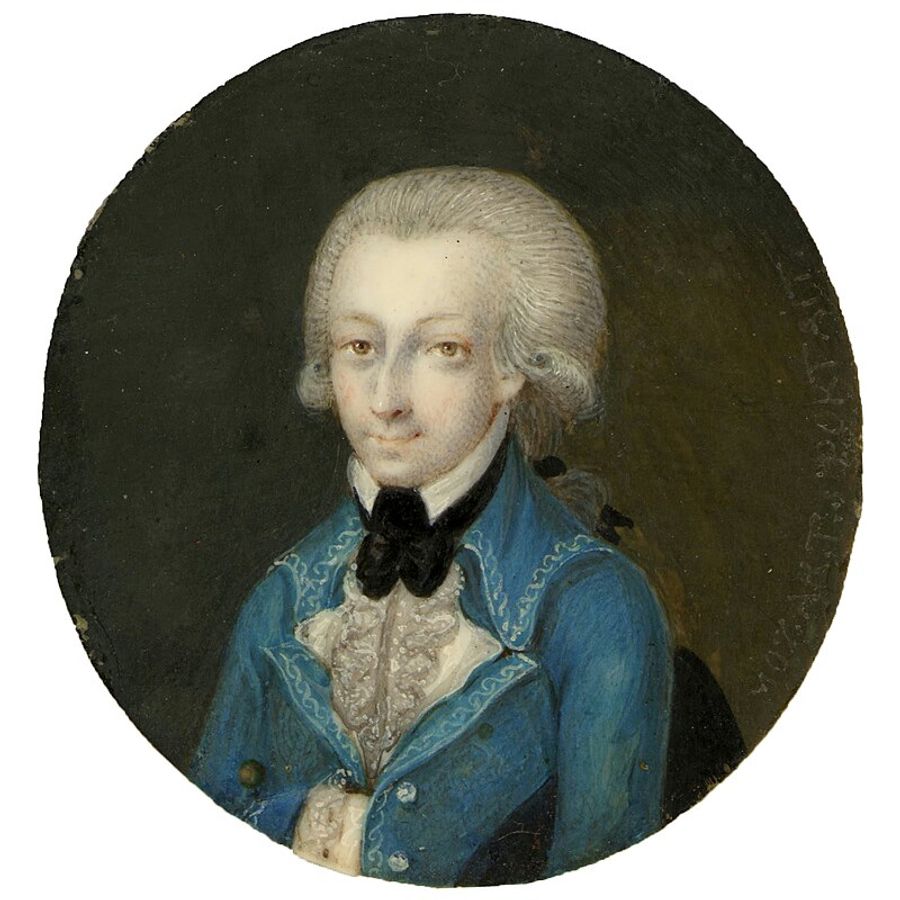
Mozart’s Divertimento in B-flat major, K. 137 (1772) belongs to a Salzburg set of three compact, symphony-like works (K. 136–138), written when the composer was sixteen. Often nicknamed “Salzburg Symphony No. 2,” it compresses the rhetoric of the Italianate three-movement symphony into music that also works persuasively as refined string ensemble writing.
Background and Context
In early 1772 Wolfgang Amadeus Mozart (1756–1791) was back in Salzburg after his second Italian journey and before the third—a moment when his musical imagination was saturated with Italian opera and the sinfonia style, yet his working life remained tied to Salzburg’s courtly routines and practical performance forces. The three Salzburg divertimenti K. 136–138 are products of that in-between world: light, fluent, and public-facing, but crafted with an ambition that exceeds mere “background music.” They occupy a telling position in Mozart’s early orchestral output, poised between the travel-season symphony and the domestic ensemble piece.
K. 137 in particular deserves attention because it demonstrates how quickly Mozart could speak in a mature orchestral dialect—balanced phrasing, quick harmonic wit, and sharply profiled contrasts—without relying on grand dimensions. Its sobriety at the opening (an Andante, not a showy Allegro) also hints at a teenage composer already interested in character and pacing, not just brilliance.
Composition and Premiere
K. 137 was composed in Salzburg in 1772 and is commonly identified in modern catalogues as a Divertimento in B♭ (also numbered K. 125b in earlier Köchel cataloguing). It is frequently grouped with K. 136 and K. 138 as a coherent set from the same Salzburg period [1]. The popular sobriquet “Salzburg Symphony No. 2” reflects the work’s three-movement, symphonic profile rather than a fixed eighteenth-century genre label.
As with much Salzburg occasional music, a specific premiere date and occasion are not securely documented in the standard public reference literature; the work’s early purpose is generally inferred from its scoring and its symphonic layout. Modern commentators often note that these pieces can plausibly serve either as small-orchestra repertoire or as chamber music, depending on forces available [2].
Instrumentation
K. 137 is transmitted as a string work—its most common modern performance medium—and is widely described in reference listings as “for strings” [3]. The scoring in sources and performance traditions can vary in practice (for example, the degree to which bass lines are reinforced), but the core disposition is straightforward.
- Strings: violin I, violin II, viola, violoncello, double bass (often with bass reinforcement ad libitum in larger settings)
This lean scoring is part of the work’s appeal: Mozart obtains distinctly “orchestral” clarity—especially in tuttis and cadential punctuation—without any winds to add color. The result is a bright, transparent sonority that aligns the piece with both early symphonies and the emerging Salzburg taste for elegant string writing.
Form and Musical Character
K. 137 follows the Italianate three-movement pattern (slow–fast–fast), a format closely associated with the opera overture and the mid-eighteenth-century symphony. Its movements are typically listed as follows [4]:
- I. Andante (B♭ major)
- II. Allegro di molto (B♭ major)
- III. Allegro assai (B♭ major)
I. Andante
Beginning with an Andante is a subtle act of dramaturgy. Rather than a ceremonial “curtain-raiser,” Mozart offers a poised, singing surface that invites attentive listening. The movement’s most striking quality is its controlled elegance: phrases unfold with conversational symmetry, yet Mozart repeatedly finds small, telling inflections—cadences that arrive with a half-smile, inner voices that briefly cloud the harmony, and bass motion that keeps the music from becoming merely polite.
In broader formal terms, the movement behaves like a compact sonata-allegro design adapted to a slow tempo (clear thematic contrast, a brief working-out, and a return that sounds inevitable rather than merely repeated). It is exactly the kind of movement that reveals Mozart’s early mastery of proportion: nothing is overstated, but nothing is generic.
II. Allegro di molto
The central Allegro di molto is the work’s kinetic release. Its quick tempo and crisp figuration suggest the overture world, but the writing is not simply “busy”; it is articulated for maximum clarity, with short motives that can be tossed between upper and lower strings. In performance, this movement often benefits from lean bowing and bright articulation, which bring out its rhythmic buoyancy.
What makes it distinctive within the genre is how confidently Mozart controls momentum: cadential points feel like structural pillars rather than pauses, and the harmonic rhythm (the rate of chord change) helps create the sense of breathless forward motion.
III. Allegro assai
The finale, Allegro assai, crowns the divertimento with a lucid, almost athletic directness. Its thematic material tends to be deliberately “plain” in profile—an advantage, because it allows Mozart to play games with sequencing and with the distribution of energy across the ensemble. The movement’s extreme clarity, noted by commentators on the set, is not mere simplicity; it is a kind of classical discipline, keeping textures clean so that form and gesture read instantly [5].
Taken as a whole, K. 137 shows the teenage Mozart thinking orchestrally even when writing for strings alone: he uses registral contrast (high violin brilliance against grounded bass), rhythmic unisons, and clean cadences to suggest the public voice of the symphony in miniature.
Reception and Legacy
K. 137 has never occupied the cultural pedestal of Mozart’s late symphonies, yet it has enjoyed a persistent performing life precisely because it satisfies multiple needs at once: it can open a concert with grace, sit comfortably in a chamber program, or serve as a stylish “classical” foil in mixed repertoire. Modern presentations regularly pair it with its companions K. 136 and K. 138, underlining the sense of a Salzburg triptych from 1772 [2].
The nickname “Salzburg Symphony No. 2” is best understood as a listening cue rather than a strict classification. Heard with symphonic ears, the work’s three-movement plan and its bright outer movements make complete sense. Heard as a divertimento, its pleasures lie in polish, balance, and the intimacy of string sonority. Either way, K. 137 offers a compelling snapshot of Mozart at sixteen: already fluent in international style, already alert to pacing and character, and already able to make “small forms” feel consequential.
Sheet Music
Download and print sheet music for Divertimento in B-flat major (“Salzburg Symphony No. 2”), K. 137 from Virtual Sheet Music®.
Sources
[1] Köchel Verzeichnis (Mozarteum): contextual notes for the Salzburg divertimenti set (K. 136–138) and genre background.
[2] Cleveland Orchestra program book (“Mozart in the Meadows”): discussion of K. 136–138 as early-1772 Salzburg works and their flexible ensemble identity.
[3] Köchel Verzeichnis (Mozarteum): identification of KV 137 as a divertimento in B-flat for strings (work listing context).
[4] IMSLP work page: movement list and basic reference data for Divertimento in B-flat major, K. 137/125b.
[5] Sin80 repertoire note: overview and descriptive commentary on K. 137 and the set’s symphonic character.