- Köchel Number
- K9 136 | K6 125a
- Genre
- Orchestral Music
- Form
- Serenades, Cassations & Divertimenti
- Key
- D Major
- Date
- Early 1772
- Place
- Salzburg
- Age
- 16
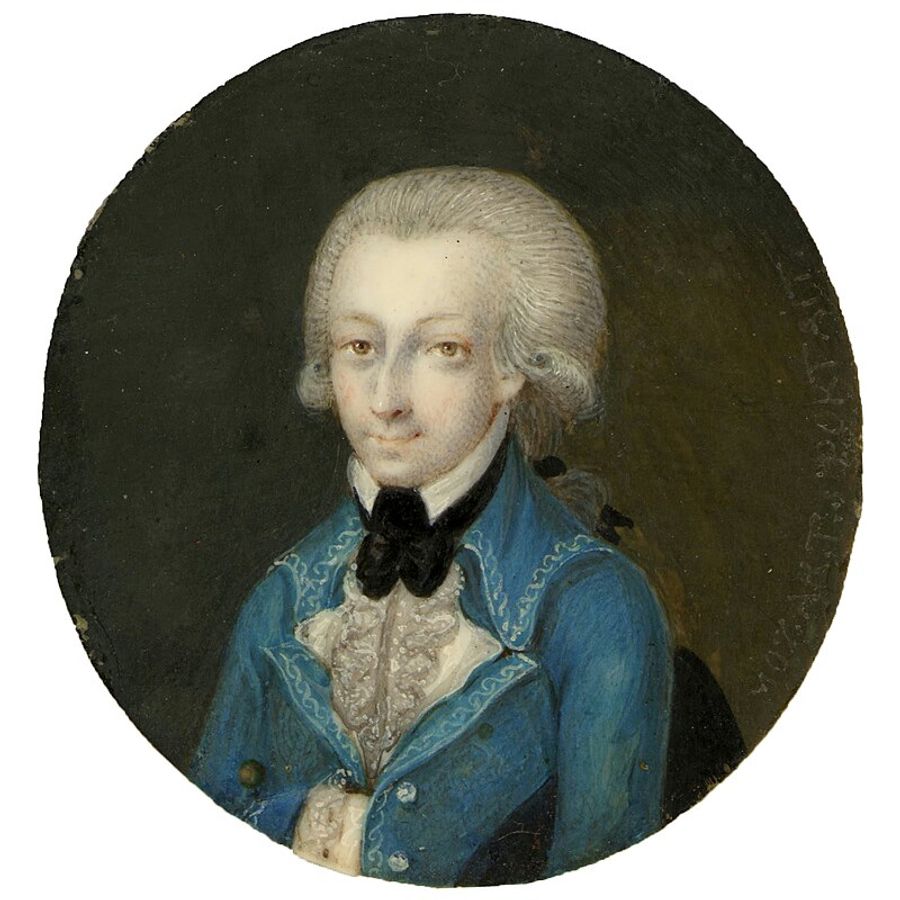
Mozart’s Divertimento in D major, K. 136 (1772) is the first of three tightly argued, string-only works (K. 136–138) often grouped—somewhat misleadingly—under the later nickname “Salzburg Symphonies.” Written in Salzburg when the composer was 16, it compresses the rhetoric of the Italian sinfonia into a brilliant, concerto-like conversation for strings.
Background and Context
In early 1772, Wolfgang Amadeus Mozart (1756–1791) was back in Salzburg, employed under Archbishop Sigismund von Schrattenbach and already balancing court duties with an increasingly international musical outlook shaped by his Italian journeys. The Divertimento in D major, K. 136 belongs to that Salzburg moment: music meant to be practical, gratifying, and playable by the forces at hand, yet also alert to the newest stylistic polish arriving from Italy.
K. 136 is the first of a triptych—K. 136 in D, K. 137 in B♭, and K. 138 in F—whose genre labels have long been fluid. They appear as divertimenti in later tradition, but their three-movement, fast–slow–fast layout points strongly to the contemporary Italian sinfonia model (essentially an opera-overture design transferred into concert life). That hybridity is part of their fascination: they can sound like “miniature symphonies” for strings, yet they speak with the intimacy and quick reflexes of chamber music.
A modern scholarly wrinkle is that Mozart’s autograph dating is unusually vague (“Salisburgo 1772”), and some editorial work has argued for more complicated chronology than the familiar “January–March 1772” narrative. Nonetheless, Salzburg in 1772 remains the work’s conventional placement and the core of its identity in the Köchel catalogue and performance tradition [1] [2].
Composition and Premiere
K. 136 is securely attributed and transmitted, and it survives as a complete work with a stable text in modern editions. Precise circumstances of commission are not documented; like much Salzburg outdoor and courtly entertainment music, it may simply have been written for immediate local use—music to be played by capable string players in a court or collegiate setting rather than destined for a single landmark occasion.
Because no premiere documentation is standardly cited for K. 136, it is safest to speak of intended function rather than a known first performance. What is clear is that the piece quickly proved adaptable: it works with one player to a part as chamber music, and it also thrives with doubled parts as a compact string-orchestra showpiece—one reason it has remained ubiquitous in the string repertoire [3].
Instrumentation
K. 136 is written for strings alone, and its sonority is part of its argument: without winds or timpani, Mozart relies on articulation, register, and bright D-major figuration to create “orchestral” impact.
Typical performance forces today:
- Strings: violins I & II, viola, violoncello, double bass (often doubling the cello line)
Historically and textually, the scoring sits on the border between quartet thinking and orchestral practice. Many performances treat it as “string orchestra music,” but its clarity and motivic economy often feel like chamber writing scaled outward—an effect listeners notice immediately in the first movement’s clean, athletic dialogue between upper and lower strings [3] [4].
Form and Musical Character
The work’s three movements form a classical arc—brisk opening, lyrical center, and a quicksilver finale—while keeping the musical surface continually “in motion.” What makes K. 136 distinctive among youthful serenade-type works is its compression: there is little filler, no dances (no minuets), and almost no purely “background” writing.
I. Allegro (D major)
The opening movement projects symphonic confidence without symphonic weight. Its thematic ideas are built from energetic, violin-led patterns that can be played with a concerto-like brilliance, yet Mozart keeps the texture transparent enough for inner voices to matter. In formal terms, the movement behaves like a focused sonata-allegro design (exposition, development, recapitulation), but its rhetoric is closer to the theater: quick cues, clean cadences, and a sense that every gesture must “speak” promptly.
II. Andante (A major)
The slow movement shifts to the dominant (A major), offering not tragedy but poise: sustained lines, balanced phrases, and harmonies that invite expressive shading. Here K. 136’s chamber-like identity becomes most apparent. With only strings, each change of color must come from bow stroke, voicing, and dynamics; the music rewards attentive ensemble playing rather than sheer volume.
III. Presto (D major)
The finale is a compact display of momentum—often described by performers as a perpetual-motion test of articulation. Its brightness is not merely “cheerful”: Mozart uses rapid figuration and tightly coordinated entries to create a feeling of delighted urgency. Crucially, the movement’s drive does not come at the expense of structure; cadences and phrase returns remain crisp, so the listener senses form even when the notes fly past.
Reception and Legacy
K. 136’s later nickname—“Salzburg Symphony No. 1”—captures something real (its symphonic poise and fast–slow–fast plan) while also slightly distorting the work’s original cultural niche. It is not a full four-movement symphony with winds and public concert ambition; it is closer to a refined Salzburg entertainment piece that happens to be engineered with striking tightness. In that sense, its durability is understandable: it is short, grateful to play, and immediately communicative.
Historically, the trio K. 136–138 has become a kind of gateway into Mozart’s teenage mastery: music that demonstrates how quickly he could absorb Italianate momentum and re-cast it with Salzburg clarity and impeccable string writing. For listeners who primarily know Mozart through later landmarks—Eine kleine Nachtmusik, the mature symphonies, the Viennese concertos—K. 136 deserves attention as an early example of his ability to make “functional” music feel inevitable. The work’s continuing life in conservatories and chamber-orchestra programs reflects precisely that quality: it teaches ensemble discipline while still sounding, in performance, like pure pleasure [3] [1].
Sheet Music
Download and print sheet music for Divertimento in D major (“Salzburg Symphony No. 1”), K. 136 from Virtual Sheet Music®.
Sources
[1] Mozarteum Foundation Köchel Catalogue entry for K. 136 (genre placement, key, basic work data; NMA linkage)
[2] Henle Blog (2021): discussion of the autograph dating ‘Salisburgo 1772’ and arguments about possible re-dating for K. 136–138
[3] The Cleveland Orchestra program note PDF (Peter Laki): overview of K. 136–138, function and scoring, and their atypical three-movement design among Mozart divertimentos
[4] Deer Valley Music Festival program note: accessible discussion of K. 136’s character and the ‘scaled-up quartet’ idea in performance