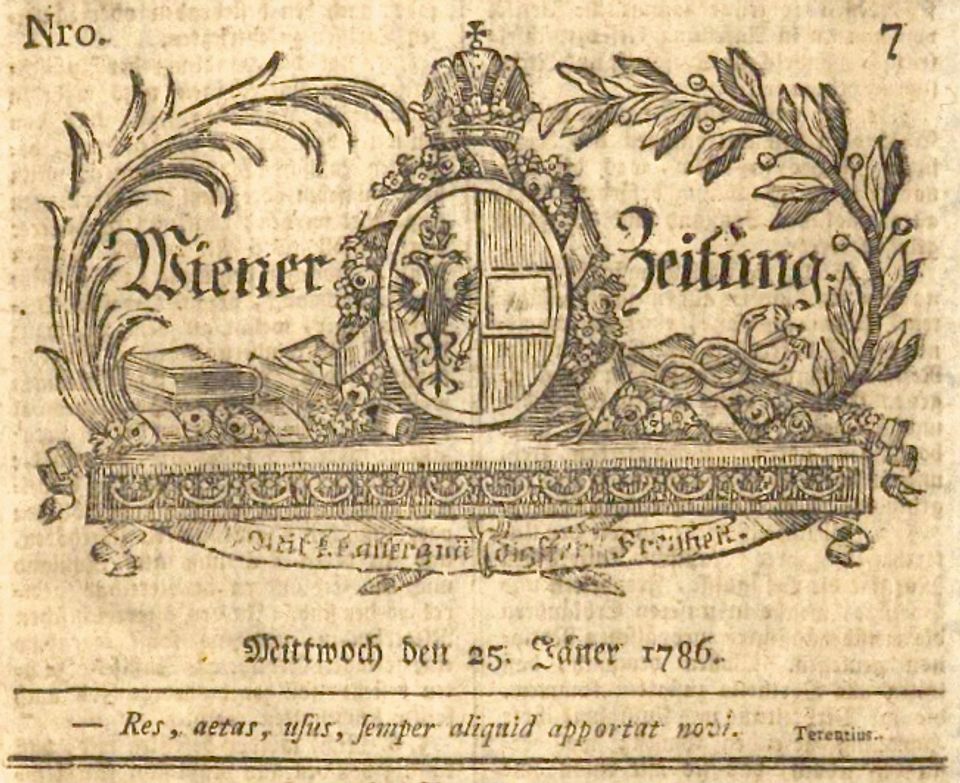
One autumn afternoon in 1785, Artaria & Co. advertised six new string quartets in the Wiener Zeitung. Mozart had been paid roughly a hundred ducats for them, in cash, and that was the end of the matter. Whatever the Viennese firm earned afterwards — on reprints, exports, decades of drawing-room performances across Europe — was Artaria's alone. That was the music business Mozart lived in, and for a decade he worked it with remarkable ingenuity before it finally broke him.
There were no royalties in the 1780s, no meaningful copyright, and no way to earn a second coin from a piece once the engraver had the plates. A composer ate by combining four things: commissions, performances, teaching, and the one-time sale of manuscripts or printing rights. Mozart, who arrived in Vienna in 1781 determined to live as a freelancer rather than a court servant, pursued all four at once.
The engine was his subscription concerts. Each Lent he rented a hall — the ballroom of the Trattnerhof in 1784, the Mehlgrube casino the following winter — sold seats by the series to aristocratic patrons, and appeared as soloist in a freshly written piano concerto. On 20 March 1784 he mailed his father the complete list of his subscribers: 174 names, "thirty more," he boasted, "than Richter and Fischer combined." During one five-week stretch that spring he played in twenty-two concerts. It is no coincidence that in February of the same year he opened the little ruled notebook now held at the British Library as the Verzeichnüss aller meiner Werke, a thematic catalogue of everything he wrote thereafter. He needed it to keep track.
Publication was the second stream. Artaria, his chief Viennese publisher from 1781 onwards, eventually brought out eighty-three first editions of his works.¹ Every one was an outright sale. Teaching filled the gaps: the piano concertos K. 449 and K. 453 were written for his gifted pupil Barbara Ployer, and in January 1782 Mozart told his father that three pupils earned him about eighteen ducats a month. He found the work tedious, and said so often.
Commissions, the oldest model, arrived unpredictably. The "Haffner" Symphony was thrown together in 1782 for the ennoblement of a Salzburg family friend; nine years later a grey stranger offered fifty ducats for a Requiem on behalf of Count Walsegg, who intended to pass it off as his own. Opera houses paid flat fees — 450 florins for Figaro, 200 ducats for La clemenza di Tito — and then the score, like everything else, belonged to someone else.
By the summer of 1788 the whole apparatus had failed him. Subscription lists went unsigned, the Turkish war emptied aristocratic purses, and Mozart began writing to his fellow Freemason Michael Puchberg. Roughly twenty-one of those letters survive, and Puchberg eventually advanced him about 1,415 florins in all.² "Great God!" Mozart wrote in July 1789. "I would not wish my worst enemy to be in my present position." Two and a half years later he was dead, owning almost none of the music the world would refuse to let go of.
Mozart Piano Sheet Music · Browse our Köchel catalogue · Mozart's Manuscripts: What His Handwriting Reveals
Sources
¹ Alexander Weinmann, *Vollständiges Verlagsverzeichnis Artaria & Comp.* (Vienna, 1952), the standard catalogue of the firm; figure repeated in the New Grove article "Artaria."
² Otto Erich Deutsch, *Mozart: A Documentary Biography* (London, 1965); see also Andrew Steptoe, "Mozart and Poverty," *Musical Times* 125 (1984), pp. 196–201.