- Köchel Number
- K9 631 | K6
- Genre
- Opera & Stage Music
- Form
- Arias, Scenes, Ensembles & Choirs
- Date
- 1765–1766
- Place
- London, The Hague
- Age
- 9
Mozart’s Arias for voice and orchestra (K. 631) refers to a now-lost group of vocal pieces associated with his grand tour years, dated to 1765–1766 in London and The Hague, when he was nine. No musical text survives, and the item’s exact contents—perhaps even its precise scope as a “set”—remain unclear.
Mozart’s Life at the Time
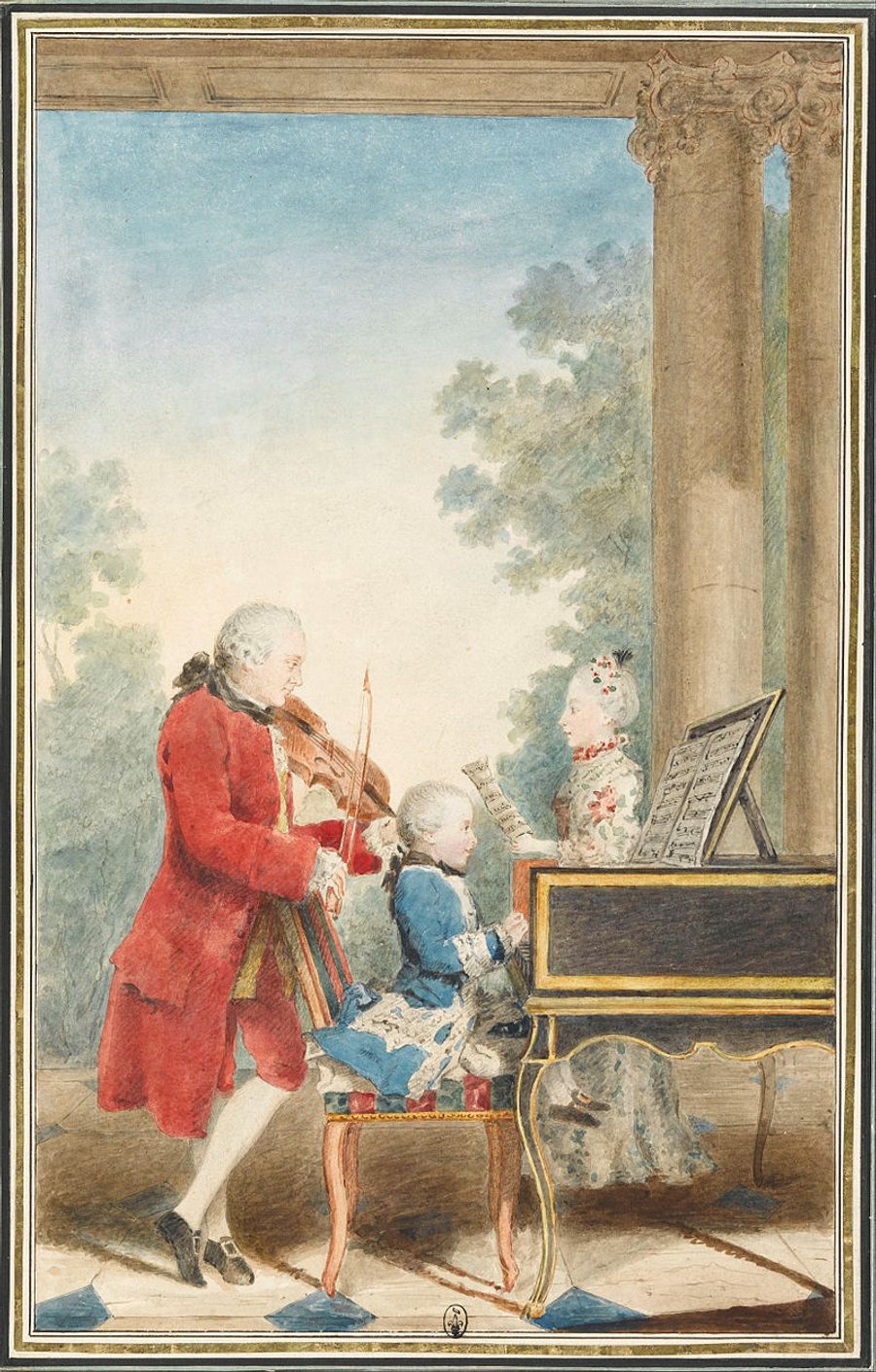
In 1765 the nine-year-old Wolfgang Amadeus Mozart was still on the Mozart family’s extended Western European tour, leaving London in late July and travelling toward the Dutch Republic, with significant gaps in the documentation of their route and daily musical activity during August and early September.[1] Within the Köchel-Verzeichnis entry, K. 631 is dated broadly to London and The Hague (1765–1766) and is listed as a completed work whose transmission is entirely lost.[2]
Musical Character
Because K. 631 is lost—without autograph, copy, incipit, text, or scoring—the music itself cannot be described in reliable terms.[2] Still, its very classification among arias, scenes, and vocal ensembles places it close to Mozart’s earliest attempts to write in a theatrical Italianate idiom, the kind of work that, on tour, could function as a portable demonstration of style, vocal writing, and quick assimilation of contemporary opera.[2] Given how often youthful pieces were copied, circulated, and later misattributed in the 18th century, it is prudent to treat K. 631 as a problematic entry: plausibly Mozart’s, but not securely characterisable—and potentially doubtful in attribution—until musical sources re-emerge.[3]
Sources
[1] MozartDocuments.org: diary evidence and itinerary context for the Mozarts’ travel immediately after leaving London (4 Aug 1765).
[2] International Mozarteum Foundation (Köchel-Verzeichnis): K. 631 entry with status (lost), dating (London/The Hague, 1765–1766), and genre placement among arias/scenes/ensembles.
[3] Wikipedia: overview of Mozart works of spurious/doubtful authenticity and common causes of misattribution (useful context for handling uncertain early attributions).