- Köchel Number
- K9 630 | K6
- Genre
- Chamber Music
- Form
- Violin Sonatas & Variations
- Key
- D Major
- Date
- 1766
- Age
- 10
The Violin Sonata in D major (K. 630) is transmitted as a sonata for keyboard with violin accompaniment, dated 1766, but its attribution to Wolfgang Amadeus Mozart (1756–1791) is regarded as doubtful. The work survives, and is best approached as a modest domestic sonata in two short movements rather than as a secure entry in Mozart’s early violin-sonata canon.
Mozart's Life at the Time
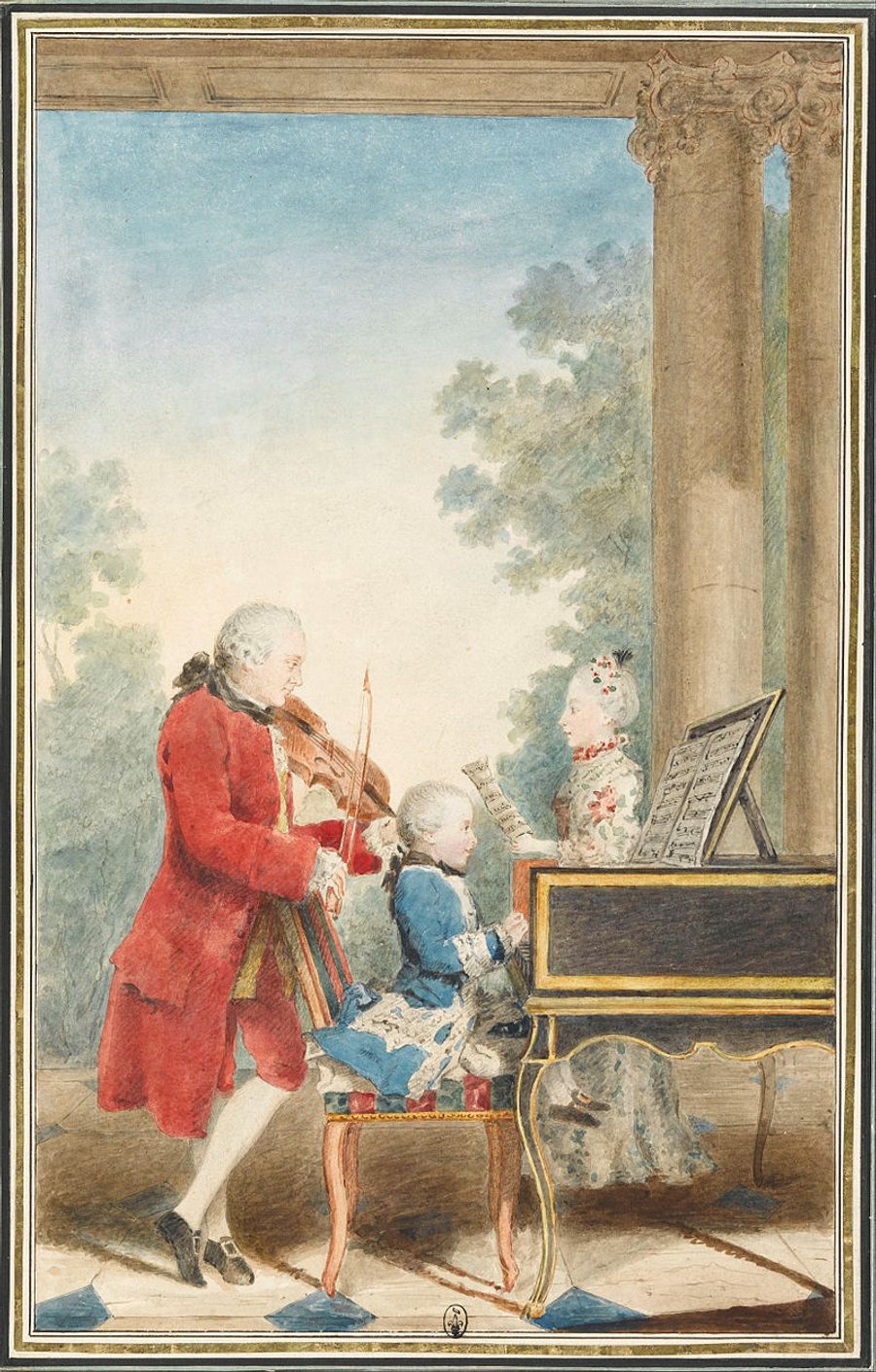
If the traditional dating of 1766 is accepted, Mozart was ten years old and had just completed the long childhood tour that took him through Western Europe (including London and the Low Countries) in 1763–66. In these years he produced a stream of keyboard-centered sonatas with optional or subordinate violin parts for private music-making—precisely the market to which K. 630 also seems to belong, whatever its true authorship.[1]
Musical Character
K. 630 is laid out as a clavier-and-violin sonata (vl, clav) in D major, in two movements: Allegro followed by a Rondo: Grazioso.[1] Its writing keeps the keyboard in the foreground, with the violin largely reinforcing or decorating the texture—music that sits comfortably beside the many late-18th-century “accompanied sonatas” issued for amateurs. The earliest known printed form is an English publication advertising “A favorite SONATA…with an accompaniment for a Violin…Composed by W. A. MOZART,” a kind of attribution that was commercially useful at the time and helps explain why modern scholarship treats the composer as uncertain.[1][2]
Sources
[1] Internationale Stiftung Mozarteum, Köchel-Verzeichnis entry for KV 630: status (doubtful), date (1766), key (D major), instrumentation (vl, clav), movements, and publication note.
[2] Wikipedia overview of the attributed/spurious Violin Sonata in D major, K. 630 (context of English publication and doubtful authorship).