- Köchel Number
- K9 632 | K6
- Genre
- Piano Music
- Form
- Piano Pieces
- Key
- C Major
- Date
- 1765–1766
- Age
- 9
The Instrumental Piece in C (K. 632) is a short, fragmentary work in C major, tentatively dated to 1765–1766 and transmitted with doubtful authenticity. If it does preserve genuine material by Wolfgang Amadeus Mozart (1756–1791), it belongs to the astonishingly early period when he was about nine or ten years old.
Mozart's Life at the Time
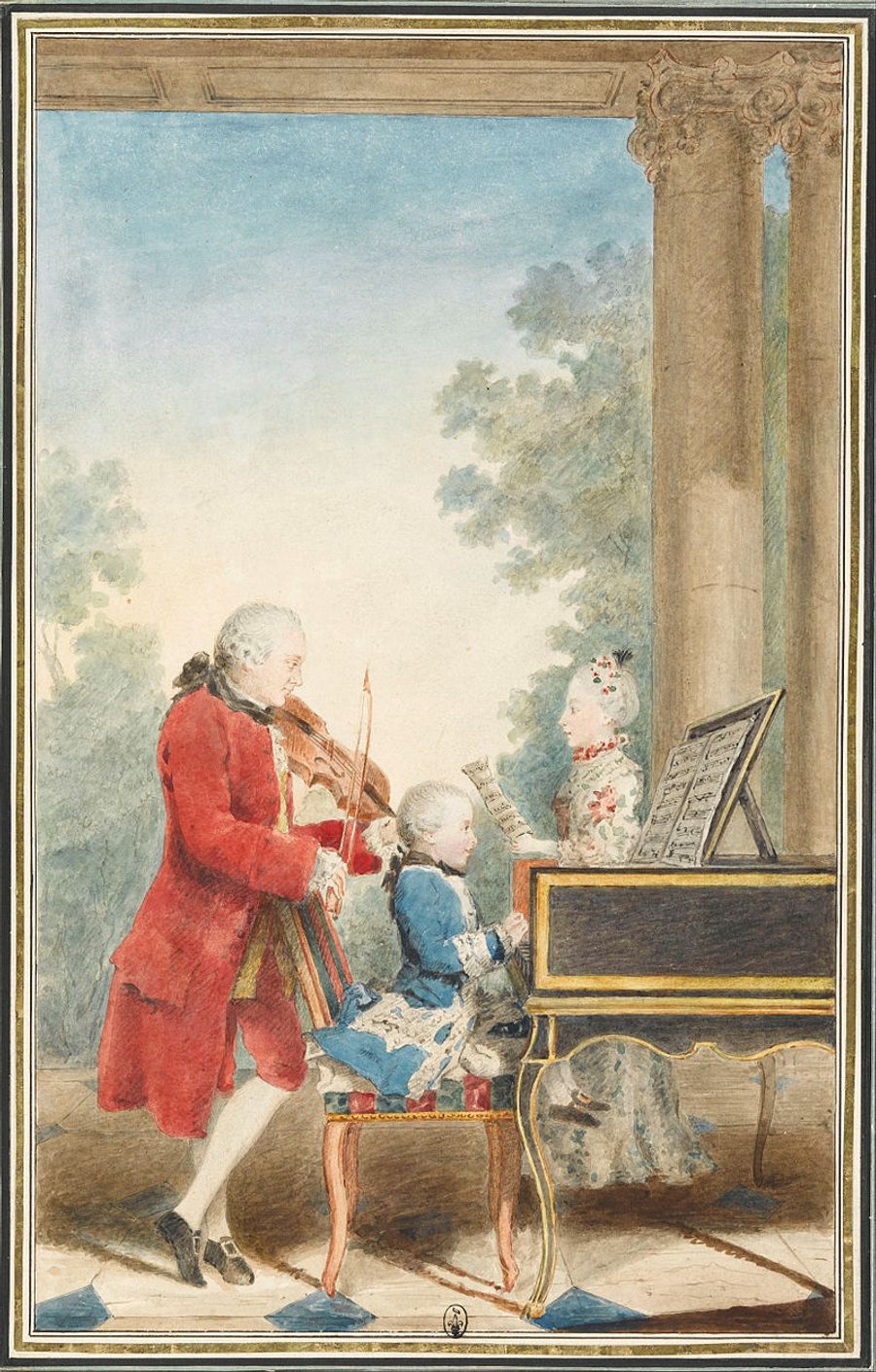
In 1765–1766, the nine-year-old Wolfgang Amadeus Mozart was traveling widely with his family on the long “grand tour” years, a period that produced a steady stream of compact instrumental pieces alongside more ambitious sonatas and ensemble works. K. 632 is dated only approximately (1765–1766) and its place of origin is not securely known, which fits the practical, on-the-road circumstances in which brief instrumental fragments could arise and be copied without clear documentation [1].
Musical Character
What survives as K. 632 is described as a fragment, with scoring given as “for clavier and violin” (alternatively “for 2 violins and bass”), in C major [1]. The documentary status matters for how one reads the notes: rather than a fully shaped “piano piece,” it is more plausibly approached as a small chamber-idea—music that may outline a simple, tonic-centered C-major syntax, with a treble line that can be carried by a violin and a supportive bass or continuo-like underpinning.
Within Mozart’s childhood output, such a fragment (if authentic) would represent the kind of concise, functional invention through which he practiced fluent phrase-making: clear cadences, straightforward harmonic motion, and a texture that can be realized flexibly by the instruments at hand—an apt snapshot of early craft, even as the attribution remains doubtful [1].
Sources
[1] International Mozarteum Foundation, Köchel Verzeichnis entry for KV 632: title, key, scoring description (fragment), dating (1765–1766), and authenticity status (doubtful).