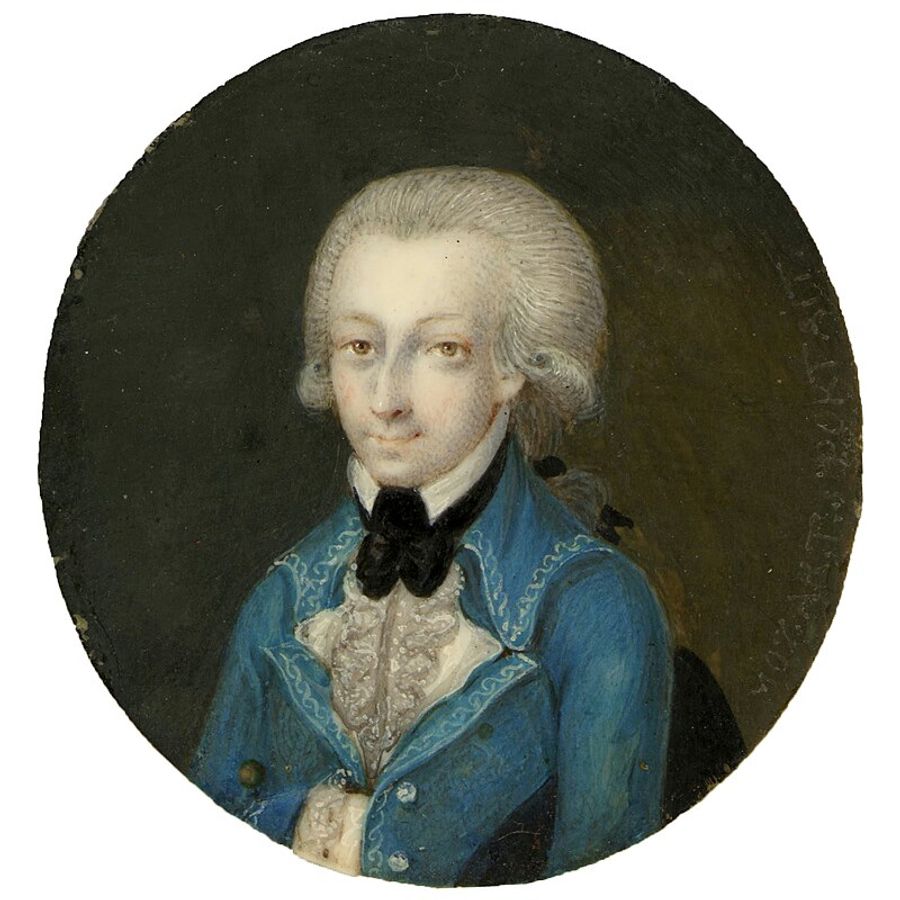
- Köchel Number
- K9 219 | K6 219
- Genre
- Concertos
- Form
- Concertos for Strings & Winds
- Key
- A Major
- Date
- 20 December 1775
- Place
- Salzburg
- Age
- 19
Mozart’s Violin Concerto No. 5 in A major, K. 219—completed in Salzburg on 20 December 1775—crowns the remarkable run of five violin concertos he produced as a 19-year-old court musician. Its famous “Turkish” episode in the finale is more than a period exoticism: it is a theatrical disruption that throws the surrounding elegance into sharper, more modern relief.
Background and Context
In 1775 Wolfgang Amadeus Mozart (1756–1791) was still employed in Salzburg under Archbishop Hieronymus Count Colloredo, serving as court organist and a working violinist (often acting as Konzertmeister). The violin was therefore not an occasional colour in his life but a practical tool: Salzburg’s musical calendar demanded a constant supply of serviceable church music and instrumental works, and Mozart’s craft developed under the pressure of specific players, specific rooms, and the archbishop’s expectations.
The five “mature” violin concertos (K. 207, 211, 216, 218, 219) form a compact workshop in which Mozart tests how operatic rhetoric—entrances, sudden turns of affect, and character contrast—can be transferred into the concerto’s public arena. A striking detail of K. 219’s transmission is that the autograph itself is explicitly dated “Salisburgo li 20 di decembre 1775,” a rare kind of precision that anchors the work to a particular moment rather than a vague “Salzburg, 1775” generality [1].
The likely destination was the Salzburg court orchestra’s violin culture, and later testimony ties Mozart’s violin writing of these years to the Italian violinist Antonio Brunetti, a colleague with whom Mozart maintained a complicated mixture of camaraderie and frustration. While the documentary trail does not allow a neat “commission story” for K. 219, the pattern is clear: Mozart was writing concert music that could function both as courtly entertainment and as a vehicle for a particular soloist’s personality.
Composition and Premiere
The Internationale Stiftung Mozarteum’s Köchel database gives the work’s completion as Salzburg, 20 December 1775, and lists the surviving sources, headed by the autograph manuscript [1]. That autograph is today associated with the Library of Congress in Washington, D.C., and its later provenance reads almost like a cultural history of collecting: acquired through the André estate of Mozart manuscripts, passing through Viennese circles (including the Wittgenstein collection), and entering the Library of Congress via the Whittall Foundation in 1948 [2].
Performance history at the moment of origin is less tidy than the autograph date. The nickname “Turkish” belongs to reception rather than composition; what matters for 1775 is that the concerto stands at the end of Mozart’s Salzburg sequence and already behaves like a small drama. Modern listeners sometimes hear it as a single, coherent “masterwork,” yet its afterlife includes signs that Mozart (or his performers) treated it as adaptable material: within a year, Mozart composed the separate Adagio in E major, K. 261, generally understood as a substitute slow movement for a concerto performance context rather than an independent inspiration [3]. This kind of replacement practice—writing a new movement to refresh a work’s appeal or suit a player—was normal in late-18th-century concerto life, and it reminds us that K. 219 originally lived as repertory, not as a fixed museum object.
A further glimpse into the work’s practical identity comes from later editorial debate over the autograph’s fine details: Henle’s commentary on a disputed appoggiatura in the first movement shows how even a “canonical” concerto can hinge on minute notational questions (ledger lines, grace-note placement) that affect what players actually do on stage [4]. The larger point is not pedantry. It is that Mozart’s writing—especially in the concerto’s decorative idiom—depends on micro-gestures that sit between composition and performance practice.
Instrumentation
K. 219 is scored for solo violin and a relatively compact Salzburg orchestra, with pairs of oboes and horns reinforcing a string body that can still speak with chamber-like clarity [1].
- Winds: 2 oboes
- Brass: 2 horns
- Strings: solo violin; violins I & II; violas; cellos and double basses
Two implications are worth stressing. First, the winds are not merely harmonic padding: Mozart often uses them to “stage” the soloist’s entrances, creating a sense of conversational timing rather than continuous accompaniment. Second, the absence of trumpets and timpani keeps the rhetoric closer to theatre and chamber serenade than to ceremonial symphonic display—one reason the “Turkish” disturbance in the finale is so effective: it arrives in a sound world that had previously behaved with courtly restraint.
Form and Musical Character
I. Allegro aperto (A major)
The marking aperto is itself a clue to the movement’s character. Rather than the tight, “argument-driven” profile of many concerto first movements, Mozart opts for something like an open stage, where themes can enter as if from different wings. The orchestra’s initial gestures present brightness without heavy insistence, and the soloist’s first appearance feels less like conquest than like a singer stepping forward.
One of the movement’s most telling features is Mozart’s ability to make decoration structural. Passagework is rarely mere display; it functions as rhetoric—delaying cadences, heightening expectation, or “re-voicing” a theme so that its expressive meaning changes on repetition. The ongoing editorial discussion of a grace-note appoggiatura in the autograph (and how to interpret Mozart’s notation) is a reminder that such ornaments are not optional frills but part of the movement’s grammar [4].
II. Adagio (E major)
The slow movement’s key—E major, the dominant of A—creates a luminous, suspended space that is both logically “related” and psychologically distant. In performance, the movement’s challenge is not virtuosity but breath control and narrative pacing: it asks the soloist to sustain long lyrical arches while remaining responsive to the orchestra’s quietly coloured commentary.
That Mozart later supplied an alternative slow movement (Adagio in E major, K. 261) strongly suggests that the concerto’s middle movement was understood as a replaceable expressive centre—either because performers desired a different kind of cantabile, or because taste in Salzburg shifted quickly [3]. The existence of a substitute does not diminish the original Adagio; rather, it highlights Mozart’s pragmatic artistry: even the most “poetic” pages were still part of a living, revisable performance economy.
III. Rondeau: Tempo di Menuetto — Allegro (A major)
The finale’s title is already a small paradox: a rondo that begins as a Tempo di Menuetto—courtly, balanced, smiling—yet contains an interruption that later listeners would label “Turkish.” This is not merely a fashionable alla turca garnish. It functions like an inserted scene: the music’s posture changes, articulation hardens, and the elegant dance is suddenly thrown into relief by a more percussive, “outdoor” energy.
Here the concerto reveals its kinship with Mozart’s stage instincts. The “Turkish” passage behaves theatrically, almost as if a different troupe has burst onto the stage; then, just as suddenly, the menuet world reasserts itself. Eighteenth-century Europe’s fascination with Janissary-style sonorities fed such episodes across genres, but Mozart’s particular twist is formal: the exotic colour is not the rondo’s main identity—it is a disturbance that sharpens our awareness of what the rondo theme had been “pretending” to be (composed, graceful, socially regulated) [2].
Reception and Legacy
K. 219’s modern fame often rests on the finale’s nickname, yet its longer legacy is the concerto’s synthesis of violinistic brilliance with character writing. The solo part does not simply float above the orchestra; it reacts, comments, persuades, and occasionally provokes. That is why the work thrives in both “symphonic” and chamber-orchestra contexts: it can be projected as a public concerto statement, but it can also read as an enlarged serenade movement—a point some scholarship has pursued by tracing the violin concertos’ roots to the concerto-like middle movements of Mozart’s Salzburg serenades [2].
For performers, K. 219 also remains a touchstone of stylistic decision-making. Questions of ornamentation, cadenzas, and even tiny autograph details (such as the debated appoggiatura) are not academic distractions; they shape the concerto’s expressive profile—from whether the first movement sounds more galant or more searching, to whether the finale’s “Turkish” eruption feels comic, threatening, or simply exhilarating [4]. In that sense, the concerto’s endurance lies not only in its melodic abundance but in its openness: it invites virtuosity, yes, but also interpretive thought—precisely the combination that marks Mozart’s Salzburg concertos at their best.
Sheet Music
Download and print sheet music for Violin Concerto No. 5 in A major, “Turkish” (K. 219) from Virtual Sheet Music®.
Sources
[1] Internationale Stiftung Mozarteum (Köchel-Verzeichnis): K. 219 work entry with date (20 Dec 1775) and instrumentation.
[2] Library of Congress (Concerts from the Library of Congress): program essay including autograph provenance and contextual discussion of “alla turca” fashion.
[3] Adagio in E major for Violin and Orchestra, K. 261 (overview of replacement movement tradition connected to K. 219).
[4] Henle Blog: discussion of a notational/appoggiatura issue in the K. 219 autograph and implications for performance and Urtext editing.