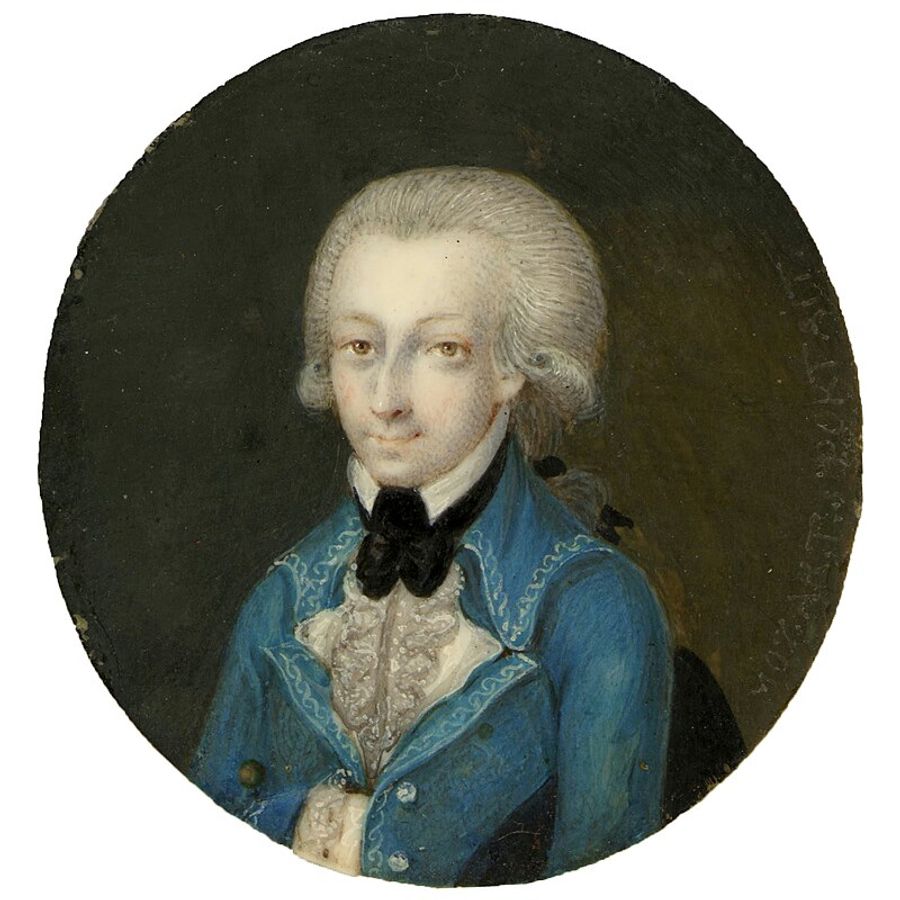
- Köchel Number
- K9 261 | K6 261
- Genre
- Concertos
- Form
- Concertos for Strings & Winds
- Key
- E Major
- Date
- 1776
- Place
- Salzburg
- Age
- 20
Mozart’s Adagio in E major for Violin and Orchestra, K. 261, is a single-movement concerto-style miniature composed in Salzburg in 1776, when he was 20. Probably written as an alternative slow movement for a violin concerto, it distills operatic lyricism and courtly poise into a concentrated, luminous span—one of Mozart’s rare excursions into the key of E major.
Background and Context
Mozart’s Salzburg years were shaped by the practical demands—and frustrations—of employment at the Prince-Archbishop’s court. In 1775 he produced the five violin concertos that form the core of his contribution to the genre; soon afterward he continued to supply violin music for the same institutional world, but in a more flexible, “single-movement” manner. Adagio in E major, K. 261 (1776), belongs to this pragmatic category: it is not a numbered concerto, but a self-contained slow movement that can stand alone in performance or function as a substitute within a larger concerto plan.[1]
Part of the work’s fascination is precisely this in-between identity. It is “concertante” (soloist forward, orchestra in partnership), yet it renounces the three-movement concerto’s public architecture in favor of a single, sustained cantabile line. In this respect K. 261 points toward a Mozartian ideal that listeners more often associate with his later vocal writing: expressive breadth achieved not through length or complexity, but through the controlled unfolding of melody and harmony.
Composition and Premiere
The Köchel Catalogue (as presented by the Internationale Stiftung Mozarteum) dates K. 261 to Salzburg, 1776, and confirms its authenticated status and surviving autograph transmission.[1] While documentation of a specific premiere is elusive, a long-standing explanation—widely repeated in reference accounts—is that Mozart wrote the piece as a replacement slow movement connected with the Violin Concerto No. 5 in A major, K. 219, apparently in response to a performer’s dissatisfaction with an earlier movement.[2]
Even when treated cautiously, that tradition is musically plausible: K. 261 has the inward tempo and sustained lyrical profile one expects of a concerto slow movement, yet it is also sufficiently self-sufficient to serve as an independent concert item. Its relatively early publication history (first edition around 1801, according to the Mozarteum catalogue record) likewise suggests that musicians quickly recognized its usefulness and appeal as a stand-alone movement for performance and study.[1]
Instrumentation
K. 261 is scored for solo violin with a light, coloristic orchestra—an ensemble that feels characteristic of Salzburg court resources, but with a particularly distinctive timbral profile in the chosen winds.[1]
- Solo: violin
- Winds: 2 flutes, 2 horns
- Strings: violins I & II, viola, cello and double bass
Two details matter for how the music speaks. First, Mozart omits oboes and bassoons, creating a softer-edged wind palette; the flutes blend readily into the string sheen rather than cutting through it. Second, the horns (notated in a way that fits E major) lend the background a warm resonance and a courtly “halo,” supporting the violin’s long phrases without turning the texture symphonic in weight.[2]
Form and Musical Character
K. 261 is a single Adagio (one movement).[3] Rather than aiming at dramatic contrast, Mozart sustains a continuous lyrical argument: the solo violin sings, reflects, and elaborates, while the orchestra provides both harmonic grounding and gentle commentary.
A slow-movement concerto in miniature
In broad terms, the movement behaves like a concerto slow movement pared down to essentials:
- The orchestra introduces the expressive climate—quietly preparing the soloist’s entrance.
- The violin takes over with extended, vocal-style melody, ornamenting the line in a way that feels closer to aria embellishment than to virtuosic display.
- Contrasts arise chiefly through harmony and register (bright E major colored by brief shadows), not through sharp rhythmic or thematic conflict.
What makes the piece distinctive among Mozart’s Salzburg violin works is its concentration. The outer movements of the 1775 concertos sparkle with theatrical wit and rhythmic vivacity; K. 261 instead lingers on sustained tone and expressive pacing. It asks the soloist for a refined legato, careful bow control, and tasteful embellishment—virtuosity of sound rather than of speed.
The special color of E major
E major is a comparatively rare key in Mozart’s orchestral output, partly because it is less convenient for many Classical-era wind instruments and because it carries an immediately “bright” sonority for strings (open E string, high resonance). Reference summaries regularly note K. 261 as one of Mozart’s infrequent uses of the key, which helps explain the movement’s particular gleam.[2] In performance, E major can feel simultaneously intimate and radiant: intimate because the scoring is light; radiant because the violin’s natural resonance is at its most generous.
Reception and Legacy
K. 261 has never competed in public fame with Mozart’s numbered violin concertos, yet it enjoys a quiet afterlife as a repertory “gem”: a short, self-contained movement that can serve as an encore, a pedagogical study in Classical cantabile, or an expressive centerpiece on recordings of the violin concertos. Modern catalogue and library infrastructures (autograph description, early print data, and standardized instrumentation) also reveal how securely the piece sits within Mozart’s authenticated output, even if it stands slightly outside the familiar concerto narrative.[1]
Why does it deserve attention today? Precisely because it shows Mozart—still only 20—treating the concerto medium as a place for lyrical “truthfulness” rather than display. In a single slow movement he demonstrates a mature instinct for pacing, color, and melodic inevitability. Heard on its own, K. 261 can feel like a distilled operatic scene without words: the violin as singer, the orchestra as discreet stage and atmosphere. That poise—so characteristic of Mozart at his best—is what allows this modest Salzburg occasional piece to transcend its practical origins.
Sources
[1] Internationale Stiftung Mozarteum (Köchel Catalogue entry): dating (Salzburg, 1776), authenticity, instrumentation, source/publication notes for K. 261.
[2] Wikipedia overview: context as probable replacement slow movement; common narrative about intended use and scoring.
[3] IMSLP work page: basic work data (single movement, key, dating) and access to scores/parts.