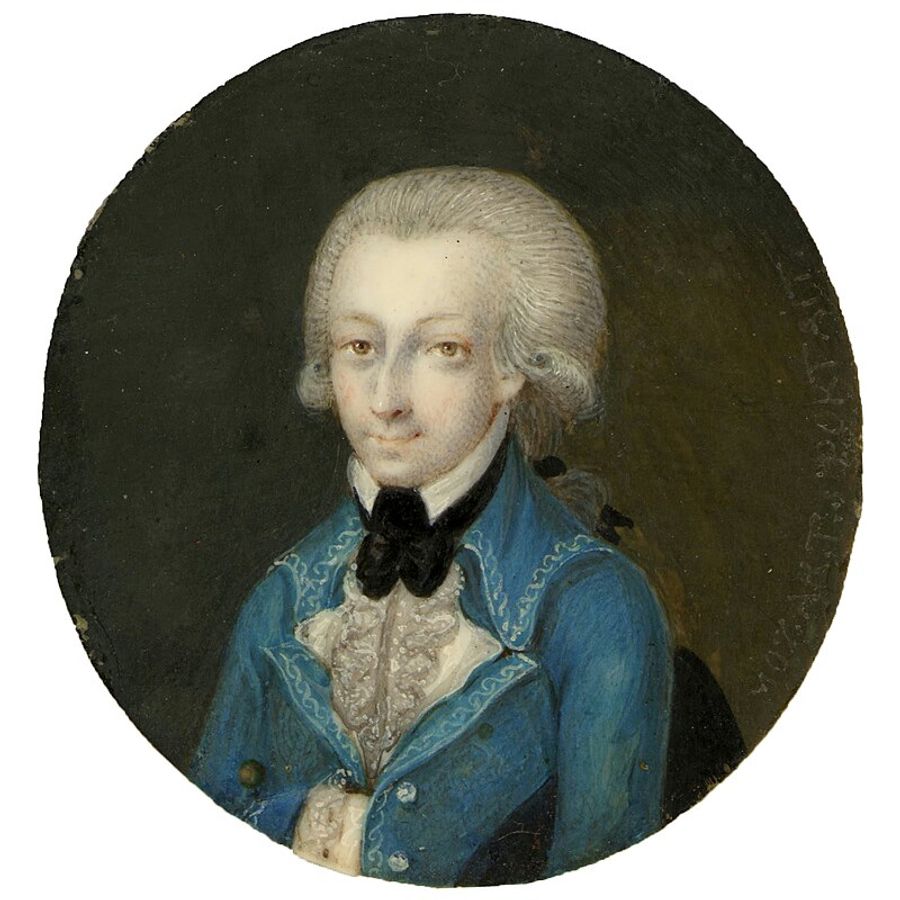
- Köchel Number
- K9 207 | K6 207
- Genre
- Concertos
- Form
- Concertos for Strings & Winds
- Key
- B Flat Major
- Date
- Spring 1773
- Place
- Salzburg
- Age
- 17
Mozart’s Violin Concerto No. 1 in B♭ major (K. 207) was composed in Salzburg in 1773, when he was just 17, and stands at the threshold of his mature concerto style. Less celebrated than the later concertos, it already shows Mozart learning how to make a solo instrument “speak” theatrically against an orchestral backdrop—and how to turn a conventional three-movement plan into a sequence of sharply profiled characters.
Background and Context
In 1773, Wolfgang Amadeus Mozart (1756–1791) was back in Salzburg after the formative Italian journeys of his teenage years—trips that exposed him to the latest operatic fashions, virtuoso violin writing, and the public concerto culture of the peninsula. Salzburg offered fewer opportunities than Milan or Naples, yet it did provide a stable musical establishment (the court ensemble of the Prince-Archbishop) and a testing ground for instrumental works designed for capable local players.
Violin Concerto No. 1 in B♭ major, K. 207 belongs to a Salzburg group that effectively inaugurates Mozart’s five authentic violin concertos. If the later concertos (especially K. 216–219) are more frequently encountered in the modern concert hall, K. 207 deserves attention for a different reason: it is Mozart’s earliest surviving original concerto for a solo instrument and orchestra, capturing a young composer translating Italianate virtuosity into his own increasingly dramatic musical language. The work also reminds listeners that Mozart, though later famed above all as a keyboard composer, was an accomplished violinist and orchestral musician in his youth.[2]
Composition and Premiere
The concerto was written in Salzburg in 1773.[1] Modern reference literature typically places it specifically in April 1773, aligning it with Mozart’s post-Italy return and a burst of instrumental composition.[2]
As with many Salzburg instrumental works, the exact circumstances of the first performance are not securely documented. Nonetheless, the concerto’s idiomatic solo writing strongly suggests a practical, performable purpose—music conceived for real players (quite possibly including Mozart himself), rather than a purely speculative exercise. What emerges most clearly is a young composer learning “concerto rhetoric”: how to pace an opening movement so that the soloist’s first appearance feels like a genuine event, not merely an ornamental overlay.
Instrumentation
Mozart scores K. 207 for solo violin with a compact, bright Classical orchestra:[2]
- Solo: violin
- Winds: 2 oboes
- Brass: 2 horns
- Strings: violins I & II, viola, cello, double bass
The wind writing is characteristically economical but telling. Oboes sharpen the orchestral profile—particularly in tuttis—while the horns broaden the harmonic space and add a ceremonial glow appropriate to B♭ major (a key Mozart often associates with genial public brilliance).
Form and Musical Character
Mozart follows the standard three-movement fast–slow–fast plan. The movement headings are:[3]
- I. Allegro moderato
- II. Adagio
- III. Presto
I. Allegro moderato (B♭ major)
The first movement is built on the Classical concerto’s hybrid logic: orchestral ritornello impulses (returning tutti blocks) meet a more flexible, solo-driven argument reminiscent of sonata-allegro form (exposition, development, recapitulation). What makes K. 207 especially engaging is its youthful directness: Mozart wastes little time establishing the movement’s public, extrovert frame, then shifts the spotlight decisively to the violin.
One can already hear a Mozartian instinct for theater in miniature. The soloist does not merely “decorate” the orchestral material; instead, the violin enters as a protagonist with its own agenda—spinning passagework that sounds like speech heightened into song, then pivoting into bravura that tests agility and articulation.
II. Adagio (E♭ major)
The slow movement, in the closely related key of E♭ major, presents the concerto’s most overtly vocal writing. Here Mozart’s Italian experience matters less as a matter of virtuoso display and more as a matter of line: the violin sings in long phrases that invite an operatic kind of breathing.
Notably, the scoring keeps the atmosphere clear rather than densely “symphonic.” This transparency allows the soloist’s cantabile to register with unusual intimacy for an early Salzburg concerto. Even when the orchestra answers, it often feels like a discreet partner—supporting, commenting, occasionally challenging—rather than a competing force.
III. Presto (B♭ major)
The finale (Presto) restores outward energy with brisk, dance-like momentum. In contrast to the slow movement’s sustained lyricism, Mozart emphasizes quick turns of character: bright repetitions, athletic leaps, and rapid figurations that push the soloist toward a more extroverted persona.
This movement can be heard as Mozart testing how much “spark” he can generate with relatively simple means. The wit lies less in harmonic surprise than in timing—how the orchestra punctuates the soloist’s runs, how cadential gestures are delayed or re-energized, and how the final stretch accelerates the listener’s sense of inevitability.
Reception and Legacy
K. 207 is sometimes treated as a preliminary step toward the more sophisticated violin concertos of 1775 (K. 211, 216, 218, 219). Yet that view risks missing what the concerto uniquely offers: a snapshot of Mozart, age 17, absorbing Italian concerto style and redirecting it toward the kind of dramatic clarity that would soon animate his mature works.
For modern performers and listeners, the concerto’s appeal is twofold. First, it is a compelling “origin story” for Mozart’s concerto thinking—his earliest surviving attempt to balance orchestral ceremony with a soloist’s theatrical presence.[2] Second, it is simply enjoyable music: bright, cleanly proportioned, and full of youthful confidence, with an Adagio that already hints at Mozart’s gift for turning instrumental melody into something uncannily human. Heard on its own terms—not merely as “No. 1” in a famous sequence—K. 207 emerges as a work that rewards close listening with both craftsmanship and charm.
Sheet Music
Download and print sheet music for Violin Concerto No. 1 in B♭ major, K. 207 from Virtual Sheet Music®.
Sources
[1] Internationale Stiftung Mozarteum, Köchel-Verzeichnis entry for K. 207 (work identification, basic catalog data).
[2] Boston Symphony Orchestra (BSO) program note page for Mozart Violin Concerto No. 1 (date/location, instrumentation, contextual remarks).
[3] Wikipedia: “Violin Concerto No. 1 (Mozart)” (movement headings; overview reference).