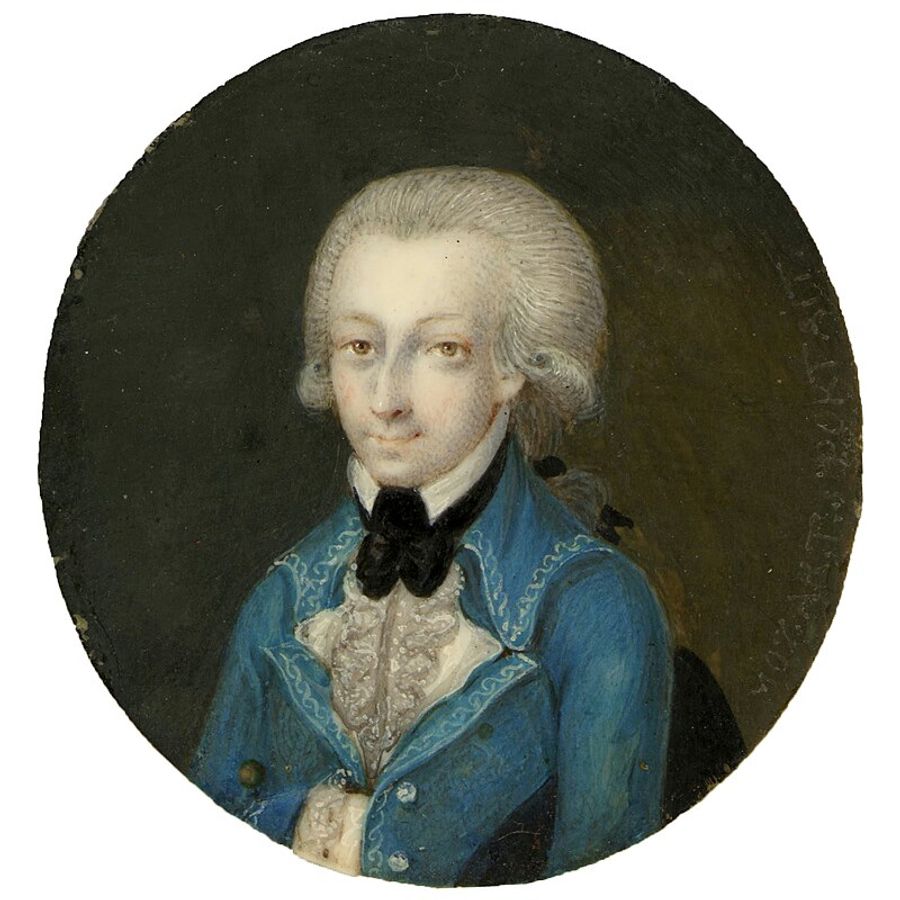
- Köchel Number
- K9 220 | K6 196b
- Genre
- Sacred Music
- Form
- Masses & Requiem
- Key
- C Major
- Date
- 1775–1776
- Place
- Munich
- Age
- 19
Mozart’s Missa brevis in C major (K. 220), known as the “Spatzenmesse” (“Sparrow Mass”), was composed in Salzburg in 1775–76, when the composer was 19. Compact in duration yet festive in color, it epitomizes the Salzburg ideal of a mass that can serve the liturgy efficiently while still sounding jubilant and ceremonial.
Background and Context
In the mid-1770s, Wolfgang Amadeus Mozart (1756–1791) was employed at the Salzburg court under Prince-Archbishop Hieronymus Colloredo, an environment that placed practical, even time-conscious demands on church music. The result was a local culture of the missa brevis: settings of the Mass Ordinary designed to fit the liturgy without undue expansion, yet (on feast days) often equipped with brilliant “court” sonorities—especially trumpets and timpani.[1]
Mozart’s Missa brevis in C major, K. 220 belongs to a cluster of Salzburg masses from his late-teen years that balance devotional function with theatrical instinct. While it lacks the monumental scale of the later Great Mass in C minor, K. 427, it deserves attention for how persuasively it solves an essentially liturgical problem: how to be concise without sounding merely perfunctory. Its nickname “Spatzenmesse” points to an additional charm—Mozart’s gift for turning a tiny motivic idea into a memorable signature.
Composition and Liturgical Function
The International Mozarteum Foundation dates K. 220 to Salzburg, 1775–76, and lists a first documented performance at Salzburg Cathedral on 7 April 1776.[1] (Older catalog traditions and some secondary references have sometimes circulated different place-associations; the Mozarteum’s work entry is the most reliable quick reference for provenance and performance data.)
K. 220 sets the standard Ordinary: Kyrie, Gloria, Credo, Sanctus (with Osanna), Benedictus (with Osanna), and Agnus Dei.[1] It is often described as a hybrid type—missa brevis et solemnis—because the musical argument is relatively compressed, yet the scoring is festal rather than austere.[2]
The instrumentation listed in the Köchel-Verzeichnis Online emphasizes the “feast-day” profile: SATB choir with strings and continuo/organ, plus trumpets and timpani.[1] That combination—bright C major, high brass, and drums—signals a public, ceremonial liturgy rather than a modest weekday service.
Musical Structure
Though K. 220 follows conventional mass architecture, it is distinguished by its quick changes of texture and its ear for vivid, almost pictorial gestures within a disciplined timeframe.
The “sparrow” idea
The nickname “Spatzenmesse” is commonly connected with a recurring, chirping violin figure—an identifying tag that listeners often notice most clearly around the Sanctus / Osanna complex.[2] The motif is not a program in any literal sense, but it functions like an emblem: a small rhythmic-cell or turn-figure that animates the surface and lends the mass an immediately recognizable profile.
Concision with contrast
As in many Salzburg masses, the long liturgical texts (especially Gloria and Credo) encourage swift, largely homophonic choral writing—clear declamation, bright orchestral punctuation, and relatively little extended contrapuntal development. Yet Mozart offsets that efficiency with strategic “moments of release”: brief lyrical turns, softening harmonic colors, and sectional articulation that keeps the listener oriented through the textual narrative. In other words, the work is not merely short; it is shaped.
A festive sound world
K. 220’s C-major palette suits trumpet writing naturally, and the timpani underline cadences and climaxes in a way that makes the mass feel more “public” than its modest scale might suggest.[1] This is one reason the piece travels easily between church and concert hall: it projects readily, but does not require the expansive forces or rehearsal time of Mozart’s largest sacred scores.
Reception and Legacy
K. 220 has maintained a practical foothold in modern repertoire precisely because it aligns with real-world constraints—liturgical timing, amateur-to-semi-professional choral resources—while still delivering a distinctly Mozartean blend of buoyancy and poise. Modern publishers continue to market it as a dependable, clear-textured work with a memorable “Sparrow Mass” identity, reinforcing its status as one of the most frequently encountered Salzburg masses outside the better-known late masterpieces.[2]
In sum, the Spatzenmesse is best heard not as a “small” mass, but as an expertly engineered one: a liturgical design that turns constraint into character, and a youthful Salzburg work whose bright ceremonial tone still feels fresh in performance today.
Sources
[1] International Mozarteum Foundation, Köchel-Verzeichnis Online — KV 220 work entry (dating, first performance, instrumentation, movements).
[2] Bärenreiter (US) product page for *Missa in C major, K. 220 (196b)* — overview of nickname and performing tradition; description of the work’s character and context.