- Köchel Number
- K9 174 | K6 174
- Genre
- Chamber Music
- Form
- String & Wind Quintets
- Key
- B Flat Major
- Date
- December 1773
- Place
- Salzburg
- Age
- 17
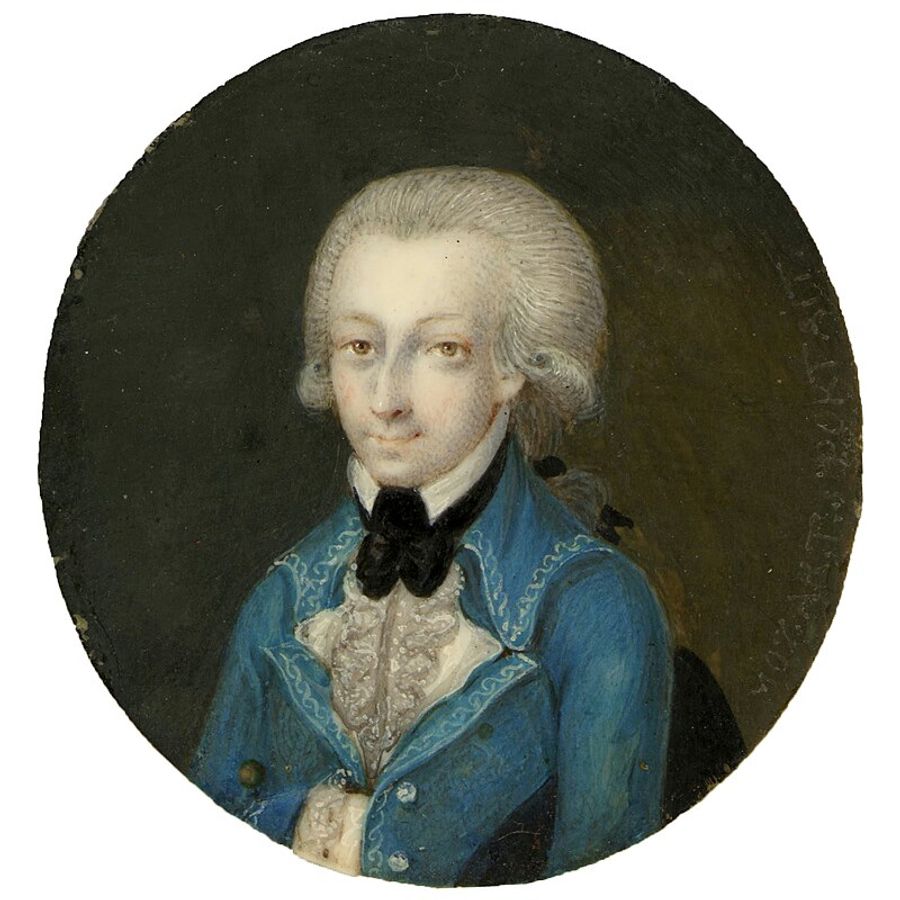
Mozart’s String Quintet No. 1 in B♭ major (K. 174) is an early, confident experiment in the “viola quintet” texture, completed in Salzburg on 1 December 1773, when the composer was seventeen [1] [2]. Though it stands in the shadow of the great Viennese quintets of the 1780s, K. 174 already shows Mozart thinking orchestrally within chamber music—using the second viola not as padding, but as a source of warmth, dialogue, and harmonic depth.
Background and Context
Salzburg in 1773 finds Wolfgang Amadeus Mozart (1756–1791) returning from travel and consolidating what he had absorbed from Italian melody, Austrian-German craft, and (increasingly) the modern quartet style then flourishing in Vienna. Just before K. 174, Mozart wrote the set of six so‑called “Viennese” string quartets, K. 168–173; the B♭‑major quintet follows them directly in Köchel’s original ordering and feels like a natural next step in the same workshop of ideas—more expansive in sonority, and more exploratory in inner-part writing [3] [4].
What makes K. 174 worth hearing—beyond its historical “first”—is its immediacy. Mozart does not attempt the contrapuntal saturation or dramatic breadth of the later quintets (K. 515, K. 516), yet he already treats five string voices as a uniquely flexible medium: capable of orchestral fullness, but also of intimate conversation where the middle register carries as much meaning as the top line.
Composition and Dedication
The work is scored for the classic Mozartian string-quintet layout—string quartet plus an extra viola (a “viola quintet”)—and was completed in Salzburg on 1 December 1773 [1] [2].
- Strings: 2 violins, 2 violas, violoncello [1]
No dedication is securely attached to K. 174 in the standard reference summaries; as with much of Mozart’s Salzburg chamber music, it likely served practical music-making among court and civic circles rather than a single named commission.
The quintet’s publication history also hints at its later, wider circulation: it appeared in print only after Mozart’s death, issued in parts in Vienna by Johann Traeg in 1798 [5]).
Form and Musical Character
K. 174 is in three movements, a compact plan that aligns it with divertimento-like chamber works of the period while still aiming for quartet-style seriousness of argument.
- I. Allegro (B♭ major) [3]
- II. Adagio (E♭ major) [3]
- III. Menuetto – Trio (B♭ major; Trio in F major) [3]
The five-part texture: why the extra viola matters
Mozart’s choice of two violas is not merely a thickening of the quartet. It changes the rhetoric of the ensemble. With two inner voices available, accompaniment figures can be distributed (rather than doubled), and the harmony can be animated from within—an effect listeners often associate with Mozart’s mature quintets, but which is already a governing idea here.
The first movement’s writing frequently suggests an “orchestral” model: the violins carry bright, public gestures while the violas and cello supply a cushioned harmonic bed that can suddenly step forward into imitation or answer-phrases. The slow movement, placed in the subdominant key of E♭ major, makes especially persuasive use of the violas’ mellow register—less about virtuoso display than about sustained cantabile and balanced voicing.
The finale as a minuet (rather than a fast sonata or rondo) is one reason K. 174 can feel more Classical-serenade in profile than the later four-movement masterpieces. Yet even here Mozart’s ear for character is evident: the Trio’s move to F major and its lighter scoring provide a clear spatial contrast, as though the ensemble’s “camera angle” has shifted inward.
Reception and Legacy
Because K. 174 was published in 1798, it belongs to the group of Mozart chamber works whose reputations were built largely in the nineteenth century—when the string quartet became a central bourgeois genre and Mozart’s earlier Salzburg pieces were selectively rediscovered [5]).
In today’s concert life, this first quintet remains less frequently programmed than the towering late trio of K. 515, K. 516, and K. 614. Still, it offers something the later works do not: a glimpse of Mozart at seventeen testing how far the quartet idiom could be enriched simply by adding one more middle voice. Heard on its own terms—bright, elegant, and expertly voiced—K. 174 is not a “prelude” so much as an early statement of a sound-world Mozart would later make unmistakably his own.
Sources
[1] Köchel-Verzeichnis (Internationale Stiftung Mozarteum Salzburg), work entry for KV 174 (genre, scoring, dating).
[2] Digital Mozart Edition (Mozarteum), New Mozart Edition (NMA) String Quintets VIII/19/1 (English preface/comments including completion date).
[3] Wikipedia, “String Quintet No. 1 (Mozart)” (movement list and general overview; used cautiously as secondary reference).
[4] Wikipedia, “Viennese Quartets (Mozart)” (context for K. 168–173 and their date/place).
[5] IMSLP work page for Mozart’s String Quintet No. 1 in B♭ major, K. 174 (publication details incl. Traeg 1798; access to score/parts).