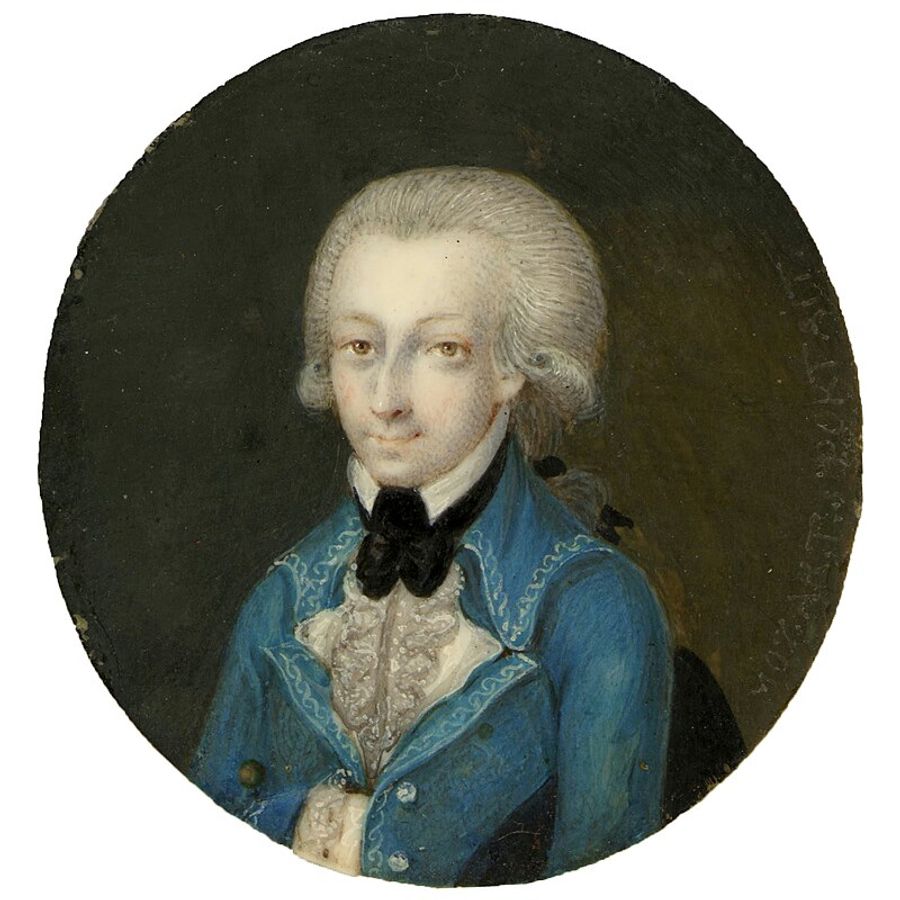
- Köchel Number
- K9 168 | K6 168
- Genre
- Chamber Music
- Form
- String Quartets & Wind Quartets
- Key
- F Major
- Date
- August 1773
- Place
- Vienna
- Age
- 17
Mozart’s String Quartet No. 8 in F major (K. 168) was composed in Vienna in August 1773, when the composer was seventeen. The first of the so‑called “Viennese” quartets (K. 168–173), it is a compact four-movement work whose seriousness—especially its F‑minor slow movement and fugal finale—shows Mozart measuring himself against the latest quartet style associated with Joseph Haydn.
Background and Context
In the summer and early autumn of 1773, Wolfgang Amadeus Mozart (1756–1791) was in Vienna, absorbing a musical environment far broader than Salzburg’s courtly routines. The six quartets K. 168–173, later nicknamed the “Viennese Quartets,” belong to this moment of listening, experimenting, and ambition: Mozart had recently encountered Joseph Haydn’s newly published quartets (notably Opp. 9 and 17) and began to treat the quartet less as pleasant divertimento and more as a medium for argument, contrast, and learned craft.[2]
K. 168 is sometimes overshadowed by the mature “Haydn” quartets of the 1780s, yet it deserves attention precisely because it documents Mozart’s teenage leap toward that later mastery. Instead of relying on the easy charm of his earlier Italianate quartets, he places weight on counterpoint, minor-mode expressivity, and a finale that does not merely entertain but proves something.
Composition and Dedication
The quartet is securely attributed to Mozart and is transmitted in authoritative modern scholarship through the Neue Mozart-Ausgabe (New Mozart Edition).[1] On the practical-documentary side, the work is dated to August 1773 in Vienna, and its four-movement design aligns it with the broader plan of the K. 168–173 set.[3]
No dedication is firmly attached to K. 168, and—like the rest of the set—these quartets do not appear to have been published during Mozart’s lifetime. They were issued only posthumously by Johann Anton André in 1801 (as part of Mozart’s Op. 94), a circumstance that helps explain why they long remained less visible than the later quartets Mozart prepared for print with greater care.[2][3]
Instrumentation
- Strings: 2 violins, viola, violoncello[3]
Form and Musical Character
Mozart lays out a classical four-movement plan that is already more “public” and symphonic in profile than many earlier quartets:
- I. Allegro (F major)
- II. Andante (F minor)
- III. Menuetto – Trio (Trio in B♭ major)
- IV. Allegro (fugue)[2]
I. Allegro
The opening movement is in sonata-allegro form, and one hears Mozart testing how much drama can be generated with only four string voices: thematic ideas are passed quickly between parts, and accompanimental figures are treated with unusual independence for such an early quartet.[2] Even when the surface is bright F major, the discourse already points toward the later Mozartian quartet ideal—where “inner” parts are not filler but participants.
II. Andante (F minor)
The slow movement is the quartet’s emotional center: a rare, concentrated turn to F minor that immediately deepens the work’s expressive range. Mozart casts it as a canon in triple meter—an unmistakable gesture of learned writing.[2] The result is not academic dryness, however, but a grave, searching lyricism, made more poignant by the knowledge that this is a teenage composer choosing restraint over display.
III. Menuetto – Trio
The minuet returns to a more courtly tone, yet it does not simply “reset” the piece. The Trio in B♭ major adds a warmer, more pastoral color, and its clear periodic phrasing can feel like a momentary window back to the social dance origins of the genre.[2]
IV. Allegro (fugue)
Most distinctive of all is the finale: Mozart opts for a fugue rather than a breezy rondo. In doing so he joins a contemporary fascination with contrapuntal finales—one also present in Haydn’s quartets of the period—and shows how quickly he could translate “learned” style into kinetic chamber music.[2] The movement’s propulsion comes less from orchestral weight than from the tight logic of entries and imitations, making the quartet feel, in miniature, like a compositional calling card.
Reception and Legacy
Because the Viennese quartets were published only after Mozart’s death, K. 168 did not shape the public image of Mozart’s quartet writing in the way the later sets did.[2] Yet modern performers and listeners increasingly value these works as a crucial “laboratory” phase: in K. 168 Mozart experiments with three features that will become central to his mature quartet language—motivically alert sonata writing, a slow movement of unusual minor-mode depth, and a finale that treats counterpoint as a source of theatrical energy rather than mere scholastic display.
In short, String Quartet No. 8 in F major, K. 168 is not simply an apprentice piece. It is a portrait of Mozart at seventeen, trying on the quartet as a serious art form—and already discovering, with startling speed, how much expressive weight four string instruments can carry.
Sources
[1] New Mozart Edition (NMA), String Quartets volume (includes facsimile reference for KV 168 and editorial framework).
[2] Wikipedia: “Viennese Quartets (Mozart)” — overview of K. 168–173, context of Haydn’s influence, movement list for K. 168, and notes on slow-movement canon and fugal finale; publication information (André, 1801).
[3] IMSLP work page: String Quartet No. 8 in F major, K. 168 — date/place (August 1773, Vienna), instrumentation, movement headings, and first publication details (André, 1800/1801).