- Köchel Number
- K9 130 | K6 130
- Genre
- Orchestral Music
- Form
- Symphonies
- Key
- F Major
- Date
- May 1772
- Place
- Salzburg
- Age
- 16
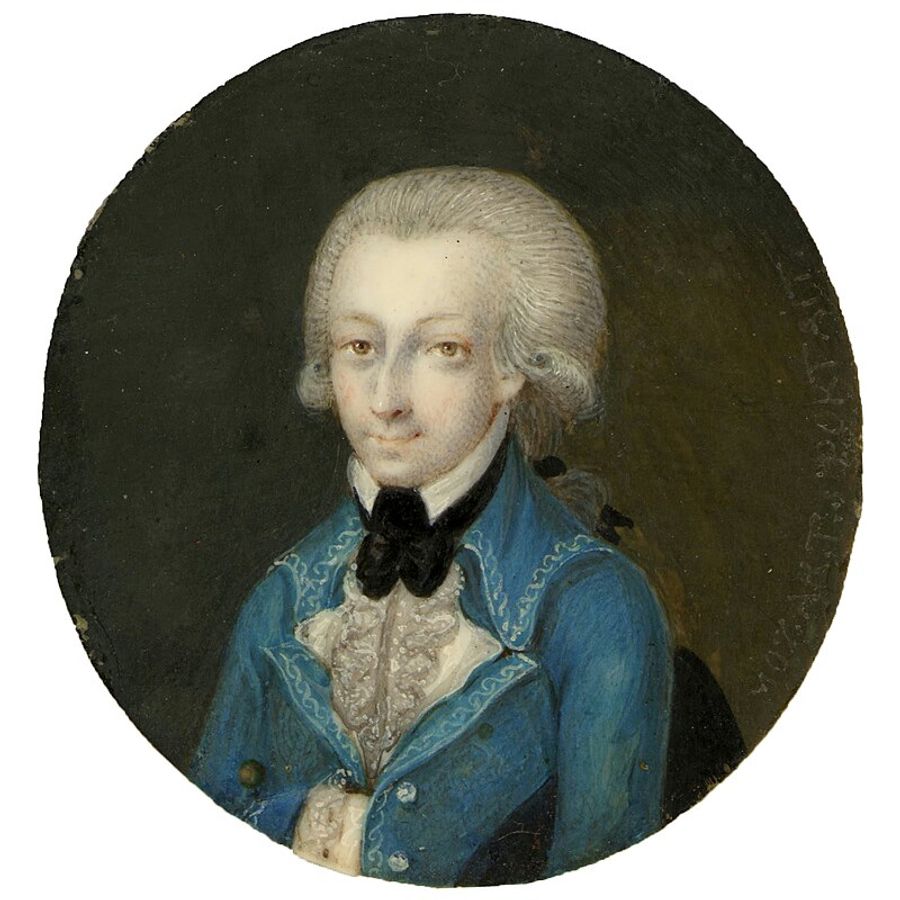
Mozart’s Symphony No. 18 in F major (K. 130) was completed in Salzburg in May 1772, when the composer was just sixteen. Modest in scale but unusually colorful in scoring, it is a striking teenage essay in orchestral imagination—especially for its prominent flutes and its rare use of four horns.
Background and Context
In 1772 Wolfgang Amadeus Mozart (1756–1791) was back in Salzburg, employed—formally and informally—within the courtly musical life overseen by Archbishop Hieronymus Colloredo. The city’s demands were practical: church music, serenades, occasional dramatic works, and orchestral pieces for court functions. Yet Salzburg was hardly provincial in taste. Mozart and his father Leopold were acutely aware of the latest symphonic styles circulating between Italy, Vienna, and the South German courts, and the teenage composer absorbed these idioms with startling speed.
Symphony No. 18 in F major, K. 130 belongs to a small cluster of Salzburg symphonies from 1772, written before Mozart’s “breakthrough” symphonies of the later 1770s and 1780s. It is not among the most frequently played works in the cycle, but it deserves attention for two reasons: first, it shows Mozart aiming beyond the routine “overture-symphony” type toward a four-movement design with a Minuet; second, it experiments with orchestral color in ways that are unexpectedly bold for a court ensemble that may not always have had the required players to hand.[1]
Composition and Premiere
K. 130 is generally dated to May 1772 in Salzburg, and it is often described as the last of three symphonies Mozart composed that month (alongside K. 128 and K. 129).[1] The autograph survives, and the work’s authenticity is secure.[2]
Unlike many later Mozart symphonies, a specific premiere date, venue, and occasion are not firmly documented in the standard reference summaries available online; the most prudent assumption is that the piece was intended for Salzburg court use, where symphonies could function as concert items, ceremonial music, or (in some contexts) theatre-related introductions. Modern editions situate the symphony within the Neue Mozart-Ausgabe (New Mozart Edition), underscoring that the work has a stable textual basis for performance and study.[3]
Instrumentation
K. 130’s scoring is the feature that most immediately marks it out within Mozart’s early symphonies. Instead of the more typical Salzburg pairing of oboes and horns, Mozart writes for flutes—and, more unusually, for two pairs of horns.[1]
- Winds: 2 flutes
- Brass: 4 natural horns (two pairs; with crooks changing by movement)
- Strings: violins I & II, viola, cello, double bass
The presence of flutes “instead of oboes” is sometimes noted as a first in Mozart’s symphonic writing, and the four-horn complement is rare in his output.[1] These choices create a soft-edged, pastoral sheen in the outer movements and give the score a ceremonial glow when the horns are deployed in full harmony.
At the same time, the scoring raises a practical Salzburg question: could the court orchestra reliably field flutes and four horns in 1772? One plausible explanation—suggested in modern reference commentary—is that players doubled (oboists taking up flutes, for example), or that Mozart was writing with an ideal ensemble in mind rather than the daily minimum.[1]
Form and Musical Character
K. 130 adopts a confident four-movement plan that aligns it with the “concert-symphony” trajectory of the early 1770s rather than the three-movement Italian sinfonia model.
- I. Allegro (F major, 4/4)[1]
- II. Andantino grazioso (B♭ major, 3/8)[1]
- III. Menuetto – Trio (F major, 3/4)[1]
- IV. Molto allegro (F major, 4/4)[1]
I. Allegro
The opening movement is energetic and plainly theatrical—music that can “raise the curtain” even when no curtain exists. What makes it distinctive is not just its youthful drive but its timbral profile: flutes lend brightness without the piercing edge of oboes, while the horns broaden the harmonic spectrum, so that cadences feel spacious and public. The result is an early example of Mozart thinking orchestrally, not merely melodically.
II. Andantino grazioso
The second movement, in B♭ major and in a lilting 3/8, offers a poised contrast: more intimate, lightly danced, and shaped by graceful phrase symmetry. Here the scoring’s grazioso character is persuasive—flutes can suggest a chamber-like delicacy even within a symphonic frame. The movement also shows Mozart practicing the art of sustained lyricism across a relatively short span: a skill that will later become central to his concerto slow movements.
III. Menuetto – Trio
Including a Minuet signals Mozart’s engagement with the Austro-German symphonic tradition as it was developing around him (Haydn’s influence is never far away in Salzburg’s musical orbit). In performance, this Minuet benefits from a firm, unhurried pulse: it is less a ballroom miniature than a public gesture, a courtly dance reframed for the concert-room. The Trio typically relaxes the texture and can spotlight the winds’ gentler colors.
IV. Molto allegro
The finale restores momentum with brisk, brilliant writing and a lively sense of forward motion. In Mozart’s early symphonies, finales can sometimes function as straightforward “closing numbers”; here, however, the Molto allegro feels like a genuine culmination—tightened rhythmic energy, quicksilver exchanges, and a bright F-major affirmation strengthened by the horns’ resonant presence.
Reception and Legacy
Because Mozart’s later symphonies (especially Nos. 35–41) dominate the concert repertoire, K. 130 often appears mainly in complete cycles or in recordings focused on the early Salzburg years. Yet this relative obscurity can obscure what the piece reveals: at sixteen, Mozart was already testing the boundaries of what a Salzburg symphony could sound like—experimenting with wind color (flutes replacing oboes) and enlarging the brass palette with four horns, an orchestral luxury he would use only rarely thereafter.[1]
Today, K. 130 repays attention as a document of stylistic ambition rather than mere apprenticeship. It stands at a point where Mozart’s symphonic craft is becoming more architecturally assured (four movements, clear contrasts, purposeful pacing), while his imagination is already drawn to the expressive potential of orchestration—an instinct that will bloom spectacularly in the mature operas and the late symphonies. For listeners interested in how Mozart became Mozart, Symphony No. 18 is a compact but telling chapter.
Sources
[1] Wikipedia: overview, dating (May 1772), movement list, and discussion of unusual scoring (flutes instead of oboes; four horns).
[2] IMSLP work page: general information (May 1772), source details including autograph manuscript and editions.
[3] Bärenreiter preface (New Mozart Edition / NMA): identifies the work as Symphony in F major, “No. 18,” KV 130, Urtext of the Neue Mozart-Ausgabe.