- Köchel Number
- K9 131 | K6 131
- Genre
- Orchestral Music
- Form
- Serenades, Cassations & Divertimenti
- Key
- D Major
- Date
- June 1772
- Place
- Salzburg
- Age
- 16
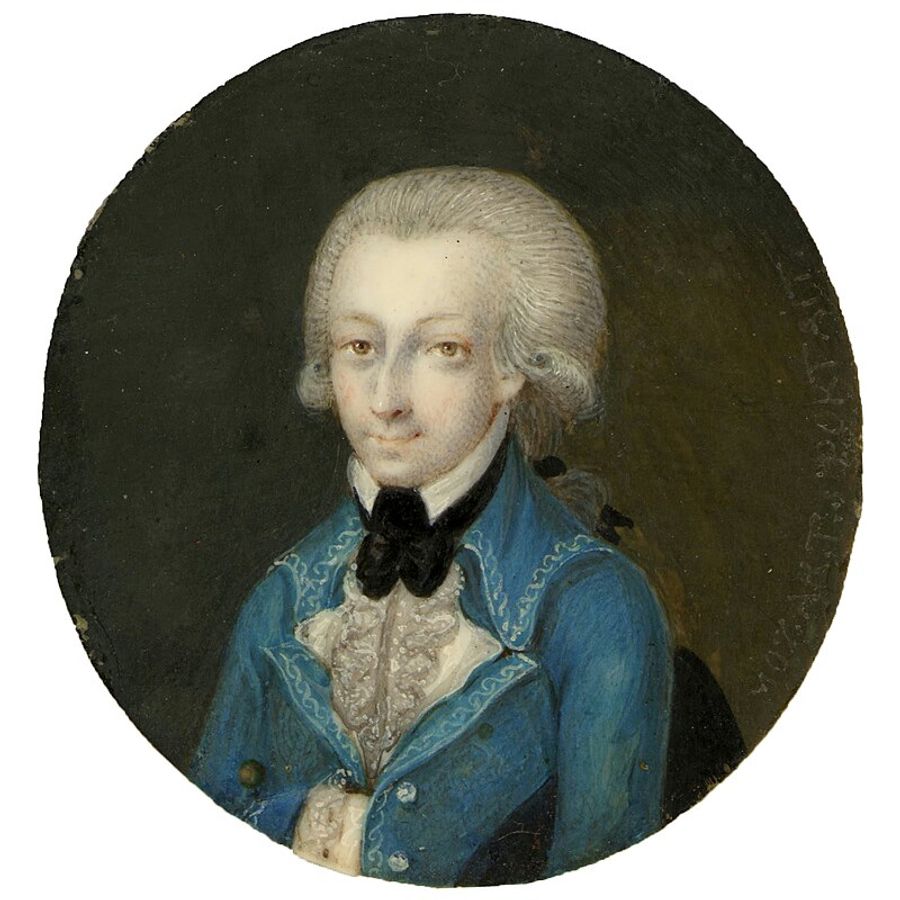
Mozart’s Divertimento (often catalogued as a Salzburg serenade/cassation) in D major, K. 131 was completed in Salzburg in May–June 1772, when the composer was 16.[1] Scored for a bright outdoor-style ensemble—flute, oboe, bassoon, four horns, and strings—it is a compact showcase of the teenage Mozart’s ear for sonority, his instinct for public ceremony, and his rapidly expanding command of multi-movement design.[1]
Background and Context
In Salzburg, the words cassation, serenade, and divertimento often point less to strict genre boundaries than to function: festive, frequently outdoor music, written for social or civic occasions (including university events) and typically laid out in several contrasting movements.[1] Mozart grew up inside this tradition; by his mid-teens he could write such “occasional” music with an assurance that makes the category label feel almost modest.
K. 131 belongs to a cluster of Salzburg orchestral entertainment works from 1772, a year that also saw Mozart composing symphonies, church music, and stage works while consolidating his practical craft as a court musician.[1] What makes this particular divertimento worth attention is the way it upgrades background-pageantry into something more psychologically varied: not merely a sequence of pleasant numbers, but a small drama in instrumental color—especially in the use of four horns, an unusually luxurious allotment for a Salzburg outdoor piece.
Composition and Premiere
The Internationale Stiftung Mozarteum (Köchel catalogue) dates K. 131 to Salzburg, May–June 1772, and notes that the work survives complete and is securely authentic.[1] The autograph title information transmitted in the catalogue underscores the Salzburg provenance and the 1772 dating.[1]
Unlike Mozart’s later Vienna concertos and operas, a specific premiere for K. 131 is not firmly documented in widely accessible reference sources. That absence is itself historically telling: much serenade/divertimento repertory was written for particular evenings and then re-used, excerpted, or repurposed as needed.[1] The work’s six-movement layout—two substantial fast movements framing slow music and multiple minuets—fits precisely the Salzburg pattern described by the Köchel catalogue’s genre overview.[1]
Instrumentation
K. 131 is scored for orchestra with winds and horns in a way that strongly signals open-air brilliance.
- Winds: flute, oboe, bassoon[1]
- Brass: 4 horns (in D)[1]
- Strings: violins I & II; two viola parts; cello & double bass (bass line)[1]
Even on paper, the sound world is distinctive. Four horns allow Mozart to alternate between ceremonial “choirs” of horns and more conversational writing in which the winds color the string texture. The effect is both festive and architectural: the harmonic underpinning can be made unusually resonant (and unusually public) when the horns are deployed together.
Form and Musical Character
The movement list, as transmitted in standard catalog/score references, shows a classic Salzburg divertimento plan, expanded by an especially weighty finale.[2]
- I. [Allegro] (D major)[2]
- II. Adagio (A major)[2]
- III. Menuetto – Trio I (D major), Trio II (G major), Trio III (D minor) – Coda (D major)[2]
- IV. Allegretto (G major)[2]
- V. Menuetto (D major) – Trio I (G major), Trio II (A major) – Coda (D major)[2]
- VI. Adagio – Allegro molto – Allegro assai (D major)[2]
A “public” opening, and a surprisingly shaped middle
The first movement’s role is the traditional one in Salzburg serenades: to establish an energetic, almost symphonic profile—music that can command attention even in a social setting.[1] Yet what follows is less predictable. The Adagio in A major (the dominant key) creates a lyric interior space—precisely the kind of “slow movement in a different key” that the Salzburg tradition cultivated as a contrast to the opening ceremonial brightness.[1]
The sequence of dance movements is also more than mere padding. Movement III offers not one trio but three—shifting not only key but affect, including a turn to D minor that briefly darkens the divertimento’s sunlit D-major world.[2] That kind of quick emotional pivot—especially within a “light” genre—is a Mozart fingerprint already visible at 16.
The finale as miniature scena
The finale’s three-part tempo design (Adagio – Allegro molto – Allegro assai) gives K. 131 a concluding gesture more ambitious than the easygoing endings of many contemporaneous divertimenti.[2] An opening slow section functions almost like an operatic curtain-raiser: a moment of suspense and breadth, after which the fast music can sound doubly jubilant.
Here the four horns become more than a decorative addition. In outdoor genres, horns naturally evoke hunting calls and open-air resonance; Mozart exploits that association while integrating the horns into structural rhetoric—punctuating transitions, reinforcing cadences, and widening the harmonic “frame” of the movement so the final pages feel genuinely conclusive rather than merely brisk.
Reception and Legacy
K. 131 is not a universal “greatest hits” item like Eine kleine Nachtmusik (K. 525), but it is well established in scholarly cataloguing and performance materials, and it survives fully intact.[1] Its enduring value lies in what it reveals about Mozart’s Salzburg technique: the ability to satisfy a functional brief (outdoor entertainment music in multiple movements) while quietly enlarging the expressive compass.
For modern listeners, the divertimento offers a different kind of Mozartian pleasure than the late operas or piano concertos. It is music that thinks in color—wind timbre against strings, horn choir sonority against lighter textures—and in contrast: bright D-major ceremonial writing repeatedly interrupted by lyrical, even momentarily shadowed episodes.[2] Heard on its own terms, K. 131 deserves to be approached not as “early Mozart, therefore slight,” but as a confident adolescent work that already treats a supposedly occasional genre as an opportunity for form, character, and instrumental imagination.