- Köchel Number
- K9 129 | K6 129
- Genre
- Orchestral Music
- Form
- Symphonies
- Key
- G Major
- Date
- May 1772
- Place
- Salzburg
- Age
- 16
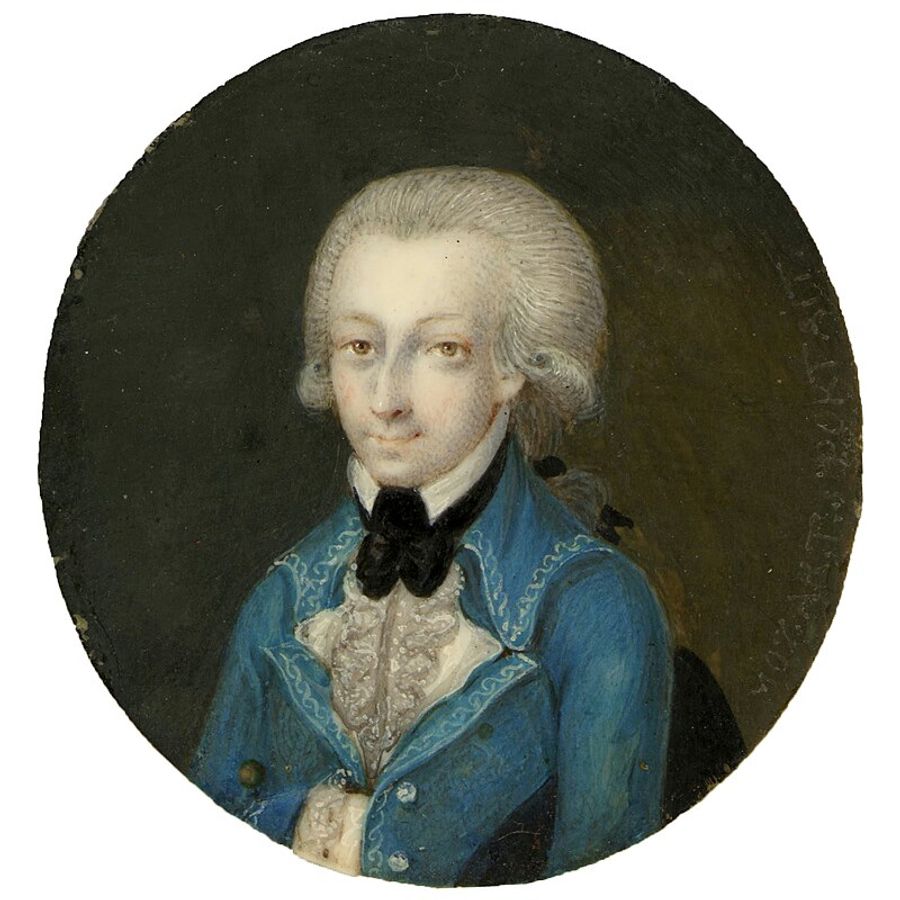
Mozart’s Symphony No. 17 in G major, K. 129 is a compact Salzburg work completed in May 1772, when the composer was sixteen. Often overshadowed by the later “numbered” symphonies, it nevertheless shows a young Mozart refining a fluent, Italianate symphonic style—quick on its feet, alert to orchestral color, and already confident in shaping large spans from small motifs.[1]
Background and Context
In the spring of 1772 Wolfgang Amadeus Mozart (1756–1791) was back in Salzburg between Italian journeys, writing for the musical life of the prince-archiepiscopal court. The symphonies from this period are typically concise, three-movement works—fast–slow–fast—designed for practical performance by the available court orchestra rather than for publication or international circulation.[3]
K. 129 belongs to a closely spaced group of Salzburg symphonies from May 1772 (K. 128–130), a moment when Mozart’s orchestral writing is notably disciplined: textures tend to be lean, the musical argument is carried by sharply profiled themes, and wind parts are used for color and punctuation rather than for fully independent counterpoint.[1] In such music, “small” does not mean casual. The piece rewards attention because it reveals how quickly Mozart learned to generate propulsion and contrast with limited means—skills that later blossom in the symphonies of the 1780s.
Composition and Premiere
The symphony is generally dated to May 1772 in Salzburg, and it is commonly described as the second of three symphonies Mozart completed that month.[1][3] (Some material may have originated earlier, a reminder that Mozart—like many eighteenth-century composers—could reuse and revise ideas as circumstances required.[1])
Like many early Salzburg symphonies, K. 129 has no securely documented first performance. It was likely intended for court use, played by the Salzburg ensemble in whatever setting required orchestral music—academy-style concerts, festive occasions, or theatrical interludes—rather than for a single public “premiere” in the later nineteenth-century sense.[3]
Instrumentation
Mozart scores K. 129 for a standard Salzburg orchestra of the early 1770s:[1]
- Winds: 2 oboes
- Brass: 2 horns
- Strings: violins I & II, viola, cello, double bass
The wind writing is characteristic of the period: oboes often reinforce the upper string lines for brilliance, while the horns supply harmonic weight and outdoor-like resonance. What makes K. 129 especially appealing is how deftly Mozart varies the orchestral “lighting”—moving between full ensemble sonority and more transparent string textures, most notably in the slow movement.[1]
Form and Musical Character
K. 129 follows the three-movement Italianate plan, but within that familiar frame Mozart finds room for vivid gestures and a surprisingly individual profile.
I. Allegro
The opening movement is an essay in early Classical drive: energetic, rhythmically buoyant, and built for immediate impact. A notable feature is Mozart’s use of the Mannheim crescendo—a graded swell in dynamics and texture associated with the famed Mannheim orchestra—which here functions less as showmanship than as a means of shaping longer phrases and heightening arrivals.[1] One hears Mozart learning how to “pace” excitement: rather than simply stating a theme and repeating it, he keeps the surface in motion through quick exchanges between strings and winds and through subtle rhythmic recombinations.
II. Andante (C major)
The Andante moves to the subdominant key of C major, a typical eighteenth-century strategy for creating a gentler, more luminous contrast. Mozart further distinguishes the movement by giving prominence to a solo violin line—a texture that feels almost concerto-like in its invitation to the leader of the violins to step forward.[1] The result is an intimate center to the symphony: the rhetoric turns from public, extrovert gesture to a singing line supported by discreet accompaniment.
III. Allegro
The finale restores G major and a brisk tempo, aiming for clean articulation and an athletic close. In early Mozart finales, wit often comes not from overt jokes but from timing: sudden changes of register, quick cadential turns, and the way a phrase seems to “answer itself” a beat earlier or later than expected. K. 129 exemplifies this economy. It is music that does not linger—yet its craftsmanship lies precisely in that refusal to overstay.
Reception and Legacy
Symphony No. 17 is not among Mozart’s most frequently programmed symphonies, partly because it belongs to an enormous body of early Salzburg orchestral music that later audiences once treated as apprentice work. Yet modern performing and recording culture has increasingly valued these symphonies as documents of stylistic formation and as attractive concert openers in their own right.[3]
What, then, makes K. 129 worth a closer listen? First, it captures Mozart at sixteen writing with professional assurance for real players: the scoring is idiomatic, the pacing crisp, the contrasts clearly staged. Second, the symphony demonstrates how an apparently “standard” three-movement plan can still yield personality—above all through the first movement’s dynamic shaping (the Mannheim-inspired crescendo) and the slow movement’s solo-violin cantabile.[1]
Heard alongside its May 1772 companions (K. 128 and K. 130), K. 129 helps map the young composer’s rapidly consolidating symphonic voice: not yet the grand architect of the final trilogy (K. 543, 550, 551), but already a remarkably exact musical dramatist, able to make a dozen minutes feel like a complete, well-told story.[1]
Sheet Music
Download and print sheet music for Symphony No. 17 in G major (K. 129) from Virtual Sheet Music®.
Sources
[1] Wikipedia: overview, dating (May 1772), scoring, movements, and notable features (Mannheim crescendo; solo violin in slow movement).
[2] IMSLP PDF score (public-domain edition): reference for the work and its three-movement layout.
[3] IMSLP work page: composition date (1772, May), movements, instrumentation, and publication information.