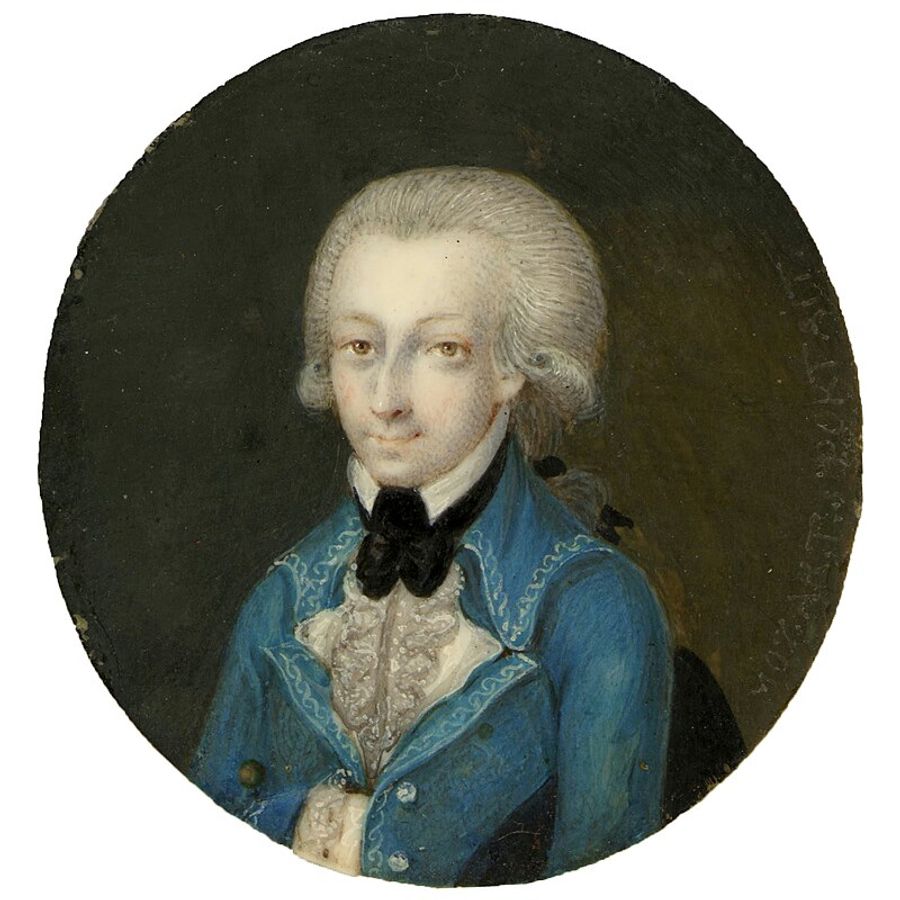
- Köchel Number
- K9 128 | K6 128
- Genre
- Orchestral Music
- Form
- Symphonies
- Key
- C Major
- Date
- May 1772
- Place
- Salzburg
- Age
- 16
Mozart’s Symphony No. 16 in C major, K. 128 was completed in Salzburg in May 1772, when the composer was sixteen. Compact, bright, and overture-like in design, it shows a young symphonist testing how much drama and harmonic adventure can be packed into a three-movement classical frame.
Background and Context
In 1772, Wolfgang Amadeus Mozart (1756–1791) was back in Salzburg after the stimulus of his Italian journeys, working within the routines—and constraints—of an archiepiscopal court. The symphony, at this stage of his career, was still closely allied to the operatic overture: a fast opening, a lyrical middle movement, and a brisk finale, usually without a minuet. Symphony No. 16 in C major, K. 128 belongs squarely to this tradition, yet it also reveals Mozart’s growing confidence in shaping sonata-allegro argument and in coloring even “standard” material with pointed rhythmic and harmonic surprises.[1]
K. 128 is the first of three symphonies Mozart completed in May 1772 (K. 128–130), a cluster that suggests purposeful experimentation: similar orchestral resources, similar dimensions, but distinct personalities.[1] If the later Salzburg symphonies of the mid-1770s are where many listeners first hear the “mature” Mozart symphonist emerging, K. 128 is valuable precisely because it documents the craft taking shape—swiftly, economically, and in public-facing, ceremonial C major.
Composition and Premiere
Mozart completed the work in Salzburg in May 1772.[1] Like many early symphonies from Salzburg, the precise occasion and first performance are not securely documented in the surviving sources; the music nevertheless fits the practical realities of local performance: modest forces, clear contrasts, and a design that can function as a concert symphony or in an overture-like capacity.[1]
The autograph score survives (today held by the Berlin State Library), a reminder that this is not a dubious or reconstructed item in the catalogue but a securely transmitted work from Mozart’s hand.[1]
Instrumentation
K. 128 uses the “standard” Salzburg symphonic ensemble of winds and horns alongside strings—enough color for brilliance and resonance, without the weight of trumpets and timpani found in more explicitly festive C-major works.[1]
- Winds: 2 oboes
- Brass: 2 horns (in C)
- Strings: violins I & II, viola, cello, double bass[1]
Mozart’s scoring already shows an instinct for clarity: the oboes sharpen the contours of cadences and thematic edges, while the horns—especially in C major—reinforce harmonic pillars and lend a courtly sheen to tuttis.
Form and Musical Character
The symphony follows the three-movement pattern associated with the sinfonia (Italian overture): fast–slow–fast.[1]
- I. Allegro maestoso (C major, 3/4)
- II. Andante grazioso (G major, 2/4)
- III. Allegro (C major, 6/8)[1]
I. Allegro maestoso (C major)
The opening movement is marked not merely fast but maestoso—and Mozart takes the hint seriously. The music projects a ceremonial profile through crisp, public gestures and a strong sense of tonal “architecture.” Formally, it is a compact sonata-allegro form (exposition, development, recapitulation), notable for how quickly Mozart pushes beyond surface brilliance into harmonic motion.[1]
A distinctive detail is the movement’s rhythmic ambiguity at the outset: triplets can make the meter feel broader than it is, only for the underlying 3/4 to assert itself more plainly as the exposition proceeds.[1] The development is brief but energetic, with a concentrated series of modulations that lends the movement a seriousness not always expected in a teenage Salzburg symphony.[1]
II. Andante grazioso (G major)
The slow movement shifts to the dominant, G major, and to a graceful 2/4—an elegant, conversational world after the opening’s public stance.[1] Here the “deserves attention” claim is less about novelty than about poise: Mozart already knows how to write slow movement melody that breathes naturally, and how to let winds and strings share the line without thickening the texture. The result is music that feels closer to chamber rhetoric than to ceremonial display.
III. Allegro (C major)
The finale, in 6/8, supplies the expected quick close, but its buoyant compound meter gives it a different kind of propulsion from the first movement.[1] In performance, this is where K. 128 can sound most unmistakably “youthful”—not in the sense of naïveté, but in its delight in momentum, clean cadential goals, and sparkling phrase symmetry.
Reception and Legacy
K. 128 is not among the late symphonies that dominate modern concert life, and it rarely carries a nickname to keep it in circulation. Yet it has remained firmly in the repertoire of recordings and scholarly catalogues, supported by secure source transmission and its place within Mozart’s clearly dated Salzburg sequence.[1][2]
Its deeper value is documentary and musical at once. Documentary—because it shows Mozart, at sixteen, absorbing Italianate overture habits while strengthening his command of sonata-allegro procedures. Musical—because, within a small frame and modest orchestration, it balances three distinct kinds of energy: the opening’s maestoso public rhetoric, the slow movement’s poised lyricism, and the finale’s kinetic lightness. Heard on its own terms, Symphony No. 16 is a persuasive reminder that Mozart’s “early” symphonies are not mere juvenilia but practical, sharply made works that train the ear for what his later symphonic imagination will expand.