La clemenza di Tito (K. 621) — Mozart’s Last Opera Seria, Reforged for Prague
- Köchel Number
- K9 621 | K6 621
- Genre
- Opera & Stage Music
- Form
- Operas & Singspiels
- Date
- 6 September 1791
- Place
- Prague
- Age
- 35
La clemenza di Tito (K. 621) is Mozart’s two-act opera seria, composed in 1791 for Prague and first performed on 6 September 1791 at the Estates Theatre as part of the coronation festivities of Leopold II as King of Bohemia.[1] Written under severe time pressure and on a heavily revised Metastasian libretto by Caterino Mazzolà, it turns an old “virtue drama” into something closer to late Mozart: quickened ensembles, psychological volatility, and wind writing of extraordinary intimacy.[2]
Background and Context
In late summer 1791, Prague briefly became the Habsburg court’s ceremonial capital. The Bohemian Estates staged elaborate festivities for Leopold II’s coronation as King of Bohemia on 6 September 1791, drawing nobility, diplomats, and a sizeable court musical contingent to the city.[3] In this climate, opera was not mere entertainment but public image-making: a coronation opera needed to proclaim order, legitimacy, and—crucially—political temperance.
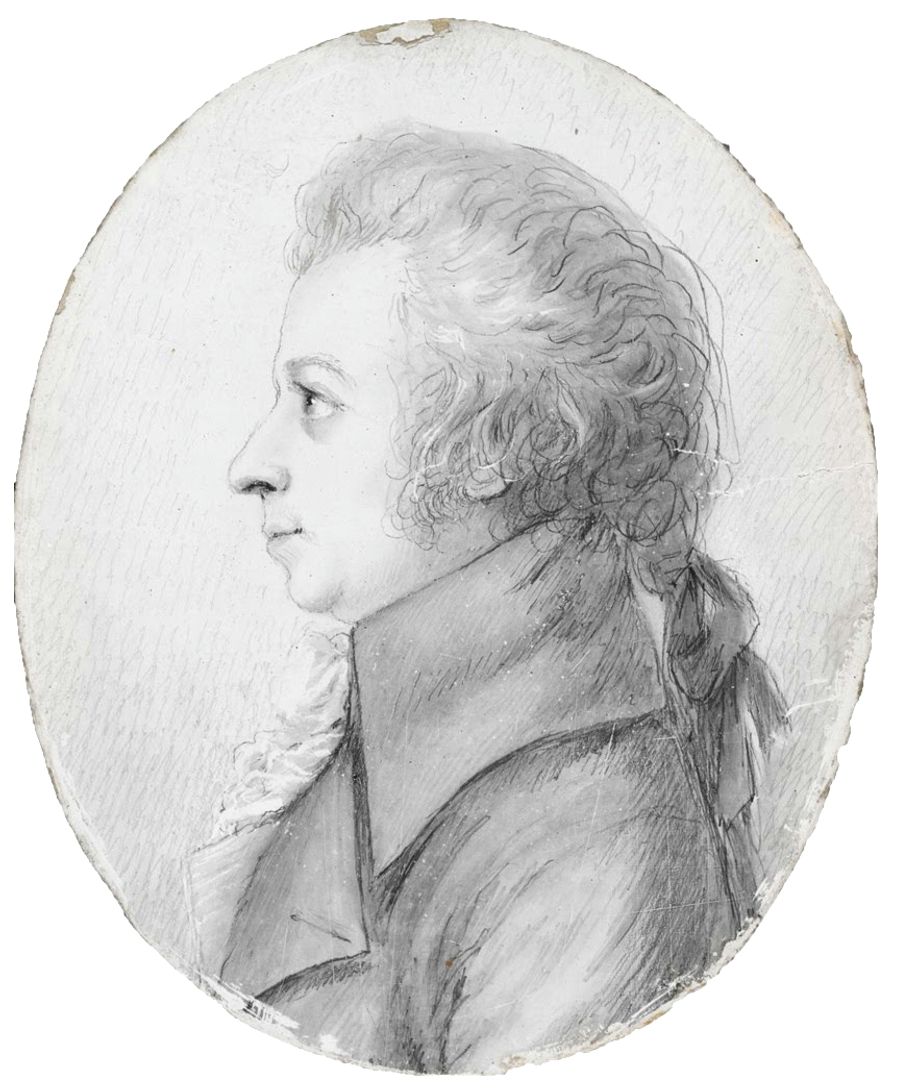
Mozart (1756–1791), then 35, arrived as a composer with unusual Prague prestige. The city had embraced Le nozze di Figaro and then witnessed Don Giovanni’s birth in 1787 under the same impresario who now needed an opera at short notice: Domenico Guardasoni.[1] That Prague remembered Mozart as a “local” celebrity matters for Tito, because the opera’s modern reputation can obscure its original function: it was a work meant to work—to satisfy ceremony, protocol, and a mixed audience of courtly insiders and public theatergoers.
The political subtext has been read in more than one direction. A recent institutional synopsis from Vienna’s Staatsoper frames the Estates’ commission as an appeal to Leopold’s leniency and a hope that Joseph II’s centralizing reforms might be softened.[4] At the same time, the opera’s emphasis on clemency and moral self-governance (rather than divine right) has encouraged Enlightenment-inflected interpretations—especially in post–French Revolution hindsight.[4]
Composition and Commission
The commission was arranged for Guardasoni by the Bohemian Estates to mark the coronation celebrations, with the première scheduled for the very day of Leopold’s crowning.[1] Mozart’s calendar in 1791 was already dangerously crowded: Die Zauberflöte was in progress, and the Requiem commission would arrive later that autumn. Modern lore often compresses Tito into a cliché of speed (“18 days”), yet the documentary situation is more cautious: the deadline was undeniably short, but the famous “18-day” figure is associated with early biographical tradition rather than surviving compositional paperwork.[1]
A valuable way to think about the “rush” is not as an excuse for supposed artistic compromise, but as an explanation for division of labor in the theater. A widespread scholarly inference—supported by autograph evidence (or rather, its absence)—is that Mozart did not write the secco recitatives: none survive in his hand, and they are often attributed to Franz Xaver Süssmayr, who traveled with Mozart to Prague to assist with copying, rehearsal preparation, and practical theatre work.[2][5] This is not merely a footnote. It shapes how the opera moves: Mozart’s accompanied recitatives and arias become the true psychological “close-ups,” while the secco stretches can feel like connective tissue—effective on stage when paced theatrically, but exposed in the concert hall.
The opera also embodies a late-stage Mozartian paradox: it is stylistically “archaic” in genre label (dramma serio), yet startlingly modern in musical rhetoric. Mazzolà’s libretto revision (discussed below) accelerated that modernity, but Mozart’s most radical contributions lie in orchestral characterization: the score’s winds do not simply color the voice, they think alongside it.
Libretto and Dramatic Structure
The text of La clemenza di Tito begins with an old, venerated backbone: Pietro Metastasio’s 1734 libretto, long associated with the moralized classicism of 18th-century court theatre. For 1791 Prague it was adapted by Caterino Mazzolà, who did more than prune: he refashioned Metastasio’s architecture toward ensemble drama.[1][2]
One concrete measure of this transformation is sheer textual surgery. A Metropolitan Opera study text summarizes the revision as severe cutting—hundreds of lines of recitative removed—paired with a rebalancing that replaces static narration with stageable confrontation and collective reaction.[2] In other words, Mazzolà helps convert a moral pageant into a drama of pressure and timing: actions happen in front of us, not in reported retrospect.
The dramaturgical keystone is the opera’s ethical gamble: Tito’s clemency must be credible as a human act, not as a deus ex machina of rulerly virtue. Modern directors often choose between two emphases:
- Tito as enlightened statesman: clemency as political technology—public mercy that stabilizes the regime.
- Tito as vulnerable individual: clemency as a costly personal decision, nearly unbearable because it is directed at intimates.
The libretto can sustain both. Yet Mozart’s music persistently pushes toward the second reading. The opera’s real “plot engine” is not the failed conspiracy itself but the emotional physics among Vitellia, Sesto, and Tito—desire, humiliation, friendship, and guilt moving faster than anyone’s ethical ideals can regulate.
Musical Structure and Key Numbers
Mozart’s score keeps the opera seria scaffolding—recitative to aria, public scenes anchored by choruses and finales—while sharpening the psychological temperature. The most striking sign of “late Mozart” is his treatment of instrumental obbligato (a featured solo instrument woven into the vocal fabric), especially the clarinet family.
Several key numbers show how the opera’s moral themes become sound:
- Sesto: “Parto, parto, ma tu ben mio” (Act I) — This is not merely a showpiece; it is self-division in real time. The aria is famously paired with an obbligato basset clarinet part written for Mozart’s friend Anton Stadler.[6] The clarinet line does what the voice cannot: it persuades, doubts, and seduces simultaneously, creating a second “conscience” that hovers around Sesto’s promises.
- The Act I finale — Mazzolà’s reconfiguration makes the revolt and crisis more directly theatrical than in Metastasio, and Mozart responds with a finale that behaves like a pressure chamber: entrances accumulate, tonal certainty is delayed, and choral writing becomes civic noise rather than decorative celebration.[2]
- Sesto: “Deh, per questo istante solo” (Act II) — A distilled late-style aria of pleading that avoids the easy triumph of vocal display. Its power lies in harmonic patience: the music seems to wait for forgiveness it cannot demand.
- Vitellia: “Non più di fiori” (Act II) — One of Mozart’s great scenes of moral collapse. The aria’s obbligato is for basset horn, a darker, reedy member of the clarinet family, whose color sits between warmth and mourning.[7] If “Parto, parto” is persuasion, “Non più di fiori” is realization: the basset horn’s long phrases do not argue, they bear.
- Tito: “Se all’impero, amici Dei” / “Se all’impero” (Act II) — Tito’s music resists the temptation to depict power as noise. Mozart repeatedly frames the emperor’s authority as restraint: poised vocal lines, luminous orchestration, and an avoidance of theatrical cruelty even when the plot would permit it.
In sum, the opera’s oft-misunderstood “classicism” is not stiffness but control—Mozart using the inherited seria vocabulary (aria types, moral rhetoric, ceremonial tone) to depict characters whose inner lives are anything but ceremonial.
Premiere and Reception
La clemenza di Tito was first performed on 6 September 1791 at Prague’s Estates Theatre, with Mozart in Prague for the preparations and première in the thick of coronation activity.[1][3] The setting mattered: a courtly audience primed for symbolic affirmation, a theater culture used to Mozart’s more volatile Da Ponte comedies, and a city in festival mode.
Reception history begins with a cautionary tale about anecdotes. The notorious quip attributed to Empress Maria Luisa—dismissal as porcheria tedesca (“German mess/swinishness”)—is widely repeated, yet at least one reference compilation notes that the story does not appear in sources contemporary with 1791 and only surfaces much later (in 19th-century literary recollection).[8] The episode is useful less as a “fact” than as a clue to a long-standing interpretive prejudice: for decades, Tito was treated as a dutiful ceremonial job rather than a work of invention.
More securely documented are the conditions that shaped early impressions: the opera’s tight schedule, the prominence of secco recitative (the least “modern-sounding” component to later ears), and the ceremonial framing that could make dramatic pacing feel secondary to political function. Yet even skeptical listeners have tended to concede the extraordinary arias and ensembles—moments where Mozart’s late style flashes unmistakably through the genre’s older mask.
Performance Tradition and Legacy
The opera’s legacy is, in many ways, a 20th-century story: a gradual return from relative neglect into the central Mozart repertoire, catalyzed by renewed interest in opera seria as stage drama rather than museum etiquette.[2] Modern performance practice has also helped. When orchestras adopt Classical-era balances and articulate recitative with theatrical urgency—treating dialogue as action, not delay—the opera’s structure snaps into focus.
Two interpretive debates continue to generate meaningful musical consequences:
1. What kind of “clemency” is Tito’s? Productions that present clemency as public strategy will often keep Tito physically distant, emphasizing civic ritual and choral tableaux. Productions that treat clemency as personal crisis tend to intensify chamber-like scenes—especially those in which wind obbligati behave like emotional counter-voices.
2. How to handle the recitative problem (and its authorship)? If secco recitatives are indeed largely by Süssmayr, the question becomes artistic rather than forensic: do performers smooth the stylistic seam, or do they lean into contrast—making Mozart’s accompanied recitatives and arias feel like sudden shafts of psychological light?[5]
Ultimately, La clemenza di Tito endures because its ethical “message” is never simple propaganda. Mozart turns clemency into a tension between public duty and private feeling, then gives that tension a sound-world in which the clarinet family—basset clarinet and basset horn above all—speaks with a human immediacy that opera seria had rarely allowed itself. The result is not an anachronism from the past, but a late work that looks steadily toward modern musical drama.
Sheet Music
Download and print sheet music for La clemenza di Tito (K. 621) — Mozart’s Last Opera Seria, Reforged for Prague from Virtual Sheet Music®.
Sources
[1] Overview of commission, libretto adaptation, and Prague premiere date/venue
[2] Metropolitan Opera program notes (libretto revision, genre context, recitatives attribution, reception history)
[3] MozartDocuments: coronation festivities context and Mozart’s presence in Prague around the premiere
[4] Wiener Staatsoper production page: political framing of the coronation commission and Enlightenment reading
[5] Digital Mozart Edition (Neue Mozart-Ausgabe) editorial PDF for *La clemenza di Tito* (recitatives/authorship discussion)
[6] Anton Stadler biography (connection to *La clemenza di Tito* and obbligato clarinet writing)
[7] Basset horn reference (instrument role in Mozart, including Vitellia’s “Non più di fiori”)
[8] Classic Cat reference note on the late provenance of the “porcheria tedesca” anecdote