Finale (Presto) in D major from *Ascanio in Alba* (K. 111): the ‘Symphony No. 48’ confusion, and why the music matters
- Köchel Number
- K9 111 | K6 111a
- Genre
- Opera & Stage Music
- Form
- Operas & Singspiels
- Key
- D Major
- Date
- August 1771
- Place
- Milan
- Age
- 15
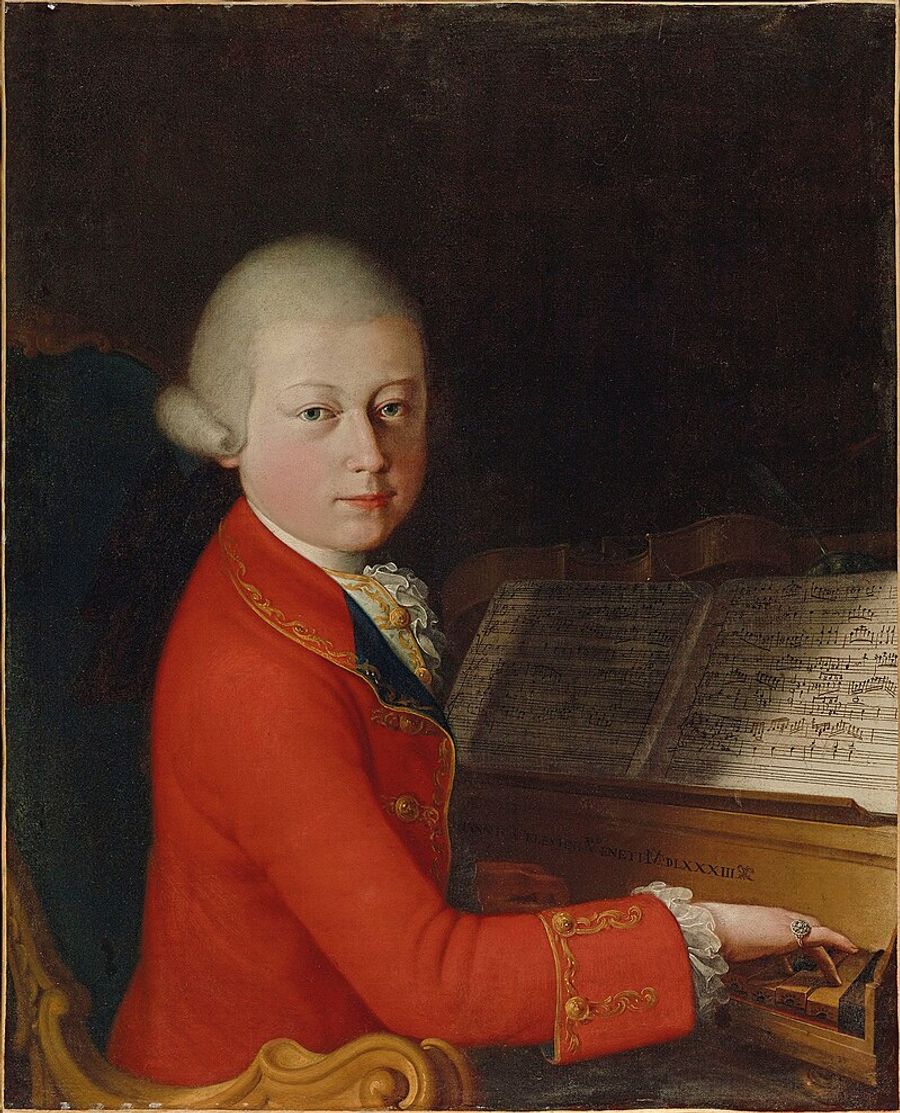
Mozart’s brilliant D-major Presto finale associated with Ascanio in Alba (K. 111) comes from his Milanese wedding serenata of 1771—music written when he was only fifteen. Long circulated in symphony catalogues as the finale of a putative “Symphony No. 48 in D major,” it is best understood today as dramatic theatre-music that happens to function superbly in the concert hall.
Background and Context
In October 1771 Milan hosted lavish court celebrations for the marriage of Archduke Ferdinand of Austria to Maria Beatrice d’Este. For the festivities at the Teatro Regio Ducale, the Habsburg administration commissioned a new festa teatrale—a semi-ceremonial stage work designed to flatter its patrons with pastoral allegory, choral spectacle, and balletic sheen. Mozart, fresh from Italian operatic successes as a teenage prodigy, was engaged to supply the music for Ascanio in Alba (K. 111) to a libretto by Giuseppe Parini.12
The work’s afterlife has created an unusual byway in Mozart reception history. Because eighteenth-century theatre overtures (sinfonie) were interchangeable with “symphonies” in later concert use, and because parts of Ascanio circulated independently, some symphony listings eventually treated material related to K. 111 as a D-major symphony—sometimes even as “No. 48.” Modern scholarship and editions, however, emphasize that the “symphony” is an assemblage: two movements derive from the opera’s overture, while the famous Presto finale (often labelled K. 120/111a) belongs to the orbit of the stage work rather than to a standalone symphony in Mozart’s mature sense.34
Why should listeners care about this finale today? Precisely because it sits at an intersection Mozart mastered early: public ceremonial theatre, Italianate orchestral brilliance, and the young composer’s instinct for kinetic endings. Heard on its own, the movement compresses the excitement of an operatic curtain-call into a concentrated orchestral sprint.
Composition and Commission
Ascanio in Alba was composed for Milan and first performed at the Teatro Regio Ducale on 17 October 1771.12 Documentary traces of the commission run through Count Carlo Giuseppe di Firmian, the governor-general of Lombardy, who oversaw preparations for the wedding festivities and correspondence around the project.25
The finale in question is the fast D-major Presto that later sources attached to the “symphony” composite connected with K. 111. In older Köchel-catalogue practice and subsequent symphonic cataloguing, the finale gained its own identifier (K. 120/111a) and was at times treated as if it completed a three-movement symphony built from the overture; modern presentations tend to describe it more cautiously as the finale “to the sinfonia of Ascanio in Alba.”4
That distinction is more than pedantry. A theatre sinfonia is functional music: it frames a stage event, signals authority and festivity, and primes the audience for spectacle. The Presto finale behaves like a theatrical “release of energy”—an exuberant closing gesture—rather than the argumentative, architectonic finale Mozart would later craft for the great Viennese symphonies.
Libretto and Dramatic Structure
Parini’s libretto dresses dynastic celebration in Arcadian costume. The plot belongs to the world of pastoral allegory, where nymphs, shepherds, and deities enact virtues—constancy, clemency, wise rule—appropriate to an imperial wedding.12 In such works the drama is deliberately “low-stakes”: the goal is harmony, public rejoicing, and a final tableau that crowns the evening.
This aesthetic helps explain why an orchestral finale could circulate independently. In a festa teatrale, numbers often function as framed set pieces (arias, choruses, dances) whose appeal is immediate. A closing Presto—even without text—suits the genre’s need for an unmistakable festive signal, the sonic equivalent of stage machinery, lights, and applause converging into a final blaze.
Musical Structure and Key Numbers
The Finale: Presto (D major)
The D-major Presto associated with the “Symphony No. 48” tradition is compact (IMSLP’s catalogue description gives 110 bars) and driven by sparkling rhythmic propulsion.4 Even by Mozart’s teenage standards, the movement is exceptionally “public”: it aims outward, projecting brilliance rather than intimacy.
Several features make it distinctive within its period and worth hearing as more than a cataloguing curiosity:
- A ceremonial key with theatrical voltage. D major in the eighteenth century is a natural home for festive brilliance—strongly associated with trumpets and timpani in ceremonial contexts. Even when performed without those colors, the key’s open-string resonance in the strings and its “bright” harmonic profile read instantly as celebratory.
- Motoric momentum and tight phrase craft. The short-breathed, repeating rhythmic cells give the music a sense of unstoppable forward motion—ideal for a finale that must “seal” an event. The effect anticipates Mozart’s later gift for finales that feel like controlled exhilaration, though here the argument is less symphonic and more theatrical.
- An overture-finale attitude. Rather than developing themes in a long symphonic span, the movement behaves like an operatic closing bustle—an orchestral flourish that suggests stage action even in purely instrumental form.
The broader ‘symphony’ assemblage (K. 111 + K. 120/111a)
The composite labelled “Symphony, K. 111+120” in modern reference literature underlines the source of confusion: material from the opera’s overture sits alongside the separate finale.3 In some historical numbering systems this composite was counted among Mozart’s symphonies (hence the “No. 48” label), even though its provenance is essentially theatrical and its components do not represent a single, unified symphonic conception composed as such.34
For a listener, the practical takeaway is simple: the Presto makes excellent sense in the concert hall—but its rhetoric is that of the theatre. It is best appreciated as a youthful, brilliantly engineered closing gesture from a Milanese court entertainment, not as the missing finale to a “lost” late-classical symphony.
Premiere and Reception
Ascanio in Alba premiered in Milan at the Teatro Regio Ducale on 17 October 1771.12 The work’s success contributed to Mozart’s growing Italian reputation during these formative travels, and the continuing documentary interest in the Milanese commission (including Firmian’s involvement) shows how seriously the project was taken as a political-cultural event, not merely as an evening’s diversion.25
The finale’s later reception belongs largely to music history’s filing systems: catalogues, editions, and recordings that repackaged theatre material as symphonic repertoire. That very process helps explain its survival. Brilliant, concise, and immediately effective, the D-major Presto is exactly the kind of movement that orchestras could adopt as a standalone concert item—especially in the nineteenth and early twentieth centuries, when “Mozart symphonies” were often defined more by available parts and practical programming than by strict genre boundaries.
Today, hearing the movement with its proper context restores its point. This is celebratory stage music—crafted for a specific public ritual in Milan in 1771—and it reveals a fifteen-year-old composer already fluent in orchestral theater: how to ignite a room, how to crown an occasion, and how to make a “finale” feel inevitable in barely a couple of minutes.14
Sources
[1] Wikipedia — Ascanio in Alba: genre, librettist (Giuseppe Parini), premiere date and place (Teatro Regio Ducale, Milan, 17 Oct 1771).
[2] Italian Wikipedia — Ascanio in Alba: commission context for the Milan wedding festivities; Count Firmian; premiere details.
[3] Wikipedia — Symphony, K. 111+120: explanation of the composite ‘symphony’ (overture movements from K. 111 plus separate finale) and the ‘No. 48’ numbering tradition.
[4] IMSLP — Finale zur Sinfonia des ‘Ascanio in Alba’, K. 120 (Symphony No. 48 tradition): movement title (*Presto*), key, and description of its original classification and later understanding.
[5] MozartDocuments.org — ‘Four letters by Count Firmian on Mozart and Ascanio in Alba’: primary-document context for the commission and preparations.