Lorenzo Da Ponte - The Abbé Who Wrote Mozart
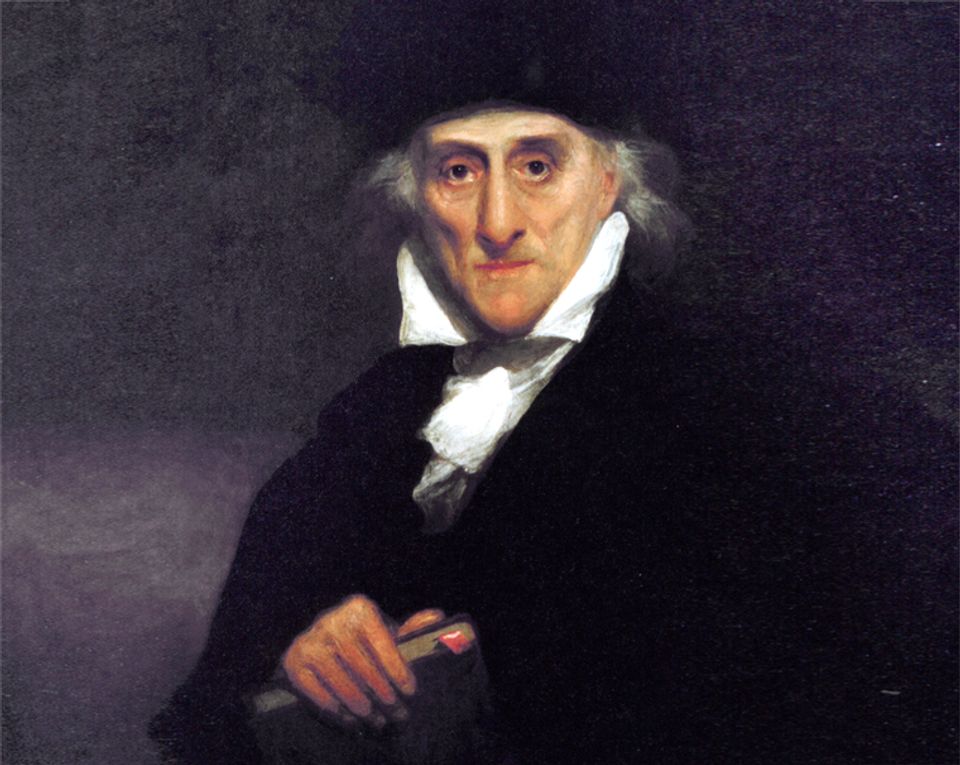
How a Venetian priest, a friend of Casanova, and eventually a New York grocer gave the world Figaro, Don Giovanni, and Così fan tutte
A grave nobody can find
On a sweltering New York morning in August 1838, an old Italian poet died at 91 Spring Street, a few blocks from the bookstore where, three decades earlier, he had introduced America to Dante. He was 89. His funeral filled old St. Patrick's on Mulberry Street. Then, with no headstone and no map, he was lowered into a Catholic cemetery on East 11th Street. When that ground was paved over in 1909, his bones were shovelled into a pile of other anonymous bones and reinterred at Calvary Cemetery in Queens, where, to this day, no one knows precisely which of the dead was him.¹


As an Amazon Associate we earn from qualifying purchases.
This was the closing scene in the life of Lorenzo Da Ponte: priest, libertine, fugitive, court poet to an emperor, grocer, bookseller, opera impresario, the first professor of Italian at Columbia College — and the man who wrote the words to the three greatest operas of Mozart's career.
He had no business doing any of it.
Born in a ghetto, baptised by a bishop
He wasn't even born Lorenzo Da Ponte. He was born Emanuele Conegliano on 10 March 1749, in the Jewish quarter of Ceneda — today's Vittorio Veneto, in the Veneto foothills — the eldest son of a leather-worker named Geremia and a young mother, Rachele, who died when the boy was five.² In 1764 his widowed father, wishing to marry a sixteen-year-old Catholic girl, did what poor Jewish widowers in the Republic of Venice sometimes did: he brought his three sons to the bishop's font. By custom, converts took the name of the cleric who baptised them. The boy walked into the cathedral as Emanuele Conegliano. He walked out, fourteen years old, as Lorenzo Da Ponte.³
The bishop paid for his seminary. He took minor orders. In 1773, at twenty-four, he was ordained a Catholic priest.
It suited him about as well as a saddle suits a fish.
A Venetian priest, a violin, and a banishment
In Venice he taught Latin by day and gambled by night. He wrote verses for noblemen. He had affairs — first with a patrician, then with a married woman called Angioletta Bellaudi, by whom he fathered two children, both abandoned to a foundling hospital. The trial record of 1779 alleges that he lived in a brothel and, on at least one occasion, played the violin in his cassock while the girls received clients.⁴ In December of that year the Magistracy of Blasphemy convicted him of "public concubinage" and "abduction of a respectable woman" and banished him from Venetian territory for fifteen years.⁵
It was during those Venetian years that he had befriended a fellow rake, a man twenty-four years his senior who would haunt the rest of his life: Giacomo Casanova.⁶ They met around 1776 at the home of Senator Bernardo Memmo. The original Don Juan and the future librettist of Don Giovanni would, in the manner of disreputable men everywhere, keep bumping into each other for the next twenty years.
Vienna, 1783: "We shall have a virgin Muse"
Banished, broke, and thirty, Da Ponte drifted north. In Dresden he picked up the unfashionable trade of writing libretti for translation. In 1781 a colleague handed him a letter of introduction to a court composer in Vienna. The composer's name was Antonio Salieri.⁷
Joseph II had just revived the Italian opera at the Burgtheater and needed a poet for it. Salieri brought his shabby protégé to court. The emperor, in a famously good mood, asked the priest how many plays he had written. None, Da Ponte admitted. "Good, good!" Joseph laughed. "We shall have a virgin Muse!" — and gave him the job.⁸



As an Amazon Associate we earn from qualifying purchases.
Enter Mozart
That was 1783. Somewhere in the same Vienna spring, at the home of the Jewish-born banker Baron Raimund Wetzlar von Plankenstern — Mozart's landlord, his patron, the godfather of his first child — the new court poet was introduced to a 27-year-old Salzburger who was already the talk of musical Europe and impatient for an Italian opera commission.⁹
Mozart sized him up and wrote home to his father with the wariness of a man who had been promised things by Italians before:
"Our poet here now is a certain Da Ponte. He has an enormous amount to do… He has then promised to write a libretto for me. But who knows if he will be able to keep his word, or whether he will want to? As you know, these Italians are very civil to one's face… If he is in league with Salieri, I shall never get anything out of him."¹⁰
He needn't have worried. The Italian, eventually, kept his word.
Smuggling Figaro past the emperor
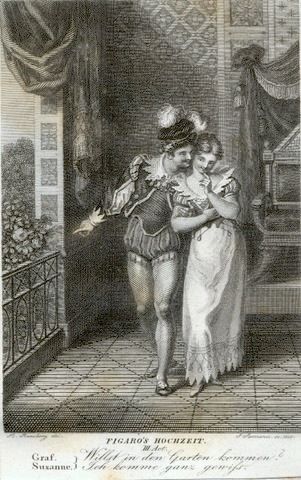
Their first project together was a piece of pure cheek. Pierre Beaumarchais's play La folle journée, ou Le mariage de Figaro — a comedy in which servants outwit their masters and a count is humiliated by his own wife — had been banned in Vienna by Joseph II as politically dangerous. The French Revolution was six years away; the emperor could smell it.
Mozart wanted it anyway.
According to Da Ponte's own Memoirs — written half a century later, charming, self-serving, and not always strictly accurate — he quietly adapted the play in secret while Mozart set the music. When the emperor finally summoned him, Da Ponte assured His Majesty that he had pruned every dangerous scene and that, by the way, "the music is remarkably beautiful." Joseph relented.¹¹
Le nozze di Figaro premiered at the Burgtheater on 1 May 1786. The applause was so insistent — singers were demanding encores after almost every number — that the emperor was forced to issue a decree restricting them at future performances.¹²
Vienna was politely impressed. Prague went mad for it. Inevitably, a second commission followed.
Three operas, one desk, a bottle of Tokay
What happened next is the most famous scene in any librettist's autobiography, and the one any honest scholar prefaces with: "according to Da Ponte himself…"
In 1787 he found himself contractually obliged to write three operas at once — Mozart's Don Giovanni, Salieri's Axur, re d'Ormus, and Vicente Martín y Soler's L'arbore di Diana. When the emperor laughed that it could not be done, Da Ponte, ever the showman, assured him:
"I shall write at night for Mozart, and regard it as reading Dante's Inferno; in the morning I shall write for Martin, and that will be like reading Petrarch; in the evening for Salieri, and that will be my Tasso."¹³
He went home. He sat down. And he produced, by his own description, the most quoted writing setup in the history of opera:



As an Amazon Associate we earn from qualifying purchases.
"A bottle of excellent Tokay wine was on my right, my escritoire in front of me, a snuffbox full of Seville tobacco on my left… A young and beautiful person of sixteen, whom I would have liked to love only as a daughter, lived with her mother in my house. She would come into my room… sometimes a biscuit, sometimes a cup of coffee, sometimes just her beautiful face."¹⁴
Charles Rosen, in his preface to the modern edition of the Memoirs, calls the book "not an intimate exploration of his own identity and character, but rather a picaresque adventure story."¹⁵ Translated: take it with a glass of Tokay. The chronology, however, holds up. The man really did write Don Giovanni, Axur, and L'arbore di Diana in overlapping months in 1787. The biscuits and the sixteen-year-old we have to take on faith.
A cameo from the original Don Juan
Da Ponte rejoined Mozart in Prague in October 1787 to put the finishing touches on Don Giovanni. (Local lore has the two men shouting lines back and forth between hotel windows on opposite sides of a Prague lane; the local lore is enchanting and almost certainly not true.)¹⁶
There is a stranger footnote. Casanova — by then a depressed 62-year-old librarian to Count Waldstein at remote Dux Castle in Bohemia — was in Prague for the premiere on 29 October 1787. After his death, two pages were found among his papers in his unmistakable handwriting: a redrafted version of one of Leporello's Act II scenes.¹⁷ Whether Mozart or Da Ponte ever used a syllable of it is doubtful. But the symmetry is too good to spoil. The original Don Juan really did, in some small unrecorded way, lend a hand to the operatic one.
Così, the death of an emperor, and the end of Vienna
The third Mozart–Da Ponte opera, Così fan tutte, premiered on 26 January 1790. Recent musicology has confirmed an old rumour: Salieri tried to set the libretto first, gave up, and Mozart inherited it.¹⁸
Less than a month after the premiere, on 20 February 1790, the Emperor Joseph II died.
Everything Da Ponte had built collapsed inside a year. The new emperor, Leopold II, was surrounded by the Italian poet's many enemies. By the spring of 1791 Da Ponte had been dismissed from imperial service and ordered out of Vienna.¹⁹ He drifted to Trieste, where, at forty-three, he married Nancy Grahl, the twenty-year-old English-born daughter of an Anglo-Jewish chemist — a marriage that would last forty years and produce four children.
Casanova's last advice — and a silence about Mozart
On the way to England the couple stopped in Bohemia for a final, melancholy visit to Casanova. The old seducer was 67, gouty, writing his memoirs at Dux. He gave Da Ponte three pieces of advice: keep his marriage secret in Catholic countries, beware of his enemies, and one piece of geography that turned out to be prophetic — "Don't go to Paris. Go to London."²⁰
As an Amazon Associate we earn from qualifying purchases.
Mozart, by then, was already dead. He had died in Vienna on 5 December 1791, at thirty-five.
In his entire 700-page Memoirs, Da Ponte does not give the death of his greatest collaborator a single sentence.²¹
A grocer in New Jersey
London should have been a triumph. It was a slow disaster. For thirteen years Da Ponte was house librettist at the King's Theatre, Haymarket; he wrote, he translated, he co-managed, he co-signed loans, he ran a small Italian bookshop, and he ran himself, by 1805, so hopelessly into debt that bailiffs were a daily problem. That summer he boarded a ship for Philadelphia, carrying — the story goes — only a violin.²²
He was 56 years old. He spoke almost no English. He had never been to America.
He tried being a grocer in Elizabethtown, New Jersey, then in the small town of Sunbury, Pennsylvania. "I laughed to myself," he wrote in the Memoirs, "every time my poetical hand weighed out two ounces of tea."²³
A bookstore quarrel that changed everything
In 1807 he was back in New York, ducking into a bookstore on lower Broadway, when he overheard a young customer say something dismissive about Italian literature. Da Ponte, of course, intervened. "I could spend a month," he snapped, "naming eminent Italian writers and poets." The young man was Clement Clarke Moore — the future author of "Twas the night before Christmas" — and his father, Benjamin Moore, was the president of Columbia College.²⁴
It changed everything. Through the Moores, Da Ponte tutored Italian to Manhattan's elite. In 1825, at seventy-six, he was appointed Columbia's first professor of Italian — unpaid, but the title was real. He was the first Catholic priest, and the first man of Jewish birth, ever to hold a chair at the college.²⁵
The first opera house in America
He was not finished. In May 1826 he persuaded the touring Spanish singer Manuel García to mount the American premiere of Don Giovanni in New York; García's daughter Maria, the future legendary mezzo Maria Malibran, sang Zerlina. Da Ponte was 77 years old, watching, in English-speaking America, the opera he had written four decades earlier in a Vienna that no longer existed.²⁶
In 1828, at seventy-nine, he became a citizen of the United States.
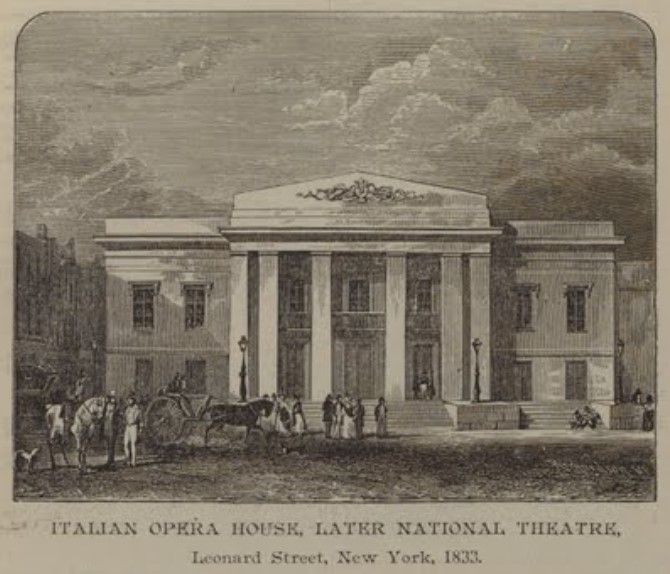
In 1833, at eighty-four, he raised $150,000 from his Manhattan friends and built the Italian Opera House at Church and Leonard Streets — the first purpose-built opera theatre in America, the architectural ancestor of the Metropolitan Opera. It went bankrupt within two seasons. He didn't care. He had built it.²⁷
Why it worked
So why did it work? Why did the partnership of a chronically dispossessed, half-believing Venetian rake and a sober German prodigy produce three of the most perfectly weighted libretti ever written?
The New Grove Dictionary concedes that "the portrayal of grand passions was not Da Ponte's strength" — but notes that he worked unusually closely with his composers, sharpening characterisation and compressing action with a craftsman's instinct.²⁸ The biographer David Cairns goes further: at every point, he writes, Da Ponte is "wittier, more stylish, more concise and more effective" than his sources.²⁹
As an Amazon Associate we earn from qualifying purchases.
Perhaps the deeper answer is that Da Ponte himself had spent a lifetime in disguise. A Jew turned priest turned rake turned exile turned grocer turned professor — a man whose own name was a borrowed one — had a connoisseur's understanding of the masks, the double-takes, and the improvised escapes that drive Figaro, Giovanni and Così. He understood, from the inside, what it meant to be one thing while pretending to be another.
A true phoenix
Mozart, in that wary 1783 letter to his father, used a phrase about the ideal pairing of a "good composer who understands the stage" with "an able poet". He called such a partnership "a true phoenix."³⁰
For four years in Vienna — against an emperor's bans, three simultaneous deadlines, a Tokay bottle on the right, a snuffbox on the left, and a serving girl bringing biscuits — that phoenix actually flew.
The bones of the man who supplied its words lie somewhere in Queens, in a grave nobody can identify.
¹ George James, "For Mozart's Librettist, a Queens Fanfare," *New York Times*, 21 October 1987; *Find a Grave*, memorial 11764 (Calvary Cemetery, Queens). On the 1909 reinterment: Sheila Hodges, *Lorenzo Da Ponte: The Life and Times of Mozart's Librettist* (Madison: University of Wisconsin Press, 2002 reissue of 1985 ed.), epilogue.
² Rodney Bolt, *The Librettist of Venice: The Remarkable Life of Lorenzo Da Ponte, Mozart's Poet, Casanova's Friend, and Italian Opera's Impresario in America* (New York: Bloomsbury, 2006), ch. 1.
³ Hodges, *Lorenzo Da Ponte*, ch. 1; *New Grove Dictionary of Music and Musicians*, 2nd ed., entry "Da Ponte, Lorenzo."
⁴ Bolt, *The Librettist of Venice*, ch. 3, drawing on Venetian state archives reproduced in Hodges, pp. 28–32.
⁵ Hodges, *Lorenzo Da Ponte*, p. 29, citing the records of the Venetian Magistrato alla Bestemmia.
⁶ Anthony Holden, *The Man Who Wrote Mozart: The Extraordinary Life of Lorenzo Da Ponte* (London: Weidenfeld & Nicolson, 2006), ch. 3.
⁷ Hodges, *Lorenzo Da Ponte*, ch. 2; Da Ponte's own account in his *Memoirs* (see note 14).
⁸ Lorenzo Da Ponte, *Memoirs of Lorenzo Da Ponte*, trans. Elisabeth Abbott, ed. Arthur Livingston, preface by Charles Rosen (New York: NYRB Classics, 2000 [1929]), pt. II, ch. ix; cited in Robert Marshall, "Mozart's Jewish Librettist," *Commentary*.
⁹ Hodges, *Lorenzo Da Ponte*, p. 10; Daniel Heartz, *Mozart's Operas* (Berkeley: University of California Press, 1990).
¹⁰ W. A. Mozart to Leopold Mozart, Vienna, 7 May 1783, in *The Letters of Mozart and His Family*, ed. Emily Anderson, 3rd ed. (London: Macmillan, 1985).
¹¹ Da Ponte, *Memoirs*, account of the audience with Joseph II concerning *Figaro*; San Francisco Opera, "Revolutionary Partnership: Mozart & Da Ponte in Vienna," sfopera.com.
¹² Heartz, *Mozart's Operas*, ch. on *Figaro*; Hodges, *Lorenzo Da Ponte*, pp. 51–60.
¹³ Da Ponte, *Memoirs* (NYRB ed.), pp. 152–53 (Livingston/Abbott trans.).
¹⁴ Da Ponte, *Memoirs* (NYRB ed.), pp. 152–53; quoted also in New York Society Library, "Overlooked Books: Goodbye, Columbus, Hello Da Ponte," nysoclib.org.
¹⁵ Charles Rosen, preface to Da Ponte, *Memoirs* (NYRB Classics, 2000).
¹⁶ Mark Podwal and other local Prague guides; the story is not corroborated in any contemporary source.
¹⁷ H. E. Weidinger et al., "The 'Dux Drafts': Casanova's Contribution to Da Ponte's and Mozart's *Don Giovanni*," *Maske und Kothurn* 52 (Vienna, 2006); originally published by Paul Nettl, *Musik und Tanz bei Casanova* (Prague, 1924).
¹⁸ Bruce Alan Brown and John A. Rice, "Salieri's *Così fan tutte*," *Cambridge Opera Journal* 8/1 (March 1996): 17–43; John A. Rice, *Antonio Salieri and Viennese Opera* (Chicago: University of Chicago Press, 1998), pp. 474–479.
¹⁹ Hodges, *Lorenzo Da Ponte*, pp. 110–125; Holden, *The Man Who Wrote Mozart*, ch. 12.
²⁰ Holden, *The Man Who Wrote Mozart*, ch. 13; Bolt, *The Librettist of Venice*, ch. 14.
²¹ Hodges, *Lorenzo Da Ponte*, p. 26; Joan Acocella, "Nights at the Opera," *The New Yorker*, 8 January 2007.
²² Holden, *The Man Who Wrote Mozart*, ch. 17; Opera Holland Park program note, "Poet, Priest, Adventurer," operahollandpark.com.
²³ Da Ponte, *Memoirs* (NYRB ed.), American chapters; quoted in Rex Hearn, "Lorenzo Da Ponte, Mozart's all-American librettist," *Palm Beach ArtsPaper*.
²⁴ Columbia Magazine, "How Mozart's Librettist Became the Father of Italian Studies at Columbia," interview with Barbara Faedda, author of *From Da Ponte to the Casa Italiana* (New York: Columbia University Press, 2017); Howard Jay Smith, "The Man Who Brought Opera to America," *American Heritage*, Summer 2022.
²⁵ Italian Academy at Columbia, "The Founders," italianacademy.columbia.edu; Jack Beeson, "Da Ponte, MacDowell, Moore, and Lang," *Columbia Magazine*.
²⁶ Smith, "The Man Who Brought Opera to America"; *Untapped New York*, "The Lost Opera Houses of New York."
²⁷ Smith, "The Man Who Brought Opera to America"; Hodges, *Lorenzo Da Ponte*, epilogue.
²⁸ *New Grove Dictionary of Music and Musicians*, 2nd ed., entry "Da Ponte, Lorenzo."
²⁹ David Cairns, *Mozart and His Operas* (London: Allen Lane, 2006).
³⁰ Mozart's "true phoenix" remark, paraphrased from his correspondence of 1783, quoted in *The National*, "The Relationship Between Mozart and Lorenzo Da Ponte."
---
## A note on sources
Da Ponte's own *Memorie* (Venice/New York, 1823–27) are the source of most of this article's best stories — the emperor's "virgin Muse," the smuggling of *Figaro* past the censor, the Tokay-bottle writing room, the encounter with Clement Clarke Moore. They are also a brief in his own defence, and modern biographers — Sheila Hodges (1985), Anthony Holden (2006), Rodney Bolt (2006) — agree that he distorts dates, omits inconvenient facts, and is jarringly silent on the death of Mozart. The Casanova manuscript at Dux Castle is real; the local Prague legend that Mozart and Da Ponte shouted lines across a lane is not. Where the *Memoirs* are the only source for an anecdote, I have flagged it.