Constanze Mozart: Love, Loss, and the Making of a Legacy
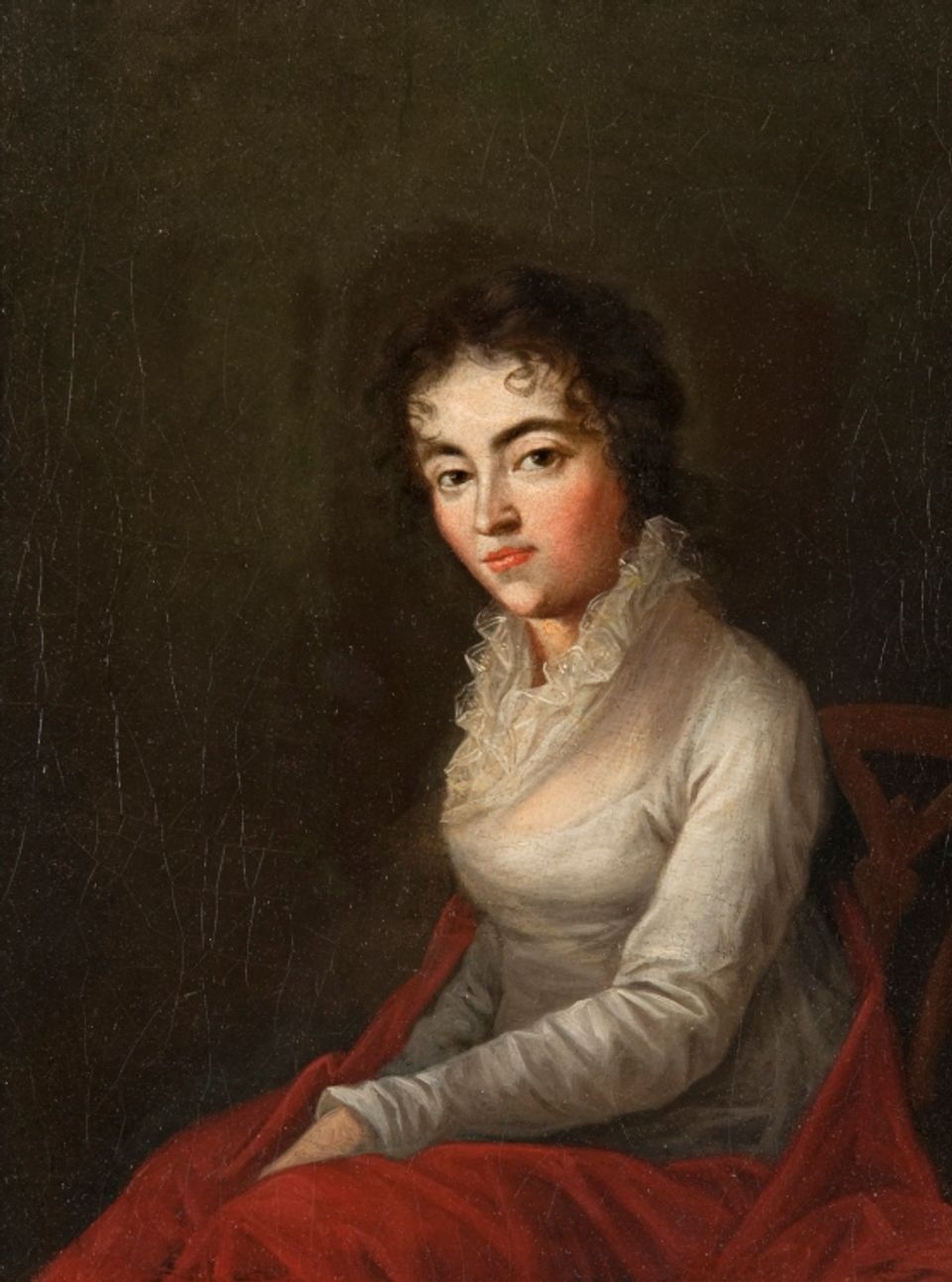
On a cold December evening in 1791, Vienna’s grand Burgtheater was packed to the rafters. The city’s finest musicians and singers had gathered on stage “as if competing to be heard”. This was no ordinary concert, but a hastily organized benefit for a young widow. Less than three weeks earlier, Constanze Mozart had watched her husband – Wolfgang Amadeus Mozart – lowered into a common grave amid a winter storm. Now, as the final notes of a Requiem echoed through the hall, the “forsaken widow of our immortal composer” received an outpouring of support from the Viennese public. By night’s end, the benefit concert had raised an estimated 1000 gulden – plus a generous contribution from the Imperial court – to help Constanze and her two small children.
It was the first of many times Constanze would harness music and public goodwill to survive tragedy [1][2][3]. In the coming years, this resourceful woman – once dismissed by detractors as a mere footnote to Mozart’s genius – would shape her husband’s legacy in ways no one could have imagined. Hers is a story of devotion under pressure, of shrewd perseverance after heartbreak, and of myths challenged by documented truth.


As an Amazon Associate we earn from qualifying purchases.
Part 1: The Weber World
Maria Constanze Cäcilia Josepha Johanna Aloysia Weber was born on 5 January 1762 in the town of Zell im Wiesental in southwest Germany[4]. She grew up in a musical household that straddled the bustling cultural centers of Mannheim and Munich. Her father, Fridolin Weber, was himself a musician – a bassist, prompter, and copyist by trade[5] – and through him Constanze was connected to a broader musical clan (Fridolin’s half-brother was the father of composer Carl Maria von Weber[5]). Constanze was the third of four sisters, all trained singers. Two of her elder sisters, Josepha and Aloysia Weber, would go on to distinguished musical careers of their own: Josepha eventually originated the role of the Queen of the Night in The Magic Flute, and Aloysia became a celebrated soprano for whom Mozart composed arias[6][7].
Mozart meets the Webers—Aloysia first
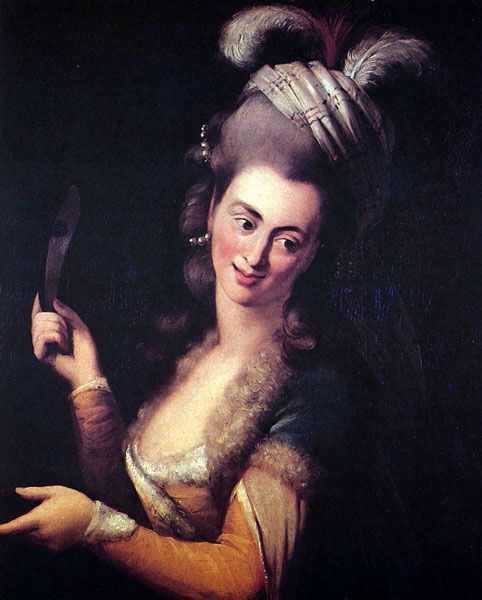
In 1777, an up-and-coming 21-year-old composer named Wolfgang Amadeus Mozart arrived in Mannheim on a job-hunting tour. In the Weber household – then living in Mannheim – Mozart found warm hospitality and talented company. He promptly fell in love…but not with 15-year-old Constanze. Mozart’s first infatuation was Aloysia Weber, a soprano of extraordinary promise[8]. He composed music for Aloysia and dreamed of taking her to Italy; she, however, did not reciprocate in the end. By the time Mozart passed through Munich in early 1779, Aloysia (who had secured a singing position there) brusquely rejected his courtship[9]. Heartbroken, Mozart returned to Salzburg.
Vienna and vulnerability after Fridolin’s death
The Weber family’s fortunes shifted with Aloysia’s career. In late 1779, they followed her to Vienna, where she had secured a post. Tragedy struck soon after: within a month of their Vienna arrival, Fridolin Weber died suddenly[10]. Constanze’s mother, Cäcilia, was left to support four daughters in a big city. To make ends meet, Frau Weber took in boarders at their apartment – a common practice at the time. One of those who would soon rent a room was none other than Wolfgang Mozart himself[11][12].
Under the same roof: “Zum Auge Gottes”
By March 1781, Mozart had left the employment of the Archbishop of Salzburg and moved to Vienna to pursue a freelance career. Initially he lodged with friends, but by early summer he moved into the Webers’ home “Zum Auge Gottes” (“God’s Eye”) on the Petersplatz[11]. Constanze was 19; Mozart was 25. What began as a friendly arrangement quickly turned into a romance that raised eyebrows.
Surviving letters show that by the summer of 1781 Mozart was courting Constanze in earnest[13]. When Constanze’s mother realized the situation, she was so alarmed at having an unhindered suitor under her roof that she asked Mozart to leave in September 1781, for the sake of propriety[13].
Rumors vs letters: “trapping” Mozart and what evidence supports
Constanze’s world was one of music but also of precarity. As a young singer in a family without a patriarch, she lived on the fringes of Vienna’s musical economy. The Webers navigated survival by leveraging their daughters’ talents: Aloysia’s opera contracts, Josepha’s engagements, and even Constanze’s potential marriage prospects. It was not uncommon for families to see a good marriage as a daughter’s “career,” and rumors later suggested that Cäcilia Weber had been scheming to ensnare Mozart as a son-in-law.



As an Amazon Associate we earn from qualifying purchases.
There is little evidence that Constanze or her mother “trapped” Mozart into marriage; such allegations appear in later gossip rather than contemporary documentation[14]. In fact, Mozart’s letters paint Constanze in a sympathetic light, describing her as modest, caring, and mistreated by her own family. In one frank letter to his skeptical father Leopold, Wolfgang admitted Constanze was “not ugly, but…far from beautiful,” possessed “no wit,” yet had “the kindest heart in the world” and the good sense to be an excellent wife and mother[15][16]. He noted that “she dresses her own hair every day” and is “accustomed to being shabbily dressed” because her mother spent what little money they had on the other sisters, “never for Constanze”[17]. This candid portrayal – affectionate but honest – suggests Mozart loved Constanze for her character and resilience, not any calculated charms.
Part 2: Love, Pressure, and Vienna
Courtship tensions and Leopold’s resistance
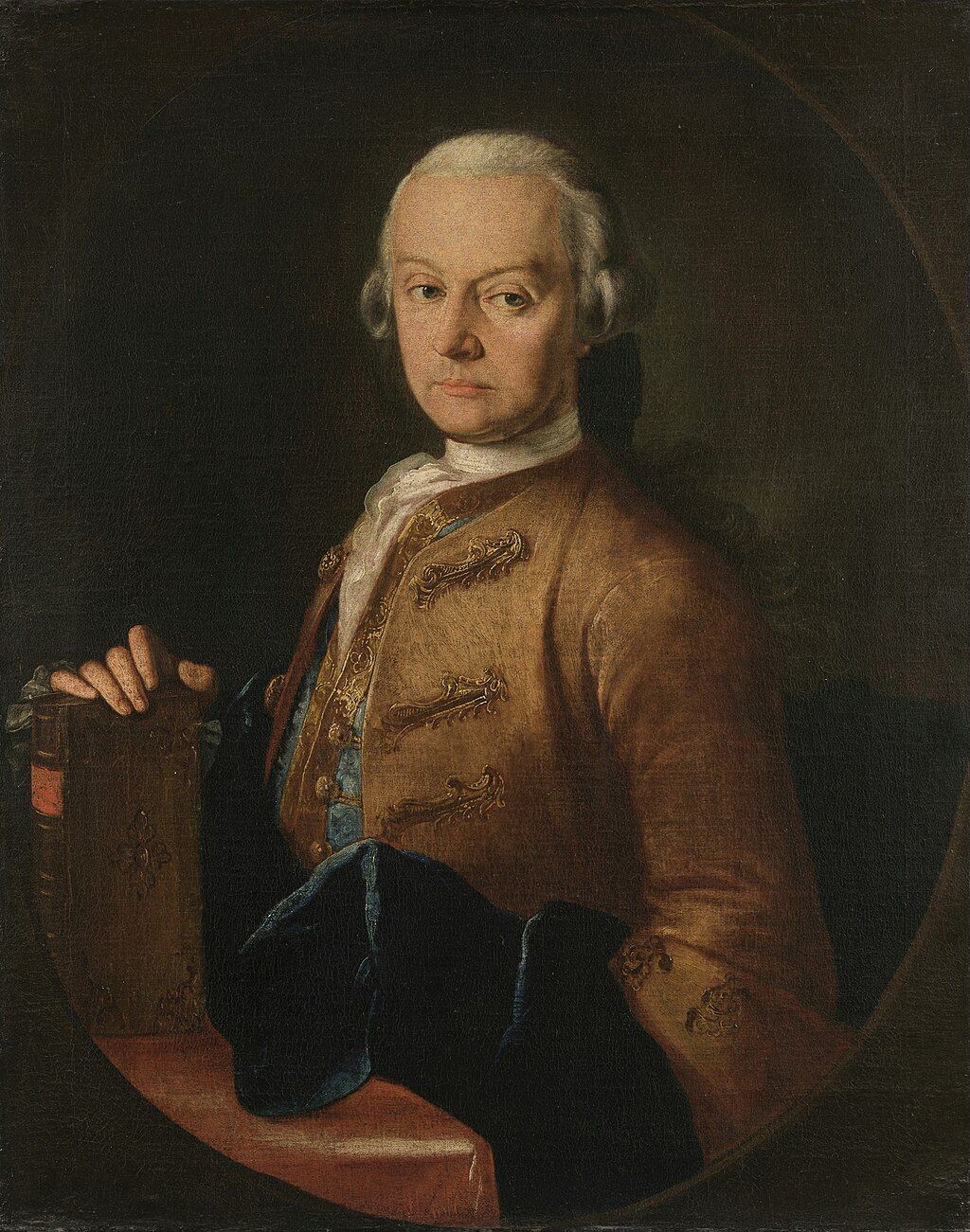
By early 1782, Wolfgang and Constanze had reconciled after a brief lovers’ quarrel. (They had temporarily broken off their engagement that April when Mozart learned Constanze had allowed a young man to engage in a silly parlor game of measuring her calves – an incident that sparked Mozart’s jealousy and later amusement[18]. The two made up quickly.) Now the real challenge was winning Leopold Mozart’s approval for the match. Leopold, a proud but cautious man, harbored deep reservations about his son marrying a penniless Fräulein from a “scheming” family. For months, Wolfgang wrote home to Salzburg trying to convince his father to consent. As summer wore on, however, the situation turned urgent.
The July 1782 crisis and the rush to marry
By late July 1782, it seems Constanze had spent significant time unchaperoned with Wolfgang – enough to scandalize Viennese society and infuriate her mother. One dramatic report has Constanze’s sister Sophie rushing to Mozart in tears, warning that their mother threatened to send the police after Constanze if she did not return home from Wolfgang’s apartment[19]. Mozart felt cornered. “All the good and well-intentioned advice [from you] fails to address the case of a man who has already gone so far with a maiden,” he protested in a letter to Leopold on 31 July. “Further postponement is out of the question.”[19] In other words: delay any longer and Constanze’s honor would be compromised beyond repair. Mozart even wrote to a family friend, Baroness von Waldstätten, asking whether the police truly had authority to intrude – “If not, I know no better remedy than to marry Constanze tomorrow morning, or if possible today.”[20]
Marriage and the contract: security on paper
And that is exactly what he did. On August 4, 1782, Wolfgang Amadeus Mozart and Constanze Weber were married in a small side chapel of St. Stephen’s Cathedral in Vienna[21]. The wedding was hastily arranged “in an atmosphere of crisis”[22]. In fact, Leopold’s belated letter of consent arrived the day after the ceremony[23]. The couple’s marriage contract was interestingly modern: Constanze brought a dowry of 500 gulden, which Mozart pledged to increase by 1,000 gulden; this sum would go to the survivor, and any assets acquired during marriage were to be jointly owned[21]. For a young woman who essentially had nothing, the contract gave Constanze a rare measure of financial security and legal standing. Confirmed: The marriage register and contract in Vienna document these terms, showing Constanze’s small dowry and Mozart’s promise to augment it[24][25].




As an Amazon Associate we earn from qualifying purchases.
Domestic life: pregnancies, illness, and affection in the letters
The newlyweds’ day-to-day reality in Vienna was a mix of music, domesticity, and periodic hardship. They moved into a series of apartments, gradually upgrading to better quarters during Mozart’s flush years and downsizing when times got tough. Constanze quickly became pregnant and over the next eight years bore six children – though tragically, four of them died in infancy[26]. Only two sons survived: Carl Thomas Mozart, born 1784, and Franz Xaver Wolfgang Mozart, born July 1791, just five months before his father’s death[27][28]. Such relentless childbearing took a toll on Constanze’s health. In letters, Mozart often fretted over his “little wife’s” wellbeing. He sent her to the spa town of Baden on several occasions to take the waters for her health[29].
Mozart’s surviving correspondence from 1789, includes warm instructions to Constanze while she was away receiving medical treatment: “don’t be sad,” “take care of your health,” and “be assured of my love” he urges, before drowning her in playful kisses – “I kiss you and squeeze you 1,095,060,437,082 times”[30]. The tone of these letters – “unfailingly affectionate, often intensely so”[29] – confirms that their marriage was, by all accounts, a happy one.
Money and music: debt myths, real income, and Constanze’s musical role
Life with Mozart was mercurial. One year the Mozarts would be dancing at aristocratic soirées and showered with concert income; the next, they might be pawning silverware to pay the rent. Mozart’s income swung wildly: he could earn thousands of florins in a good year from concerts, publications, and patrons, yet by 1788 their finances had cratered[31][32].
In 1791, the very year he died, Mozart still earned a respectable 1,900 florins (not counting profits from his opera The Magic Flute), a sum higher than many court salaries[33].
How, then, did he “die penniless”? The truth is nuanced. Contemporary records and modern research suggest Wolfgang suffered not from lack of income but from lack of financial prudence[34]. He overspent on fine living – lodging in fashionable districts, elegant clothes, billiards and card games, and generosity to Constanze beyond their means[34]. By mid-1790, the Mozarts had accumulated significant debt. Mozart resorted to frequent loans from friends like Michael Puchberg (letters show him repeatedly pleading for small sums)[34]. Constanze, juggling pregnancies and illnesses, likely had little ability to rein in her husband’s spending. Yet later biographers unfairly painted her as the spendthrift.
The image of Constanze as a frivolous, financially inept wife finds no support in primary sources – in fact, Leopold Mozart himself grudgingly praised her housekeeping as “highly economical”[35]. It was Wolfgang’s “lack of business sense” that brought them to near bankruptcy, not Constanze’s homemaking[34].
Despite hardships, the young family had joyful times. They were active in Vienna’s social and musical circles, especially through Mozart’s Freemason connections. Constanze, though often busy with motherhood, shared in her husband’s artistic life. She was a trained soprano with a lovely, agile voice[36], and Mozart wrote music for her.


As an Amazon Associate we earn from qualifying purchases.
The soaring, difficult soprano solos of his Great Mass in C minor (1783) were specifically intended for Constanze, who sang them at the Mass’s Salzburg premiere[37][38]. We can easily imagine the pride in Mozart’s eyes as Constanze ascended the high notes of “Et incarnatus est,” fulfilling the promise of her own musical talent. She also inspired his creativity in more subtle ways. During their courtship, Mozart took Constanze to the salon of Baron van Swieten, where she encountered the intricacies of Baroque fugues by Bach and Handel[39][40]. Constanze became entranced by these complex works. In an April 1782 letter to his sister, Mozart credits Constanze’s fascination as the reason he wrote down a new fugue for her: “My dear Constanze is really the cause of this fugue’s coming into the world… She absolutely fell in love with [fugues]… She never ceased to entreat me until I wrote down a fugue for her.”[41][42] Clearly, Constanze was not the “unmusical simpleton” some detractors later made her out to be. She was a genuine musical partner to Mozart – a wife who could appreciate and even demand the most “artistically beautiful” music[43].
Friends observed that the Mozarts’ home was often filled with music and laughter. They played four-hand piano duets; Constanze sang as Wolfgang tried out new arias; they enjoyed silly games and private jokes. One surviving letter from Mozart to Constanze, written during his 1789 tour of Germany, is both tender and ribald. He teases her to “spruce up your sweet little nest” because on his return, “my little rascal here…is itching to possess your sweet [—].” (Mozart’s playful euphemism for his aroused state was partly censored by an unknown hand)[44]. He concocts a cheeky vignette about this “little sneak” misbehaving as he writes, requiring a “little slap” – a glimpse of the couple’s intimate humor[45].
The authenticity of this risqué letter (23 May 1789) is well attested, and it illustrates the affectionate, even erotic, spark between the two[46][45].
Some 19th and early 20th-century authors suggested that Constanze might have been unfaithful or cold toward Mozart. No credible evidence supports these claims[14]. On the contrary, all surviving correspondence indicates deep mutual devotion. Later in life, Constanze flatly remembered her Mozart years as “completely happy,” writing that she had been twice blessed with “most excellent husbands by whom I was loved and honored – even adored – and who were equally loved by me”[47]. Her first marriage, though short, was a union of true affection and understanding – something even the staunchest Mozart biographers today concede was not an illusion[14].
Yet happiness turned to horror in the autumn of 1791. Mozart fell gravely ill while working feverishly to complete a mysterious Requiem commission. Constanze, herself recovering from the birth of their infant Franz Xaver, did her best to nurse Wolfgang through November as his condition worsened. According to the later testimony of her sister Sophie (who helped tend him), Constanze was exhausted and despairing. In the early hours of December 5, 1791, Mozart died in his bed at age 35 with Constanze nearby – contrary to melodramatic myths that she was absent or neglectful at the end (those are myths, thoroughly debunked by Sophie’s eye-witness account). Constanze was left a widow at 29, with two young children, no savings, and an unfinished Requiem mass for which payment had already been received[48]. Her world was shattered – but her resolve was just beginning to harden.
As an Amazon Associate we earn from qualifying purchases.
Part 3: After the Genius Died
Immediate aftermath: debt, pity, and public help
Mozart’s death plunged Constanze into crisis. In addition to crushing grief, she faced immediate practical dilemmas: debts to settle, creditors at the door, and the prospect of supporting her family with no steady income.
Contemporary reports emphasized the “perilous financial circumstances” of Mozart’s widow[49]. Viennese society, perhaps feeling guilty for not appreciating Mozart enough in life, rallied around Constanze. “Everyone is competing to compensate Mozart’s widow for her loss, and to console her,” reported Der Heimliche Botschafter on 16 Dec 1791[50]. Baron Gottfried van Swieten, a longtime patron of Mozart, and Countess Thun, a noble friend, quickly took an interest in the welfare of Constanze’s children (one-year-old Karl and baby Franz)[51]. Theater director Emanuel Schikaneder dedicated a performance of The Magic Flute to Constanze’s benefit, funneling proceeds to her[52]. Even Archduke Maximilian Franz (the Austrian Emperor’s brother) pressed 24 ducats (~108 florins) into Constanze’s hand before departing Vienna[53].
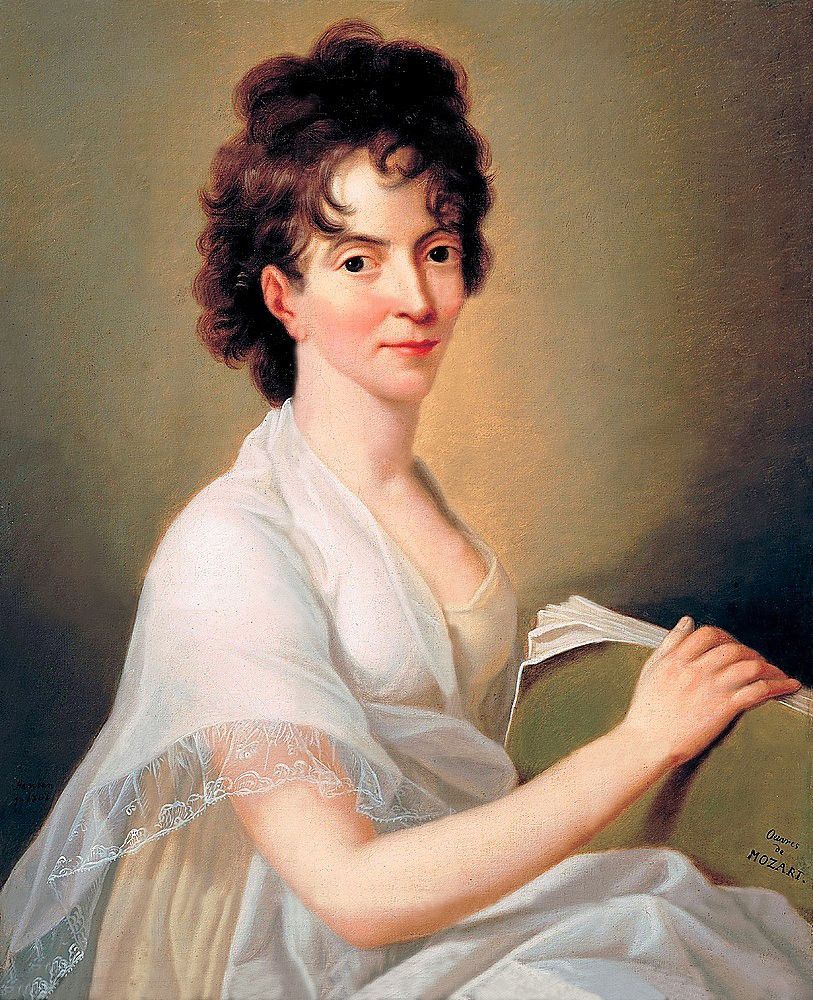
Going directly to power: petition, pension, and the benefit concert
Constanze, however, knew charity alone would not sustain her. Just six days after Mozart’s death, on 11 Dec 1791, she personally petitioned Emperor Leopold II for a widow’s pension[54][55]. She outlined her plight and, anticipating rumors that Mozart had left massive debts, assured Leopold that 3,000 florins would suffice to clear what he owed[54][56]. According to an early biography (written by Constanze’s friend Franz Xaver Niemetschek in 1798), the Emperor received Constanze in an audience and responded with both kindness and pragmatism. Leopold II allegedly said: “If it really is as you say… then there is still time to do something for you. Let a concert be given of the works he left, and I will support it.”[54][57] True to his word, Leopold allowed a grand benefit concert in the Burgtheater on 23 Dec 1791 (the one described in our Lede), and the Imperial court contributed handsomely to its success[3][58].
At that concert, “our most prominent musicians, singers and female singers” volunteered their talents, and the receipts – reportedly around 1000 florins, plus the Emperor’s subsidy – enabled Constanze “to pay off her husband’s debts” in one stroke[1][54].
The only source for Constanze’s face-to-face meeting with Leopold II is Niemetschek’s biography[54][57]. No independent Imperial record of the audience survives, leading some historians to wonder if the account was slightly embellished to flatter the Emperor’s memory. However, a documented petition from Constanze to Leopold on 11 Dec 1791 does exist, and a small annual pension was indeed granted – albeit by Leopold’s successor, Emperor Franz II, in March 1792[55]. Thus, the broad outlines of Niemetschek’s story hold: Constanze proactively sought help, and the imperial family responded, even if details are uncertain.
The Requiem problem: finishing the work and protecting authorship
Constanze did not simply await rescue; she took the reins of Mozart’s posthumous affairs with remarkable savvy. One of her first challenges was Mozart’s Requiem in D minor, which was only half-finished but fully paid for by an anonymous noble client (now known to be Count Franz von Walsegg). Constanze understood that if the work remained unfinished, she might have to return the fee – a financial blow she could not afford. She therefore enlisted Mozart’s pupils and colleagues to complete the Requiem as seamlessly as possible. Composer Joseph Eybler made an attempt, and ultimately Franz Xaver Süssmayr, who knew Mozart’s intentions, delivered a completed Requiem by late 1792. Constanze then arranged for a public performance of the Requiem in Vienna (2 January 1793) to establish Mozart’s authorship of the piece before the Count could premiere it privately[59]. It was a delicate bit of subterfuge: by getting the Requiem into the public ear, Constanze ensured that Walsegg could not pass it off as his composition (as was his wont). She thereby protected both Mozart’s legacy and her own right to further benefit from the work.
As an Amazon Associate we earn from qualifying purchases.
Niemetschek mentions a public concert featuring “die merkwürdige Seelenmesse” (the remarkable Requiem Mass) organized by Constanze in this period[59]. Thanks to her, Mozart’s Requiem – his final masterpiece – saw the light of day and could eventually be published for wider audiences.
Building the estate: manuscripts, publishers, and the André sale
With debts paid and urgent tasks handled, Constanze turned to securing long-term income. She had two main assets: Mozart’s musical works (many unpublished or in manuscript) and Mozart’s reputation. In the 1790s, she vigorously promoted both. She began negotiating with publishers across Europe to print Mozart’s remaining compositions. This was a tricky business: Constanze needed to maximize profits while preventing unauthorized copies. For several years she declined to sell off Mozart’s autograph manuscripts at fire-sale prices, despite being in dire need of cash.
Contemporary accounts and later scholarship agree that “despite poverty and hardship, she did not sell the manuscripts [immediately]…but carefully guarded them”, waiting for the right moment[60].
A persistent legend claimed Constanze mercenarily “dumped” Mozart’s manuscripts for quick money; in reality she held on until 1799, when she finally sold a large collection of autographs – including major operas – to publisher Johann Anton André under favorable terms[61][62]. It is largely thanks to her foresight that Mozart’s musical autographs ended up preserved in a coherent collection, rather than being scattered to the winds by piecemeal sales[61].
Constanze also capitalized on Mozart’s celebrity as it began to grow. In the immediate years after 1791, she organized memorial concerts not just in Vienna, but in other cities. She even embarked on a concert tour in 1795–96, bringing Mozart’s music (with her sister Aloysia singing alongside her) to audiences in Germany[63][64]. By all reports Constanze was a competent soprano and her performances of her husband’s works were well received. One notable enterprise was her effort to stage Mozart’s lesser-known late opera La Clemenza di Tito. Constanze “promulgated” this opera by mounting a benefit performance in Vienna on 29 December 1794, casting Aloysia in a lead role and singing one herself (Vitellia)[65][66]. She thus kept Mozart’s music alive on the stage when it might have been forgotten.
Making “Mozart” in print: Niemetschek, Nissen, and biography as legacy
During this period Constanze made an astute alliance that would profoundly influence Mozart’s legacy: she befriended Franz Xaver Niemetschek, a Czech scholar and ardent Mozart admirer. She decided that Mozart’s life story needed to be told – on her terms. In 1797, Constanze sent her eldest son Karl (then about 12) to live in Prague under Niemetschek’s tutelage[67]. The arrangement served multiple purposes: Karl would get a good education (funded by a stipend from a patron, likely Countess Thun or others), and Constanze would collaborate with Niemetschek on writing the first full biography of Mozart[67]. The resulting book, published in 1798, drew on materials Constanze provided – including anecdotes, some letters, and her personal recollections. Niemetschek portrayed Mozart in a heroic light and Constanze in a sympathetic one. It was in this biography that many readers first learned of Constanze’s pivotal actions: securing an imperial pension, organizing the benefit concerts, completing the Requiem, and so on. The biography also propagated certain stories that would stick in Mozart lore (like the Emperor’s quote about supporting the concert[54][57]).

As an Amazon Associate we earn from qualifying purchases.
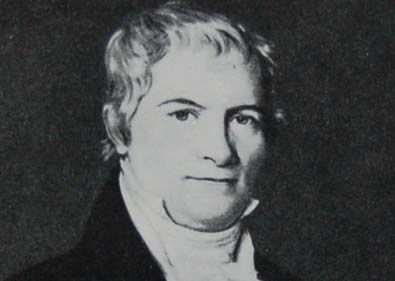
The Niemetschek biography is a recognized historical source; Constanze’s cooperation in its writing is documented by her sending her sons to him and later acknowledging his work[67]. It made Mozart’s life known to the world and established Constanze’s role as his devoted widow.
By the end of the 1790s, Constanze Mozart had accomplished what many thought impossible: she had climbed out of debt, ensured her children’s upbringing, and laid the groundwork for Mozart’s immortalization. In 1800, having successfully sold the remaining trove of manuscripts to André (for a substantial sum), she found herself financially secure at last[68][69].
Around this time, Constanze’s life entered a new chapter. She had met a Danish diplomat, Georg Nikolaus von Nissen, a few years earlier (sources differ on the exact year; one account says as early as 1793[70], others that they met in 1797[71]). Nissen was an ardent Mozart fan who became a tenant in Constanze’s home and, gradually, her second great love. By 1798, they were living together in Vienna – an unconventional arrangement for an unmarried couple in that era[71]. Constanze, now in her late thirties, had transformed from the naïve girl Leopold once disparaged into a savvy, independent woman. In Nissen she found a loyal partner who supported her and her children. In turn, Constanze allowed herself to love again, without ever diminishing Mozart’s memory. After over a decade of companionship, she and Nissen married formally in 1809 (traveling to Bratislava to circumvent religious restrictions – she was Catholic, he Protestant)[71][72].
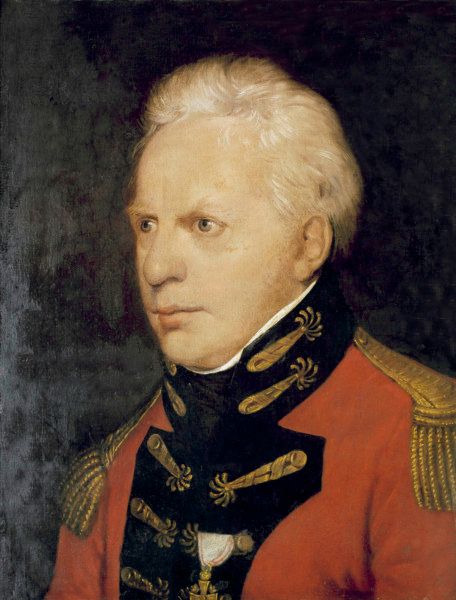
Constanze Nissen, as she became, spent her later years much as her early ones: moving through European cultural circles and preserving Mozart’s flame. She lived in Copenhagen from 1810 to 1820 while Nissen served in the Danish civil service[72]. There, she reportedly mingled with local society (though one modern critique suggests the Nissens’ participation in Copenhagen’s salons was limited, as Constanze never became fluent in Danish[73][74]). After Nissen’s retirement, the couple traveled through Germany and Italy, eventually settling in Salzburg in 1824[75]. By choosing Salzburg, Mozart’s birthplace, Constanze signaled her enduring connection to his legacy. In Salzburg, she was treated as a local celebrity of sorts – the last living link to Wolfgang Amadeus Mozart.
Constanze’s final major endeavor for Mozart was the completion of a comprehensive biography, the project that Nissen had taken up in earnest. Nissen gathered every letter, document, and anecdote he could, with Constanze’s help, to produce the definitive chronicle of Mozart’s life. Sadly, Nissen died in 1826 before finishing the manuscript[76][77]. Constanze, 64 years old but as determined as ever, spent the next two years editing and completing the work alongside a scholar named Johann von Feuerstein[76]. In 1828, Nissen’s biography of Mozart was published in Leipzig. At last, Constanze had in her hands a monumental volume – over 600 pages – telling the story of her Wolfgang as she wanted it remembered. It included many family letters (she had granted Nissen full access to the Mozart family correspondence) and even Sophie’s firsthand account of Mozart’s final hours[78][79]. In some respects, this biography was Constanze’s own memoir by proxy.
As an Amazon Associate we earn from qualifying purchases.
By the time she reached her 70s, Constanze was known to musical pilgrims who came to pay respects. Visitors like the English composer Vincent Novello and his wife met her in the 1820s and described her as gracious, intelligent, and devoted to Mozart’s music till the end. In Salzburg, Constanze was finally surrounded by family again – her sisters Aloysia and Sophie, both widowed, came to live with her in later years[80]. The three Weber sisters, together in old age, surely reminisced about their extraordinary youth in Mannheim and Vienna, and the comet-like life of Wolfgang who had blazed through their lives.
Constanze Mozart Nissen died on March 6, 1842, at the age of 80[81][82]. Just months after her death, Salzburg unveiled a grand Mozart monument in the town square – an honor she narrowly missed seeing. But her legacy was secure. As one modern writer observed, of Constanze’s 80 long years, only about 10 were spent with Mozart – yet “without her constant commitment to the work of her first husband…we would hardly have such unrestricted access to Mozart’s work today.”[83] In other words, Constanze made Mozart’s legacy possible.
Part 4: Reputation on Trial – Myths, Misconceptions, and Realities
The “bad wife” story and where it comes from
Constanze Mozart’s image has seesawed dramatically over the centuries. In her own lifetime, those who knew her – friends like Niemetschek or the Novellos – described her in positive terms: a loving wife, a competent businesswoman, a cheerful hostess. However, as early Mozart scholarship developed in the 19th century, a different narrative crept in. Some early biographers and critics (mostly male) cast Constanze as a villainess in Mozart’s story. They called her unintelligent, unmusical, frivolous – even insinuated she was unfaithful to Mozart and somehow responsible for his early death[14].
Big myths that don’t hold: burial and “neglect”
One particularly cruel tale suggested that Mozart received a pauper’s burial because Constanze was too stingy or uncaring to give him a proper funeral.
In reality, Mozart was buried according to the customary practices for his social class in Vienna at the time (common unmarked graves were the norm and carried no stigma) – Constanze had no say in the matter[48][84]. Yet that myth of the cold wife letting her genius husband be thrown into a mass grave persisted in popular imagination until research definitively refuted it[48].
Illness and character attacks: what sources actually support
Another myth accused Constanze of faking illnesses to manipulate Mozart. Some 19th-century writers claimed she feigned sickness to gain sympathy or attention.
The record actually shows Constanze had genuine health problems – bearing six children in eight years leaves physical consequences. Her sister Sophie attested that Constanze once suffered a “life-threatening leg disease” (perhaps a serious infection or thrombosis) that kept her bedridden for eight months[85][86]. Given such evidence, the trope of Constanze as a scheming malingerer appears both unfair and unfounded.

As an Amazon Associate we earn from qualifying purchases.
Why did these negative portrayals take hold? Partly, it was old-fashioned misogyny. As the authoritative Grove Dictionary of Music notes, early 20th-century scholarship was “severely critical” of Constanze “as unintelligent, unmusical and even unfaithful…a neglectful and unworthy wife.” Grove concludes these judgments were “based on no good evidence, were tainted with anti-feminism and were probably wrong on all counts.”[14]. In other words, Constanze became a convenient scapegoat for Mozart’s hardships – an interpretation likely fueled by male authors who couldn’t fathom that a great man might also have a competent woman by his side.
Modern reassessment—and the risk of new myths
By the late 20th century, Mozart biographers began to correct the record. Scholars like Volkmar Braunbehrens (1990), Maynard Solomon (1995), and David Schroeder/Halliwell (1998) highlighted how unjust earlier depictions of Constanze had been[14]. They pointed to her successful management of Mozart’s estate and the obvious affection in Mozart’s letters as evidence that Constanze was neither dim nor selfish. In 1991, musicologist Eva Rieger wrote a feminist reappraisal of Constanze, emphatically rejecting the caricature of a “libidinous, loveless, callous and disloyal” wife[87]. Rieger and others showed that many supposed “flaws” of Constanze were double standards: for example, Mozart’s own occasional flirtations or bawdy jokes are excused as “boys will be boys” antics, while Constanze’s normal healthy sexuality was maligned as “dull libidinousness” in sexist fashion[88][89]. Likewise, Mozart’s documented penchant for luxury spending was long glossed over, yet Constanze was blamed for poor housekeeping despite Leopold Mozart’s testimony to her frugality[35].
Today, the consensus among serious historians is that Constanze Mozart was a capable and caring partner who did her best under difficult circumstances. However, her reputation is still somewhat on trial. Some modern works have perhaps swung the pendulum too far in idealizing her. For instance, a 2018 biography by author Viveca Servatius set out to portray Constanze as “the most underestimated woman in music history” – a laudable intent, but according to at least one scholarly review, Servatius ended up “construct[ing] new myths” about Constanze[90][91]. She allegedly took every positive anecdote as gospel while dismissing any negative accounts as lies, painting Constanze as a flawless “charming salonnière” with “high social status” in Vienna – claims not really supported by evidence[92][93]. The truth, as usual, lies in between the extremes.
Constanze was not an all-powerful socialite; in fact, evidence suggests she had relatively few close friends and some acquaintances eventually distanced themselves from her[94][95] – perhaps due to personal frictions or jealousy of her success in controlling Mozart’s estate. She could be strong-willed and was known to hold grudges, notably never forgiving her father-in-law Leopold for his initial treatment of her and her mother[96]. She was human – not a saint, but far from the sinner some made her out to be.
In sum, modern scholarship tends to view Constanze as a “strong woman behind a great man,” someone who was vital to Mozart in life and indispensable to his legacy in death[97][98]. The unfair biases of earlier eras are being corrected, but the process involves careful scrutiny of sources to separate fact from fiction.

As an Amazon Associate we earn from qualifying purchases.
What We Still Don’t Know
The missing voice: Constanze’s lost letters
For all we’ve learned about Constanze Weber Mozart, gaps and mysteries remain. Frustratingly, none of Constanze’s personal letters to Wolfgang survive[47], so we rarely hear her voice directly – we see her through others’ eyes. We do not know, for example, her innermost thoughts on Mozart’s music or her private grief after his death, except as she reported years later to friends. There are hints she kept a diary or notes (the Mozarteum archives hold some letters from her later years), but much of her inner life is lost to time.
Archive uncertainty: curation, lost papers, and the Requiem gray zones
It’s also unclear how much she might have curated Mozart’s image by selectively preserving or destroying documents. Some scholars speculate that when preparing Nissen’s biography, Constanze may have chosen to omit certain family letters that showed Mozart or his father in a bad light – but this remains conjecture. We also still debate details of the Requiem story: Did Constanze instruct Süssmayr to actively deceive Count Walsegg by imitating Mozart’s handwriting on the completed score? Or did she simply act in good faith to fulfill a contract? The primary sources don’t give a definitive answer, leaving aspects of that famous episode shrouded in a bit of intrigue.
Money without ledgers, and the photo that probably isn’t her
Another area of uncertainty is Constanze’s financial acumen: we know she succeeded in making herself secure, but we don’t have a full accounting of how much she profited from various ventures. How lucrative was that 1795 concert tour? How large was the sum André paid for the manuscripts in 1799/1800 – enough to make her “ultimately wealthy,” as some claim[99][67]? Without access to her account books (if any existed), we piece together clues but cannot say for sure.
Finally, even images of Constanze are in doubt. A famous 1840 daguerreotype claimed to show an elderly Constanze alongside the family of composer Max Keller – a tantalizing photograph of Mozart’s wife in her late 70s. However, modern experts have discredited this: the outdoor photographic process used wasn’t available until after 1842, and Constanze was crippled with arthritis by then and unlikely to travel for a portrait[100][101]. The supposed “last picture” of Constanze is now considered a case of mistaken identity or hoax[100][102]. Thus, even something as simple as knowing what she looked like in old age remains uncertain.
Conclusion
Constanze Mozart lived a life as dramatic as an opera: a young woman swept into a whirlwind romance with a genius, a wife navigating love and loss amid the salons of Vienna, and a widow battling poverty and prejudice to secure her husband’s immortality. What is confirmed by reliable sources is that Constanze was instrumental in preserving Mozart’s works and memory: she obtained support from the Emperor when it mattered[3][58], organized concerts that paid off his debts[1][3], published his music widely[61][62], and shaped the first biographies that informed the world who Mozart was[54][57]. Disputed or uncertain are some nuances of her character – was she as socially adept as some think, or more retiring? Did she consciously mythologize Mozart in any ways, or simply present him truthfully? Myths that can be firmly rejected include the caricatures of Constanze as a foolish spendthrift or unfeeling spouse; no credible evidence supports those hostile claims[14].
As an Amazon Associate we earn from qualifying purchases.
In the final analysis, Constanze emerges as neither saint nor villain, but a three-dimensional human being. She was a practical German bourgeois woman of her era, armed with enough education and tenacity to hold her own in a man’s world when fate required it. She cherished Mozart’s music and understood its value when many did not. And if at times she acted in her own and her family’s self-interest – can any widow in her position be blamed for that? Her legacy is Mozart’s legacy. Every time we open a complete edition of Mozart’s works or read his letters, we owe a silent debt to Constanze, the woman who guarded those treasures through decades of uncertainty.
In one of Wolfgang’s last letters to Constanze, he addressed her as “meine liebe kleine Weibchen” – “my dear little wife.” The phrase sounds quaint to modern ears, but in it lies a world of affection and trust. Mozart knew, even if the world did not yet, that his “little wife” was in fact a formidable woman. History has since confirmed it: Constanze Mozart was the steady flame that kept Mozart’s genius burning long after he was gone.
Sources:
Contemporary Report on Benefit Concert (1791): Münchner Zeitung, 29 Dec 1791 – translation and commentary in Mozart: New Documents[103][3]. Describes Vienna’s first memorial concert for Constanze’s benefit, including attendance, funds raised (~1000 gulden plus court contribution), and public response.
Mozart’s Letter to Leopold (Dec 1781): Quoted in Francis Carr, Mozart and Constanze (1983)[15][16]. Mozart details Constanze’s appearance (“not beautiful”), virtues (“kindest heart in the world”), and frugal habits, defending her character to his father. Confirms Mozart’s genuine regard and counters later myths of her extravagance.
Constanze’s Family Background:Constanze Mozart – Wikipedia[5][104]. Cites primary sources on her birth (1762 in Zell), father Fridolin’s occupation, relation to Carl Maria von Weber, and sisters’ musical training. Describes Weber family’s moves (Mannheim→Munich→Vienna) and Mozart’s initial infatuation with Aloysia Weber.
Engagement Crisis & Marriage: Daniel Heartz as cited in Wikipedia[105][21]. Details the July–Aug 1782 drama: Constanze possibly staying with Mozart, mother’s threats, Sophie’s intervention, Mozart’s letters (“postponement out of the question”; plan to marry immediately). Confirms wedding date (4 August 1782, St. Stephen’s, Vienna) and contract terms.
Constanze’s Children: Wikipedia[26][27]. Lists the six Mozart children (with birth/death dates), confirming only Karl Thomas (b. 1784) and Franz Xaver (b. 1791) survived infancy. Provides context for Constanze’s repeated pregnancies and the toll on her health.
Mozart’s Letters During Marriage: Emily Anderson (ed.), The Letters of Mozart and his Family. Paraphrased via Wikipedia[106][107]. Confirms that surviving letters from Wolfgang to Constanze (e.g. 1789 from Dresden) are “unfailingly affectionate…often intensely so,” with examples of endearments and playful instructions demonstrating a loving marriage.
Mozart’s Playful/Erotic Letter (May 1790): Anderson via Wikipedia[108][45]. Excerpt of Mozart’s letter referencing “sleeping with my dear little wife” and the famous “little rascal” euphemism. Provides primary evidence of the couple’s intimate, humorous rapport – refuting any notion of a cold or prudish relationship.
Constanze’s Reflections (1829): Letter from Constanze to G. F. Schwan, 5 Dec 1829, quoted in Wikipedia[47]. She recalls being “twice completely happy” in her marriages to Mozart and Nissen, indicating her continued affection for Mozart decades later and suggesting she felt loved and honored by him.
Financial State – Income vs. Debt: George Dunea, “The financial affairs of W.A. Mozart,” Hektoen Int’l (2023)[31][34]. Uses research by H.C. Robbins Landon and others: Mozart earned large sums (e.g. ~1,900 florins in 1791) yet was burdened by “mountainous” debts due to overspending and poor money management. Supports the view that financial strain was real but not due to Constanze’s mismanagement.
Leopold on Constanze’s Housekeeping: Eva Rieger & Anja Weinberger, “Constanze Mozart” – FemBio (2021)[35]. Notes that even Leopold Mozart, initially hostile, acknowledged Constanze’s housekeeping as “highly economical.” Contrasts this primary evidence with later biographers’ claims she was a bad housekeeper, highlighting a discrepancy between sources and biased interpretations.
Constanze’s Health & Myth of Feigned Illness: FemBio[85][86]. Cites Sophie Weber’s testimony that Constanze suffered a serious leg illness for 8 months, and addresses the strain of six pregnancies. Refutes the claim that Constanze “simulated” illness by providing evidence of genuine health issues.
After Mozart’s Death – Initial Aids: Dexter Edge, Mozart: New Documents (1791-1792)[50][53]. Contemporary news reports compiled by Edge confirm broad support for Constanze: van Swieten and Countess Thun aiding the children, Schikaneder’s benefit Magic Flute, Archduke Maximilian’s gift of 108 florins on 18 Dec 1791. Establishes that Constanze received help from influential quarters immediately after Mozart’s death.
Imperial Pension & Benefit Academy: Edge & Niemetschek via Mozart: New Documents[54][57]. Provides Niemetschek’s account of Constanze’s audience with Emperor Leopold II: her request for relief, his advice to hold a concert and promise of support. Also notes a documented petition on 11 Dec 1791 and that Emperor Franz II granted a small pension in Mar 1792[55]. Verifies the crucial role of the Emperor’s intervention (even if indirectly) in Constanze’s recovery from debt.
Benefit Concert Outcome:Mozart: New Documents[1][3]. Translation of the Münchner Zeitung report on the 23 Dec 1791 concert: describes the event, participants (“prominent musicians and singers”), and funds (~1000 florins plus court subsidy) raised for Constanze. Confirms that the benefit enabled her to pay off Mozart’s debts[56][109].
Constanze’s Preservation of Manuscripts: Eva Rieger/Anja Weinberger – FemBio[60][61]. Emphasizes that Constanze, despite financial hardship, did not immediately sell Mozart’s autographs. She safeguarded them until 1799, thereby ensuring their preservation. Dispels the myth that she irresponsibly scattered his manuscripts.
Sale to André (1799-1800): FemBio[68][69]. Notes that Constanze (with Nissen’s help) eventually sold the remaining manuscripts – including major works like Figaro, Magic Flute, Eine kleine Nachtmusik – to publisher J.A. André around 1799-1800. André took great care in publishing them. Confirms Constanze’s strategic decision to wait and sell in bulk to a reputable publisher.
Concertizing & Tours: FemBio[63][64]. Describes how Constanze organized concerts “in her musical salon” after 1791 and even undertook a concert tour in 1795/96 with her sister Aloysia, performing Mozart’s works. Provides evidence of her active role in promoting Mozart’s music in the years following his death.
Promotion of La Clemenza di Tito: Wikipedia[65][66]. Records that Constanze staged a benefit performance of Mozart’s La Clemenza di Tito in Dec 1794, casting herself and sister Aloysia, and that further performances in Vienna and beyond followed. Shows Constanze’s initiative in reviving one of Mozart’s lesser-known operas and even singing a leading role, highlighting her musical involvement.
Meeting and Life with Nissen: Wikipedia[71][72]. Confirms Constanze met Georg Nissen toward the end of 1797 (some sources say earlier) when he was a tenant in her house; they lived together from 1798 and married in 1809 in Pressburg (Bratislava) due to religious reasons. Also summarizes their life in Copenhagen (1810–1820), travels, and resettlement in Salzburg in 1824. Establishes the timeline of Constanze’s second marriage and later life.
Nissen’s Biography of Mozart (1828): Emily Anderson’s Mozart Letters intro[76][77]. Explains that Nissen (Constanze’s second husband) worked on a Mozart biography using family letters; he died in 1826, and Constanze finished and published the biography in 1828. Demonstrates Constanze’s direct hand in shaping Mozart’s life story for posterity, having had full access to the Mozart family archives.
Constanze’s Role in Historiography: Elisabeth Hilscher, review in Musicologica Austriaca (2020)[97][98]. Discusses how women like Constanze often ensured “great men” had freedom to create, yet were forgotten or marginalized. Notes that Constanze’s role has been the subject of complex historiography and that opinions on her have differed greatly, indicating the need to evaluate sources carefully.
Early 20th-Century Bias vs. Modern View:Grove Dictionary of Music via Wikipedia[14]. Summarizes how early scholarship maligned Constanze with sexist stereotypes and baseless accusations, whereas later biographers (Braunbehrens 1990, Solomon 1995, Halliwell 1998) identified these assessments as unfair. Provides authoritative support that negative portrayals of Constanze were not grounded in evidence.
Recent Biographical Myths: Hilscher (2020) review of Servatius’s Constanze Mozart: Eine Biographie[91][92]. Critiques a modern biography for “systematically construct[ing] new myths,” such as depicting Constanze as a prominent salon hostess with high status, despite lack of proof. Cautions that even well-meaning attempts to rehabilitate Constanze can introduce inaccuracies.
Constanze’s Social Life Realities: Hilscher (2020)[110][111] and [94]. Points out contradictions: e.g., Servatius claims Constanze had an elegant Viennese salon and moved in elite circles, whereas sources show she spoke poor French and Danish (hindering salon participation abroad) and that “Constanze actually had few friends and many turned away from her.” Emphasizes the importance of differentiating evidence from conjecture in assessing Constanze’s character and social reach.
Daguerreotype Controversy: Wikipedia[100][101]. Describes the supposed 1840 photograph of Constanze and why scholars doubt it: technical impossibility of outdoor daguerreotype before Petzval’s lens (invented after 1842), and the fact that Constanze was severely arthritic and unlikely to travel by 1840. Also cites biographer Agnes Selby’s note that Constanze had no contact with Max Keller after 1826, undermining the photo’s backstory[100][112]. Debunks a modern myth of visual history.
[1][2][3][49][50][51][52][53][54][55][56][57][58][59][103][109]23 December 1791
https://www.mozartdocuments.org/documents/23-december-1791-benefit/
[4][5][6][7][8][9][10][11][12][13][14][18][19][20][21][22][23][24][25][26][27][28][29][30][36][37][38][39][40][41][42][43][44][45][46][47][65][66][67][71][72][75][80][99][100][101][102][104][105][106][107][108][112] Constanze Mozart - Wikipedia
https://en.wikipedia.org/wiki/Constanze_Mozart
[15][16][17] Mozart on Constanze: Tepid but Frank – Samir Chopra
https://samirchopra.com/2013/03/03/mozart-on-constanze-tepid-but-frank/
[31][32][33][34] The financial affairs of Wolfgang Amadeus Mozart - Hektoen International
https://hekint.org/2023/11/02/the-financial-affairs-of-wolfgang-amadeus-mozart/
[35][48][60][61][62][63][64][68][69][70][78][79][81][82][83][84][85][86][87][88][89][96] Constanze Mozart
https://www.fembio.org/english/biography.php/woman/biography/constanze-mozart/
[73][74][90][91][92][93][94][95][97][98][110][111] Wolfgang’s “Angels”: Two New Publications on Maria Anna von Berchtold zu Sonnenburg (née Mozart) and Constanze Nissen (Widowed Mozart) – Musicologica Austriaca
https://www.musau.org/parts/neue-article-page/view/86
[76][77] Full text of "THE LETTERS OF MOZART & HIS FAMILY VOLUME I"
https://archive.org/stream/lettersofmozarth000861mbp/lettersofmozarth000861mbp_djvu.txt