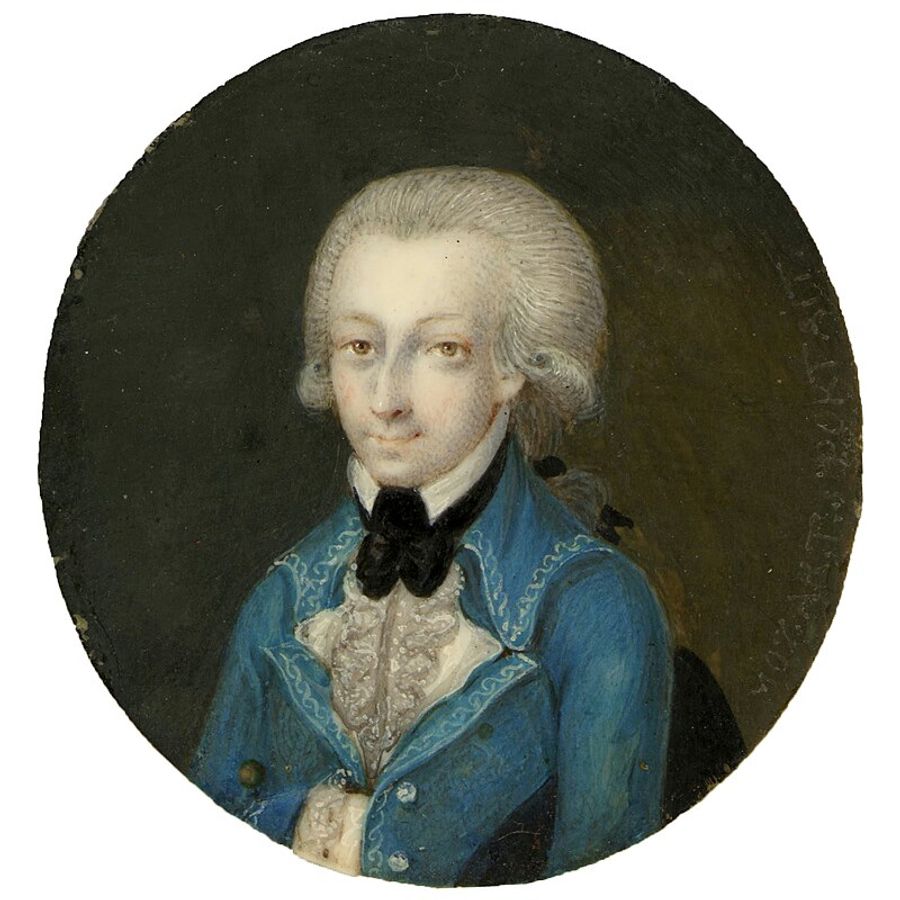
- Köchel Number
- K9 Anh.G (various) | K6 293e
- Genre
- Vocal Music
- Form
- Lieder
- Date
- Spring 1778
- Place
- Mannheim
- Age
- 22
The group known as the 19 Song Cadenzas (K. Anh. G, various) consists of short, fragmentary vocal ornamentations associated with Mozart’s Mannheim stay in spring 1778, when he was 22. Preserved only as a catalogue group (rather than a single unified work), these snippets capture the practical, performer-facing side of late-18th-century singing—where a written line could be intensified by an improvised flourish at a cadence.
Background and Context
In Mannheim in 1778, Mozart was living at close range with one of Europe’s most admired musical establishments and was actively thinking in theatrical terms—writing and coaching for singers as well as pursuing court connections. The 19 Song Cadenzas are generally placed in this Mannheim window (spring 1778) and survive as a set of brief additions meant to be inserted at the ends of vocal phrases—cadential “finishes” rather than complete songs in their own right [1]. Their attribution is transmitted as a catalogue grouping (K. Anh. G, various), and they are best understood as occasional performance materials: practical, portable, and not necessarily tied to a single identifiable text or “occasion.”
Musical Character
What is “on the page” in such pieces is typically a compact strand of melody designed to sit over a cadential harmony: a short span of passaggi (rapid scalar or arpeggiated motion), a turn or trill figure, and a shaped descent back to the final note—often written to sound spontaneous while still landing securely in time for the accompaniment’s closing gesture. In this sense, the set belongs to Mozart’s wider world of written-out cadenzas and embellishments, where he sometimes fixed in notation what singers and keyboard players would otherwise be expected to extemporize [2]. Even when authorship of individual items cannot be securely demonstrated, the musical premise aligns closely with Mozart’s Mannheim preoccupations: expressive vocal line, clear harmonic arrival, and an ear for theatrical timing at moments of closure.
Sources
[1] Wikipedia — Köchel catalogue table entry listing “Anh.G (various) … 19 Song Cadenzas … Spring 1778 … Mannheim”.
[2] Internationale Stiftung Mozarteum — Köchel-Verzeichnis overall entry: “Cadenzas, Lead-Ins and Embellishments” (context for Mozart-related cadenzas/embellishments and subparts in Anh. G).