- Köchel Number
- K9 Anh.G (various) | K6 626a
- Genre
- Vocal Music
- Form
- Lieder
- Date
- 1768–1791
- Place
- Vienna
- Age
- 12
Mozart’s cadenzas for a range of piano concertos—associated in modern cataloguing with K. Anh.G (various)—survive in uneven form, from usable solo keyboard passages to difficult fragments and items of doubtful attribution. They are linked to concertos from the boyhood “pasticcio” works (K. 40 and K. 107/1) through the mature Viennese concertos up to K. 595, preserving something of Mozart’s improvisatory voice on the page.[1]
Mozart's Life at the Time
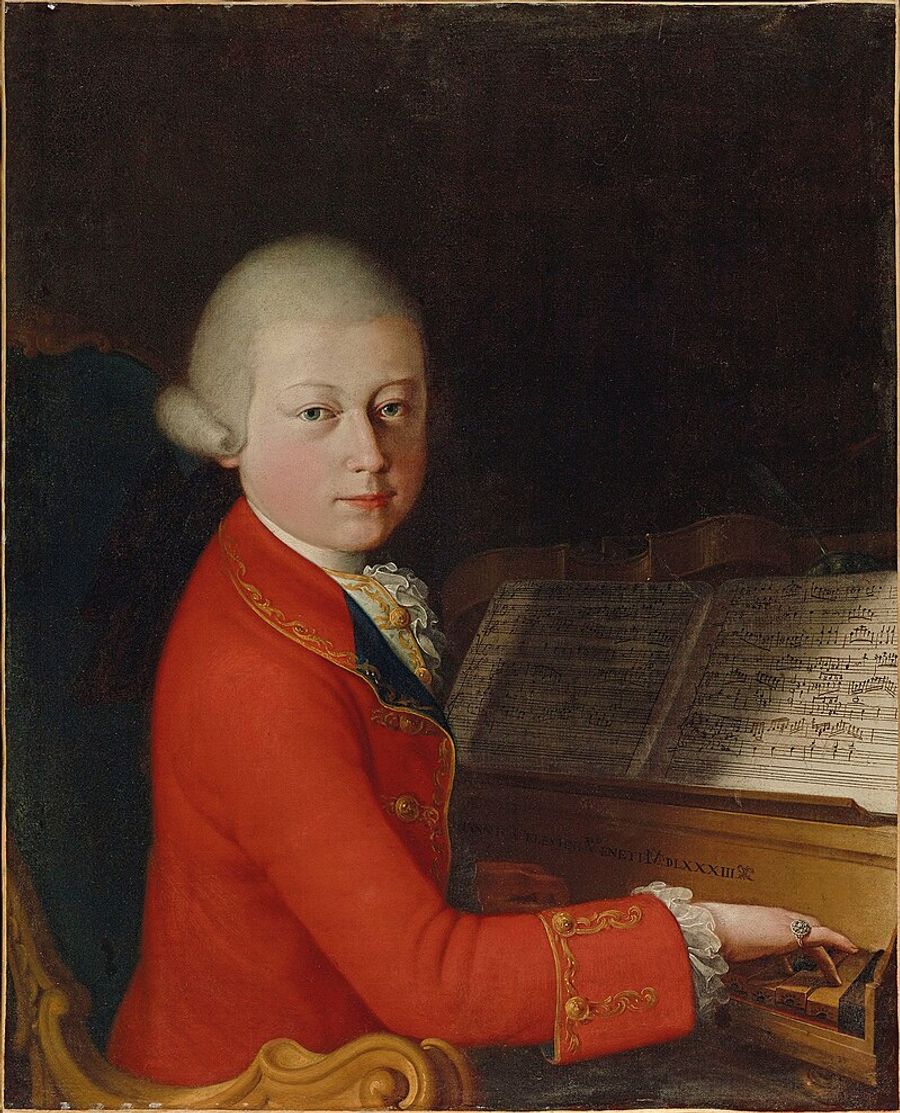
In 1768, Wolfgang Amadeus Mozart (1756–1791) was twelve and in Vienna, absorbing the city’s theatrical and keyboard culture while continuing to produce occasional works at remarkable speed. The cadenzas now grouped under K. Anh.G (various) are often described as juvenilia because they preserve short, practical keyboard insertions rather than fully autonomous compositions—and because at least some related leaves appear to have circulated, been recopied, or even touched up within the Mozart family circle.[1]
Musical Character
What survives under this umbrella is, in essence, “Mozart at the keyboard” compressed into cadenza-space: passagework designed to spin out a concerto’s harmonic tension, touch the expected cadential points, and return cleanly to the orchestra. In the earliest strata connected with the boyhood concerto K. 40, the source situation itself affects what can be said musically: the New Mozart Edition reports a cadenza written on the reverse of the last leaf of the K. 40 autograph that was likely first drafted by Wolfgang in pencil and later written over and expanded by Leopold in ink, with metre shifts that do not neatly match any of the concerto’s movements—suggesting it may not, in fact, belong securely to K. 40 at all.[1]
Across the better-established concerto cadenzas (for works including K. 175, 238, 246, 271, 365, 413–415, 449–451, 453, 456, 459, 488, and K. 595), the musical profile is consistent with Mozart’s mature practice: rapid scales and arpeggios, terse motivic reminders of the movement’s themes, and clear harmonic navigation—often aiming for a poised, rhetorically “spoken” close rather than sheer display. Even when a particular cadenza’s attribution is doubtful, the page typically reveals the same functional goal: to bridge the concerto’s suspended cadence with a brief, personalized flourish that sounds improvised yet lands with classical precision.[1]
Sources
[1] Neue Mozart-Ausgabe (New Mozart Edition), foreword to X/28/2 “Keyboard Concertos and Cadenzas” (discussion of Mozart cadenzas K. 624/626a appendices, source situation, and the problematic cadenza on the reverse of the K. 40 autograph leaf).