- Köchel Number
- K9 Anh.A 29 | K6 107
- Genre
- Piano Music
- Form
- Piano Pieces
- Date
- Winter 1770–1772
- Place
- Salzburg
- Age
- 14
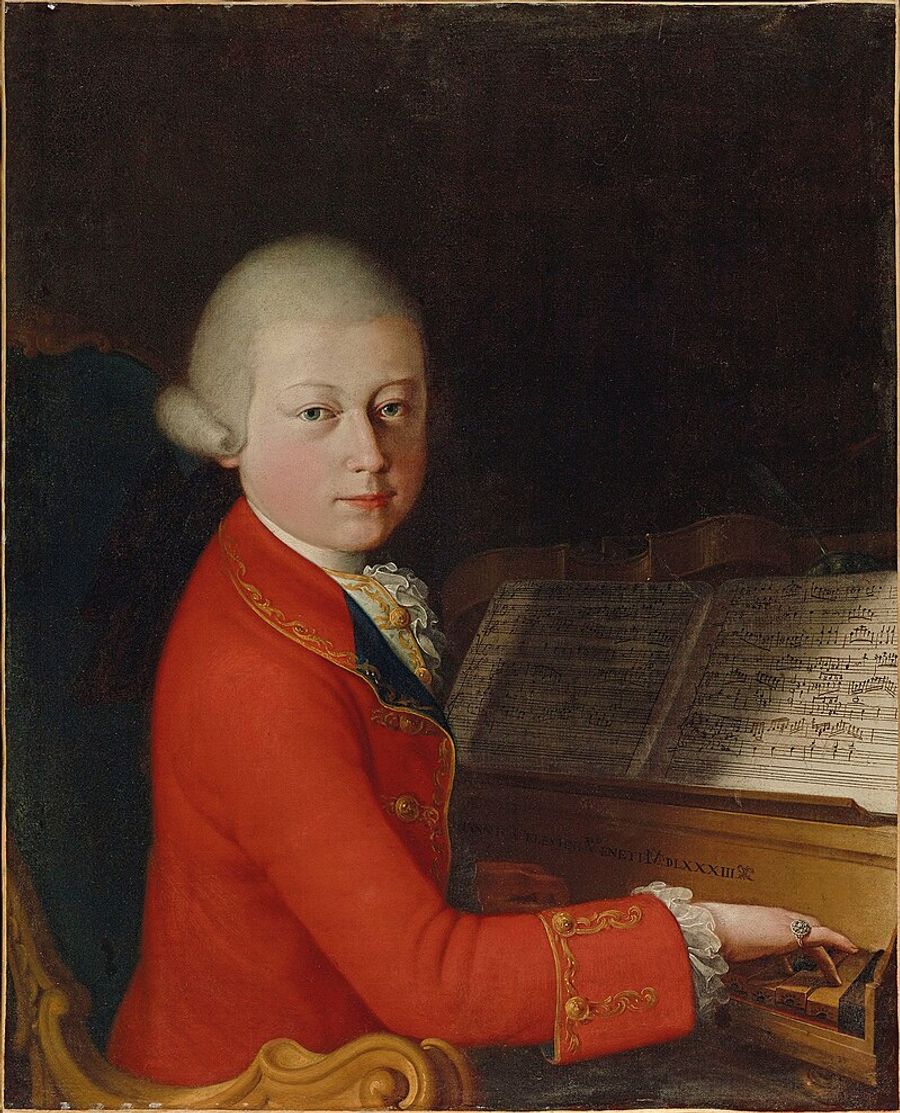
The Three Concertos for Piano after Johann Christian Bach (K. Anh.A 29) are an uncertain group of early concerto-style pieces associated with Mozart’s Salzburg years around 1770, when he was about fourteen. They stand close to music by the “London Bach” (Johann Christian Bach), suggesting arrangement, adaptation, or copying rather than fully independent concerto invention.
Background and Context
In 1770 Mozart was based in Salzburg but intermittently travelling in Italy with his father, Leopold (the first Italian journey began in December 1769 and continued through 1771). In these years the young composer absorbed fashionable keyboard style as eagerly as he studied counterpoint, and Johann Christian Bach—whom Mozart had met in London a few years earlier—remained an important model for elegant, cantabile keyboard writing.
K. Anh.A 29 is catalogued as “3 Concerti for Piano after J.C. Bach,” a description that already implies dependence on Bach’s music and leaves open basic questions of authorship and extent of Mozart’s hand in the material.[1] In practice, the best-documented “concertos after J.C. Bach” in Mozart’s orbit are the three arrangements known as K. 107, made from Johann Christian Bach sonatas and expanded into keyboard concertos with string accompaniment.[2][3]
Musical Character
Where sources are accessible, these “after Bach” concertos belong to the galant concerto world: clear periodic phrasing, tuneful right-hand melody over a supportive bass, and brilliance that lies more in fluent passagework than in dramatic conflict. In such pieces the soloist typically alternates with the strings in short tutti blocks and answering episodes, so that even simple keyboard figurations acquire a public, rhetorical profile once framed by sustained string sonority.
The model for this kind of writing is very close to Johann Christian Bach’s own keyboard-and-strings idiom, and in the comparable K. 107 set the keyboard part remains largely Bach’s while the orchestral dimension reflects Mozart’s act of “turning” a keyboard work into a concerto texture.[3]
Place in the Catalog
K. Anh.A 29 is best understood as evidence of Mozart’s early, practical engagement with admired contemporary keyboard music—music he could study, perform, and adapt—rather than as a secure cornerstone of his original piano-concerto sequence. Its association with Johann Christian Bach places it firmly within the stylistic education of Mozart’s adolescence, when fluency in the galant manner was a prerequisite for later, more individual concerto mastery.
Sources
[1] Köchel catalogue entry line identifying “Anh.A 29 … 3 Concerti for Piano after J.C.”
[2] Mozarteum (Köchel Verzeichnis): K. 107 III, concerto arrangement after J.C. Bach sonata (work page; illustrates the well-attested ‘after J.C. Bach’ concerto arrangements)
[3] IMSLP: 3 Concertos, K. 107 (after J.C. Bach) — overview and source access for the closely related, documented set