- Köchel Number
- K9 85 | K6 73s
- Genre
- Sacred Music
- Form
- Smaller Church Works
- Key
- A Minor
- Date
- July–August 1770
- Place
- Bologna
- Age
- 14
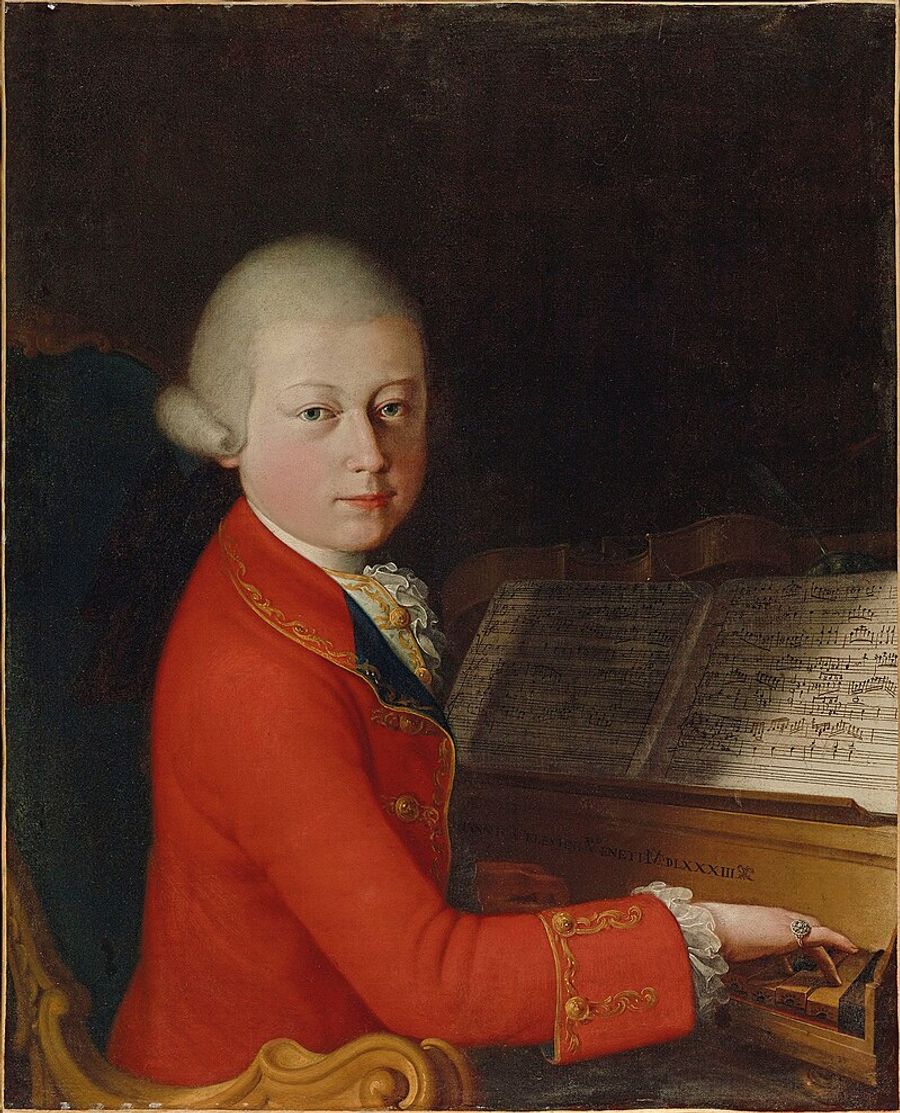
Mozart’s Miserere in A minor (K. 85) is a compact penitential setting of Psalm 51, written in Bologna in late July or early August 1770—when the composer was only fourteen. Scored with striking austerity for three low solo voices and organ, it offers an unusually inward glimpse of Mozart absorbing Italian sacred style and stile antico discipline at close range.[1]
Background and Context
Mozart’s 1770 Italian journey is often recalled for operatic triumphs and the celebrated Roman episode surrounding Allegri’s Miserere—but the Bologna stay also yielded modest, practical sacred pieces. K. 85 belongs to that quieter thread: music written not to impress a public theater, but to serve devotional use, and to demonstrate a young composer’s command of learned contrapuntal language.
Bologna was a crucial musical crossroads for the fourteen-year-old. The city’s church establishments and its famously rigorous musical circles encouraged exactly the sort of disciplined, historically grounded writing that Salzburg’s more pragmatic liturgical routine could not always demand. That tension—between liturgical utility and compositional craft—helps explain why a small-scale psalm setting like K. 85 is worth attention: it is “minor” only in dimensions, not in seriousness of intent.
Composition and Liturgical Function
The Miserere sets “Miserere mei, Deus” (Psalm 51 in the Vulgate numbering), the quintessential text of penitence in the Catholic tradition, frequently associated with Lent and devotional observances emphasizing contrition. Mozart composed the work in Bologna at the end of July or beginning of August 1770.[1]
Its scoring is tellingly restrained: voices: alto, tenor, bass; continuo: organ.[2] Rather than the festive Salzburg sound of trumpets and timpani, this is chamber-like sacred music—music for a small space, a small group of singers, and an attentive atmosphere.
Source transmission also underlines the work’s private, practical character. The International Mozarteum Foundation notes that a manuscript copy of the Miserere from 1770 survives in the hand of Leopold Mozart.[3] For a piece of this scale, such family copying is unsurprising, yet it reminds us that K. 85 lived—at least in part—through domestic documentation rather than a high-profile printed dissemination.
Musical Structure
K. 85 achieves its affect through economy. The three voices (unusually all in the lower register) create a darkened palette that suits the penitential text, while the organ anchors the harmony and line with a devotional steadiness.
A distinctive feature is Mozart’s engagement with stile antico—a “learned,” Renaissance-inflected choral manner that privileges sober note-values and contrapuntal clarity. Scholarship on Mozart’s tempo and style points specifically to the Miserere K. 85 as containing movements in stile antico, emphasizing its consciously archaic expressive frame.[4]
Rather than dramatic word-painting in the operatic sense, the piece’s rhetoric is liturgical: balanced phrases, controlled dissonance, and a sense of continuity that allows the psalm’s repeated pleas to feel cumulative. In this respect, K. 85 can be heard as an apprenticeship in sacred restraint—Mozart learning how to make intensity without spectacle.
Reception and Legacy
The Miserere in A minor is not among Mozart’s most frequently performed sacred works, in part because its scoring and scale place it outside both the grand Mass tradition and modern concert expectations. Yet precisely that modesty makes it valuable today: it fits naturally into Lenten programs, devotional concerts, or liturgies seeking historically informed simplicity.
In Mozart’s broader output, K. 85 offers a rare early example of concentrated penitential tone in a minor key—an affect he would return to only selectively in later sacred music. Heard on its own terms, it is a small Bologna document with a large implication: even at fourteen, Mozart could write sacred music that sounds less like a “student exercise” than a composed act of devotion.
Sources
[1] Neue Mozart-Ausgabe (via IMSLP EU): foreword/edition PDF noting origin in Bologna (late July/early Aug 1770) and scoring for alto, tenor, bass and organ.
[2] VMII (Virtual Mozart Information Interface): catalogue entry for K. 85/73s giving instrumentation (A, T, B and organ).
[3] International Mozarteum Foundation press release describing acquisition information, including a 1770 manuscript copy of Mozart’s Miserere KV 85 in Leopold Mozart’s hand.
[4] Dahlhaus-style analytical scholarship (Nomos eLibrary PDF) discussing Mozart’s tempo system and identifying movements in the Miserere K. 85 as *stile antico*.