- Köchel Number
- K9 88 | K6 73c
- Genre
- Opera & Stage Music
- Form
- Arias, Scenes, Ensembles & Choirs
- Date
- February–March 1770
- Place
- Milan
- Age
- 14
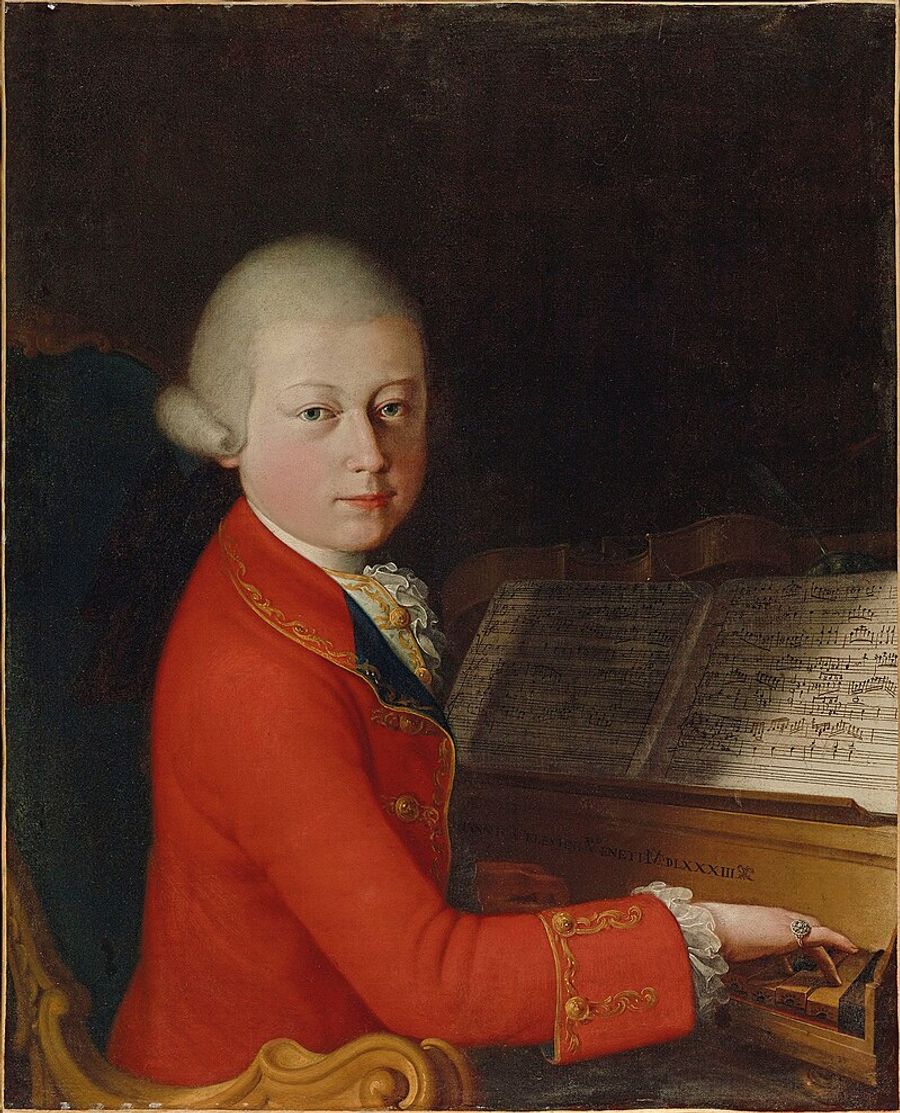
Mozart’s “Fra cento affanni e cento” (K. 88; also catalogued as K. 73c in older Köchel editions) is a brilliant Italian concert aria for soprano and orchestra, completed in Milan in March 1770, when the composer was only fourteen. Written to a dramatic text by Pietro Metastasio, it reveals a young Mozart already fluent in the high-seria language of agitation, virtuosity, and rhetorical gesture.
Background and Context
In early 1770, Wolfgang Amadeus Mozart (1756–1791) was in Milan during his first Italian journey, absorbing the local operatic culture at close range and courting influential patrons. “Fra cento affanni e cento” belongs to a small cluster of Italian arias from this period that functioned as calling cards—pieces designed to demonstrate compositional command, vocal flair, and theatrical instinct, even outside a full staged opera.[1]
The aria has often been linked, in a general way, to Mozart’s Milan operatic ambitions around Mitridate, re di Ponto (K. 87), and it is easy to hear why: the writing is unapologetically opera seria in profile—public, brilliant, and emotionally extreme. Yet scholarship on the famous Milan concert of 12 March 1770 (which helped secure Mozart an Italian opera commission) cautions against assuming that K. 88 was necessarily performed there, and even suggests a redating within that same Milanese window.[2]
What makes the work especially valuable for listeners today is precisely this “in-between” status: it is not a famous opera number with a fixed dramatic home, but it is also far more than an apprentice exercise. The surviving autograph source confirms the aria’s firm place in Mozart’s early Italian output and reminds us how seriously such occasional pieces were preserved and circulated.[1][3]
Text and Composition
The text is by Pietro Metastasio (1698–1782), the era’s dominant poet-librettist, and is drawn from Artaserse—a source that composers repeatedly mined for stand-alone arias as well as for full settings.[3] Metastasio’s poetry here is a classic vehicle for an aria di smanie (an “aria of agitation”): the speaker is beset by “a hundred anxieties,” and the language invites sharp contrasts of fear, resolve, and emotional overload.[4]
The Köchel catalogue of the Internationale Stiftung Mozarteum dates the completed work to Milan, with a terminus of 16 March 1770, and identifies the key as C major.[1] The scoring is strikingly festive for an aria centered on distress—an expressive mismatch that is, in fact, a hallmark of the style: ceremonial brilliance can become a pressure-cooker for the singer’s emotional turmoil.
Instrumentation (per Köchel catalogue):
- Voice: soprano
- Winds: 2 oboes
- Brass: 2 horns, 2 trumpets
- Strings: violins I & II, violas, cello and bass (vlc+b)[1]
Musical Character
Musically, “Fra cento affanni e cento” is a compact demonstration of Mozart’s early mastery of operatic rhetoric. The orchestral ritornello announces a bold, public stance, but Mozart quickly destabilizes that confidence through interruptions and suspense—effects that mirror a character who cannot smoothly “get through” the opening thought.[4] Even for a broad audience, the dramatic point is immediately legible: the orchestra projects authority, while the vocal line fights to keep emotional control.
For the soprano, the writing is overtly virtuosic—coloratura as psychological heat rather than mere decoration. The aria’s brilliance also lies in its tight integration of voice and orchestra: trumpets and oboes sharpen the profile of the musical “exclamation,” while the strings keep propulsion high, sustaining an atmosphere of urgent theatre.
Heard within Mozart’s output, K. 88 deserves attention as a revealing snapshot of his Italian education. In 1770 he was not yet the mature dramatist of Idomeneo (1781) or Le nozze di Figaro (1786), but he already understood a crucial operatic truth: in opera seria, emotion must be argued in public. “Fra cento affanni e cento” stages that argument with remarkable assurance—for a fourteen-year-old, and for any composer learning the craft.
Sources
[1] Internationale Stiftung Mozarteum, Köchel Catalogue entry for KV 88: dating, key, instrumentation, and source status.
[2] Anthony Pryer, “Mozart’s Operatic Audition. The Milan Concert, 12 March 1770: A Reappraisal and Revision,” Eighteenth-Century Music (Cambridge University Press) — contextualizes the Milan concert and cautions about assumed performances of KV 88.
[3] Bavarikon (Bayerische Staatsbibliothek) object page for the autograph manuscript of KV 88 — text source (Metastasio’s Artaserse), dating window, and provenance notes.
[4] Flaminioonline listening guide entry for KV 88 — identifies Metastasio/Artaserse excerpt and discusses the aria’s “aria di smanie” character and rhetorical musical gestures.