- Köchel Number
- K9 73D | K6 73D
- Genre
- Opera & Stage Music
- Form
- Arias, Scenes, Ensembles & Choirs
- Key
- B Flat Major
- Date
- 1766
- Place
- Milan
- Age
- 10
Mozart’s “Per quel paterno amplesso” (K. 73D) is a short, unfinished soprano aria (a fragment) in B♭ major, written in 1766 during his child-prodigy years on tour. Although sometimes encountered alongside the later scena “O temerario Arbace!” (K. 79), K. 73D stands as an early glimpse of Mozart’s instinct for Italian vocal line and orchestral color.
Mozart's Life at the Time
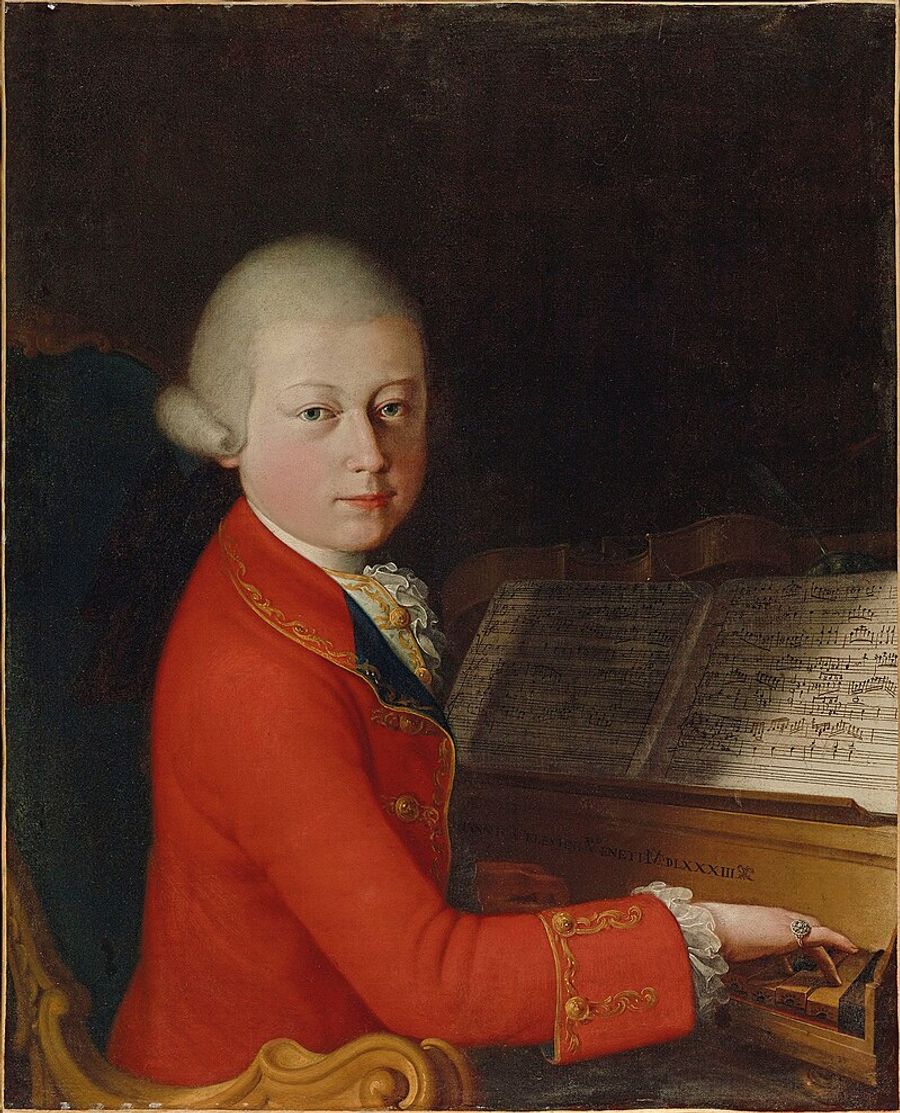
In 1766, the ten-year-old Wolfgang Amadeus Mozart (1756–1791) was still living the itinerant life of Europe’s most celebrated musical prodigy, composing as he traveled with his family. “Per quel paterno amplesso” (K. 73D) belongs to this touring period and survives only as an uncompleted work, transmitted in fragmentary form.[1]
Musical Character
The aria is in B♭ major and is scored for soprano with orchestra: winds (2 oboes, 2 bassoons), brass (2 horns), and strings with continuo bass line.[1][2] Its Italian text is attributed to Pietro Metastasio, linking it to the broader 18th‑century practice of setting adaptable opera seria poetry for concert or theatrical use.[2] Even in this incomplete state, the piece suggests Mozart’s early comfort with a cantabile soprano line supported by a bright, classical B♭-major orchestral palette—an apprenticeship that would soon feed directly into his first full Italian stage works.
Sources
[1] International Mozarteum Foundation (Köchel Verzeichnis): work entry for KV 73D with status (fragment), key, dating, and instrumentation.
[2] IMSLP: “O temerario Arbace, K.79/73d” page (includes “Per quel paterno amplesso”), giving key, approximate year, librettist attribution (Metastasio), and orchestral scoring details.