- Köchel Number
- K9 73 | K6 73
- Genre
- Orchestral Music
- Form
- Symphonies
- Key
- C Major
- Date
- 1769–Spring 1770
- Place
- Salzburg
- Age
- 13
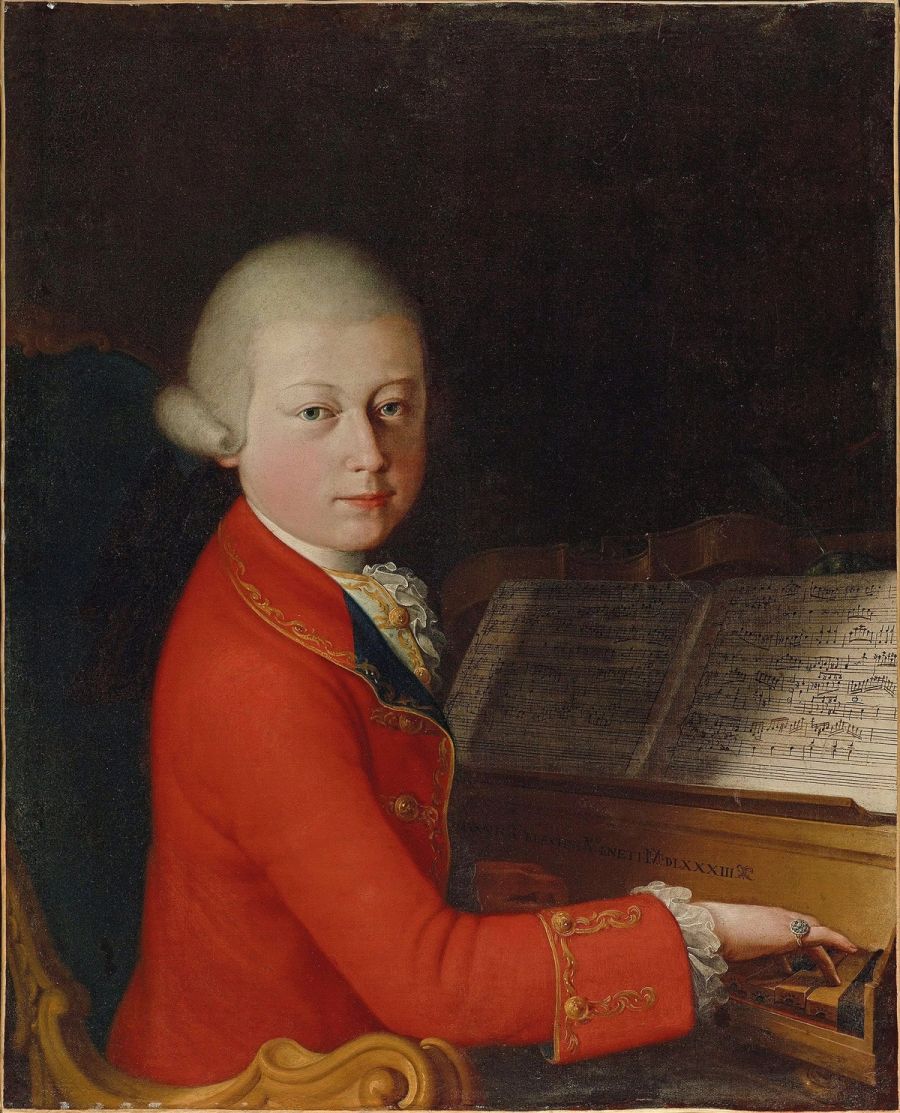
This article covers Mozart’s Symphony No. 9 in C major, K. 73/75a, an early work with uncertain dating and place of composition. It outlines the orchestration, the four movements and their formal features, and notes its later reception and the survival of the autograph score.
Composition & Context
Symphony No. 9 in C major, K. 73/75a by Wolfgang Amadeus Mozart was likely composed in late 1769 or early 1770, during or just before Mozart’s first Italian journey. Some scholarship, however, suggests a date of not before early summer 1772. The exact place of composition remains uncertain, though it may have been begun in Salzburg and completed during the Italian sojourn. The work is the first of Mozart’s symphonies in C major and reflects his youthful assimilation of galant-style symphonic practice.
Instrumentation
The symphony is orchestrated for: two flutes (used only in the slow movement), two oboes, bassoon, two horns in C, two trumpets in C, timpani, strings (first and second violins, viola, cello/bass) and continuo. Notable is the inclusion of trumpets and timpani alongside flutes – a relatively bold palette for Mozart’s early symphonies – contributing a more ceremonial or festive character. Some sources note that the flutes appear only in the Andante, and that continuo (harpsichord or organ) and bassoon were typical reinforcement instruments of the time.

Form & Musical Character
The symphony unfolds in four movements:
Allegro (C major) – opens with a full-orchestra fanfare unison on C, followed by a contrast between tremolo strings and a lyrical string reply; the first movement is often described as having a two-part structure rather than full sonata form.
Andante (F major) – scored with flutes replacing oboes; horns, trumpets and timpani are silent, yielding a lighter, more intimate texture. A dotted-rhythm motif recurs, and the middle section briefly ventures into G minor.
Menuetto & Trio (Menuetto in C major; Trio in F major) – the minuet employs full wind/brass/timpani, while the Trio is scored for strings only, offering a timbral contrast.
Molto Allegro (C major) – brisk finale in 2/4, often regarded as rondo-like. It presents a recurring principal theme and surprises in its minor-mode sidetracks.
Stylistically, the work combines the galant elegance of Mozart’s early period with hints of orchestral maturity: balanced phrasing, clear textures, and some adventurous harmonic or thematic shifts unusual for a composer of his age.
Reception & Legacy
Though seldom performed in the concert repertoire compared to Mozart’s later mature symphonies, K 73 holds value for musicology as an indication of Mozart’s developing symphonic voice. It appears in modern recordings of his early symphonies. For instance, cataloging by Neal Zaslaw highlights it within Mozart’s Symphonies: Context, Performance Practice, Reception. The autograph is preserved in the Jagiellonian Library in Kraków. Interpretive notes emphasise the work’s orchestral boldness—its full brass and timpani usage at a young composer’s hand—and its formal experiments (such as the less strict sonata form in the first movement). Some writers point out that the finale’s minor-mode detour plays with listener expectations, foreshadowing Mozart’s later formal inventiveness.
References
Sources
- https://en.wikipedia.org/wiki/Symphony_No.9%28Mozart%29
- https://imslp.org/wiki/Symphony_No.9_in_C_major%2C_K.73/75a_%28Mozart%2C_Wolfgang_Amadeus%29
- https://ourmusicworld.com/archives/21987
- https://toddtarantino.com/hum/symphony9.html
- https://academic.oup.com/book/49344
- https://es.wikipedia.org/wiki/Sinfon%C3%ADa_n.%C2%BA_9_%28Mozart%29