- Köchel Number
- K9 73w | K6
- Genre
- Piano Music
- Form
- Piano Pieces
- Key
- G Major
- Date
- 1770
- Place
- Verona
- Age
- 14
Mozart’s Thema for harpsichord in G major (K. 73w) is a tiny keyboard item associated with his Italian journey, dated to 1770 and linked to Verona, when the composer was 14. Little more than a brief thematic idea survives in the sources, yet it offers a revealing glimpse of Mozart thinking in concise, singable phrases at the keyboard.
Background and Context
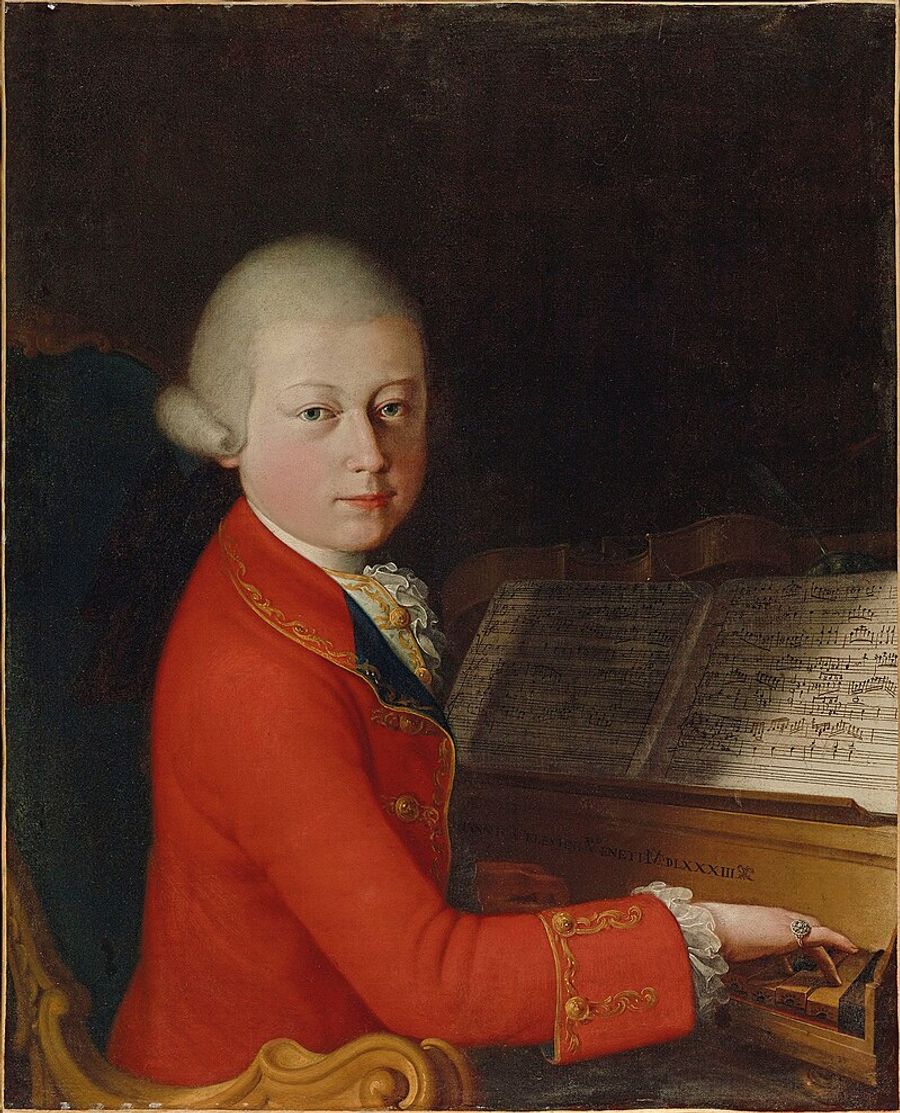
In early 1770, Wolfgang Amadeus Mozart (1756–1791) travelled through northern Italy with his father Leopold on the first of their Italian journeys, appearing in public as a prodigy and absorbing local styles along the way. Verona is firmly documented as one of the tour’s stops: a celebrated portrait session there in January 1770 even preserves a notated keyboard piece on the music desk, a fragmentary Molto Allegro in G major (K. 72a), underscoring how closely Mozart’s Italian itinerary and his keyboard improvisations could intertwine.[1]
Against this background, K. 73w is generally described as a short thema—a self-contained “seed” of melody and harmony rather than a developed multi-section work. As with other small keyboard survivals from these travel months, it was likely intended for immediate use at the instrument (practice, demonstration, or as material to elaborate in performance) rather than for publication.[2]
Musical Character
On the page, K. 73w presents itself as a compact G-major theme: a clear, diatonic idea designed to be easily grasped and readily remembered. Its usefulness lies precisely in its economy—balanced phrase-shaping and straightforward harmonic direction suggest a musical “prompt” that could invite continuation (for example through variation, figuration, or contrapuntal working) even if the source transmits only the basic statement.[2]
Sources
[1] The Morgan Library & Museum — “Mozart in Verona” (context for Mozart’s documented Verona stop in early January 1770 and the notated G-major keyboard fragment K. 72a shown in the portrait).
[2] Bärenreiter (US) — product page for a collection including Mozart’s miscellaneous keyboard works and listing K. 73w among them (evidence of the work’s identification and survival within keyboard miscellany).