- Köchel Number
- K9 72b | K6 72b
- Genre
- Opera & Stage Music
- Form
- Arias, Scenes, Ensembles & Choirs
- Date
- 26 January 1770
- Place
- Salzburg
- Age
- 14
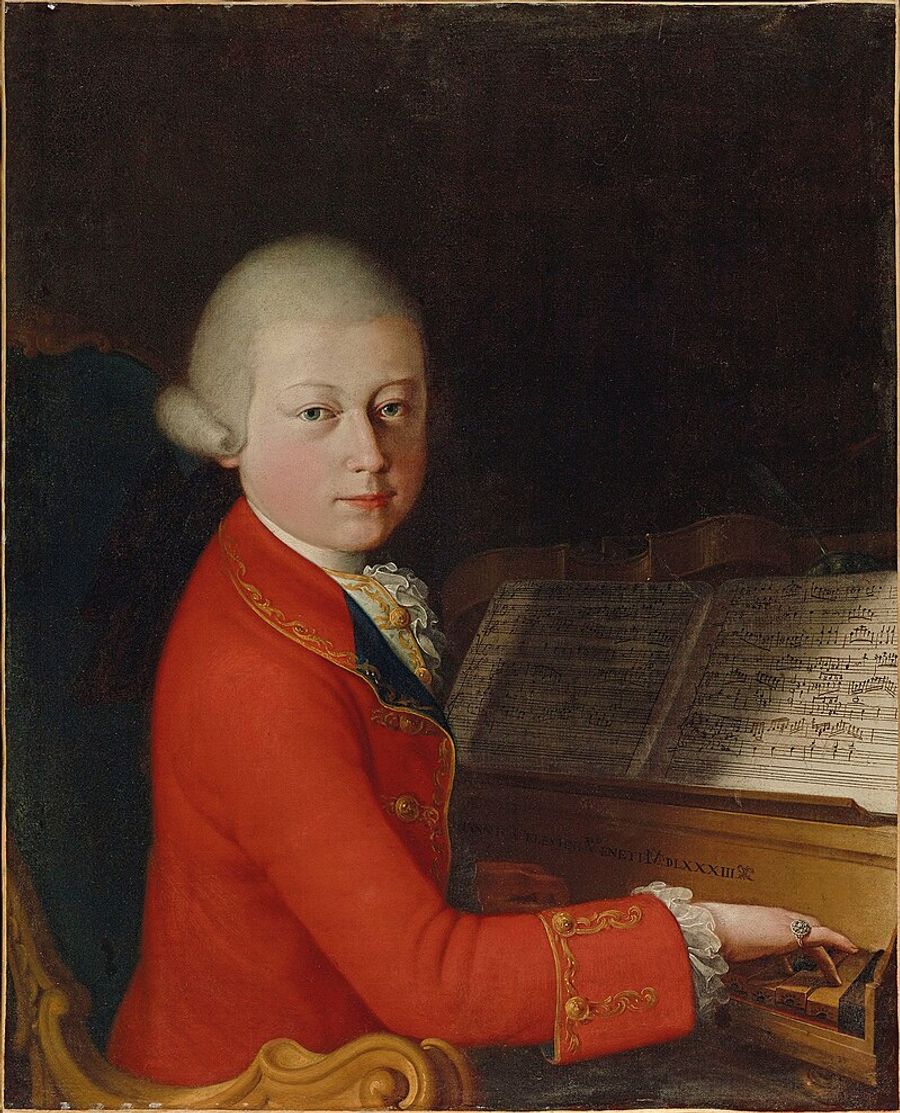
Mozart’s aria “Misero tu non sei” (K. 72b) belongs to his earliest Italianate stage-music experiments and is known today chiefly through documentary traces rather than surviving music. Dated to 26 January 1770—when the fourteen-year-old composer was traveling in Italy—it sets a text from Pietro Metastasio’s Demetrio and reminds us how quickly Mozart absorbed the conventions of opera seria even before his first mature operatic successes.
Background and Context
Among Mozart’s juvenile stage pieces, “Misero tu non sei” (K. 72b) occupies a curious place: it is listed in the Köchel catalogue but regarded as lost, and it is therefore reconstructed for us through a small chain of references rather than through notes on the page.[1]
What anchors the work historically is a letter Mozart wrote to his sister Maria Anna (“Nannerl”) dated 26 January 1770, from Milan (despite some catalog summaries that generalize the origin as “Salzburg”). In it he remarks that, just before beginning the letter, he had finished an aria from Metastasio’s *Demetrio and even quotes its opening words: “Misero tu non sei …”.[2] The New Mozart Edition likewise treats the aria as lost while accepting the early date implied by the letter.[3]
The broader context is Mozart’s intense immersion in Italian vocal style at the turn of 1770, when he was encountering professional opera culture at first hand and testing his craft on Metastasian drama—the era’s “gold standard” of serious-operatic poetry.
Text and Composition
The text comes from Metastasio’s Demetrio (Act I, scene 4), a libretto that circulated widely across Europe in countless musical settings.[4] Mozart’s brief report to Nannerl does not specify a singer, theater, or commission, and no definitive performing occasion is securely documented in standard public-facing sources; as a result, the aria is often discussed as an isolated Metastasian number whose intended function (for a specific production, or as a stand-alone showpiece) cannot be confirmed from surviving evidence alone.[2]
Catalog history adds another layer. Modern Köchel listings commonly associate K. 72b with the “Anh.” (appendix) logic used for doubtful, incomplete, or lost items, reflecting how much of the work’s identity depends on documentation rather than sources of the music itself.[1]
Musical Character
Because the score is lost, “Misero tu non sei” cannot be analyzed in the usual way (key, orchestration, formal design, and vocal range are not securely recoverable from the letter alone). Yet it still deserves attention—precisely as a window onto Mozart’s operatic apprenticeship.
Three aspects make it distinctive within his early output:
- Metastasio as training ground. Choosing Demetrio signals Mozart’s early engagement with the rhetoric of opera seria: highly patterned verse, moral argument, and sharply etched emotional states. Even without the notes, the text’s stance—addressing suffering and self-justification—belongs to the genre’s ethical theater, where characters persuade as much as they lament.[4]
- Documented compositional habit. The fact that Mozart mentions the aria casually in correspondence suggests how routinely he was producing Italian vocal numbers in this period—an important corrective to the tendency to leap from child-prodigy anecdotes straight to the later masterpieces.[2]
- A reminder of what is missing. Lost works like K. 72b sharpen our sense of Mozart’s development as something richer than the surviving canon. The New Mozart Edition’s matter-of-fact inclusion of the aria among lost items underscores that gaps in transmission are part of the historical record, not an exception.[3]
In short, K. 72b is valuable not because it can be performed today, but because it marks a specific moment—26 January 1770—when a fourteen-year-old Mozart was already thinking in the language of Italian drama, setting Metastasio with enough confidence to treat the result as one more day’s work.
Sources
[1] Wikipedia: Köchel catalogue entry line for K. 72b (Aria “Misero tu non sei”, dated 26 Jan 1770; linked with Appendix logic for lost/doubtful works).
[2] Digital Mozart Edition (Mozarteum): Mozart to his sister Nannerl, letter dated Milan, 26 January 1770, mentioning an aria from Metastasio’s Demetrio beginning “Misero tu non sei”.
[3] Digital Mozart Edition (Mozarteum): New Mozart Edition, Series II/7/1 (English preface/report) noting inclusion of the lost aria “Misero tu non sei” and its early completion date.
[4] Progetto Metastasio: text of Metastasio’s Demetrio (source for the aria’s opening line “Misero tu non sei”).