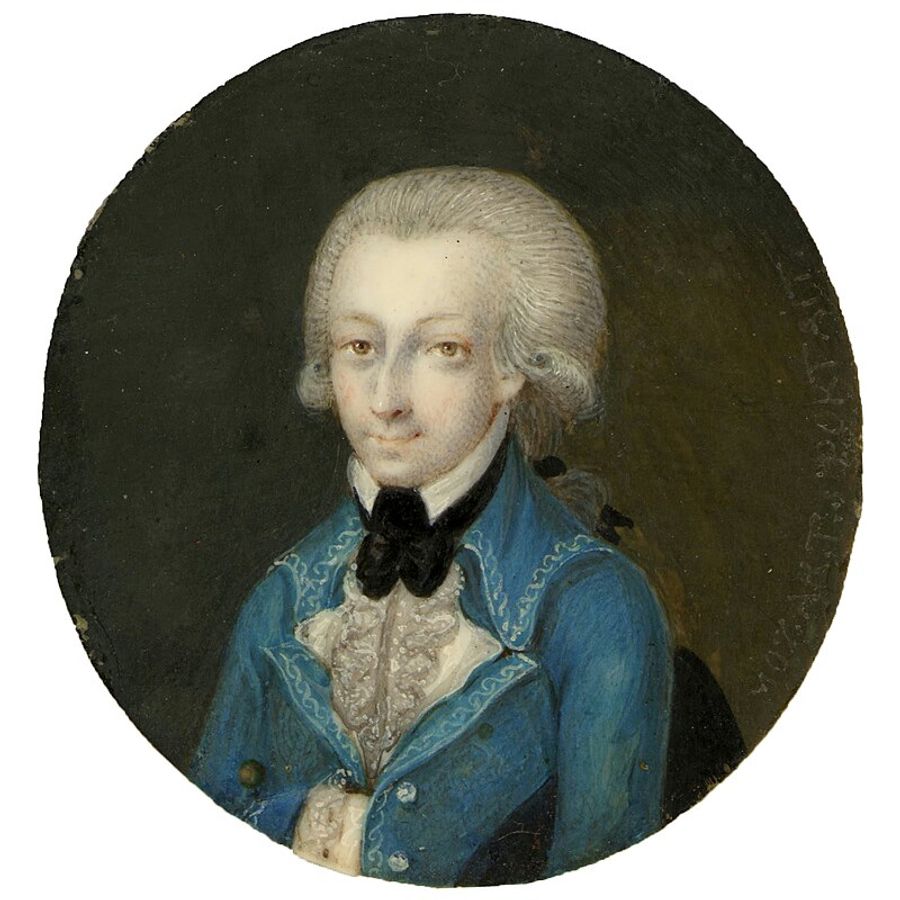
- Köchel Number
- K9 665 | K6
- Genre
- Chamber Music
- Form
- Duos & Trios for Strings & Winds
- Key
- C Major
- Date
- 1773
- Age
- 17
Mozart’s Trio in C major, K. 665 is a concise, high-spirited chamber work from his Salzburg teenage years, now dated by the International Mozarteum Foundation to 1772. Although it stands far from the public spotlight of the mature quartets and quintets, it offers a revealing glimpse of Mozart (then 16–17) writing with poise for a small ensemble and a social, divertimento-like occasion.
Background and Context
In the early 1770s Wolfgang Amadeus Mozart (1756–1791) was still primarily a court musician-in-training in Salzburg, writing abundantly across genres: church music for the Archbishop’s establishment, stage works connected to Italian travel, and a steady stream of instrumental pieces suited to private music-making. Works for small forces—duos, trios, and other flexible “house-music” formats—belong to the everyday fabric of this environment: practical, sociable, and often designed to be read at sight by capable amateurs.
K. 665 sits precisely in that world. It is not the “monumental Mozart” of the later Viennese chamber canon; rather, it shows how quickly he could produce neatly balanced, idiomatic music for a small ensemble, and how confidently he could animate a bright C-major soundscape with crisp phrase structure and alert dialogue. The work’s relative obscurity today has less to do with its quality than with the sheer competition of Mozart’s better-known chamber landmarks—and with the complicated transmission of some early instrumental items in the Köchel catalogue.
Composition and Dedication
The International Mozarteum Foundation’s Köchel Verzeichnis lists Trio in C, K. 665 as an authentic, extant, completed work, dated to Salzburg in 1772, and connected in earlier cataloguing to material around K. 135a (a ballet-related entry in older Köchel layers) [1]. This modern dating is worth underscoring because older reference traditions have sometimes circulated different year assignments for the piece.
No dedicatee is securely attached to K. 665 in standard reference listings, and (as is typical for much Salzburg occasional music) the original performance context is not documented in a way that allows a confident reconstruction. That lack of a clear “occasion story” can make the trio easy to overlook; yet it also invites listeners to hear it as part of Mozart’s broader workshop: a teenager already fluent in the conversational rhetoric of chamber textures.
Form and Musical Character
K. 665 belongs to Mozart’s category of works “for one to three string or wind instruments” (as the Köchel Verzeichnis groups it) [1]. In practical terms, this is music that lives by clarity: short motives, clean cadences, and an ensemble interplay that can be realized effectively without the sonic cushioning of a larger accompaniment.
What makes the trio deserve attention is its economy with personality. Even within a modest scale, Mozart tends to:
- Stage dialogue rather than mere accompaniment: lines pass between parts with a sense of repartee, so that the texture feels like conversation rather than solo-with-bass.
- Exploit C major’s public “brightness” while avoiding blandness: the best early Mozart avoids empty cheerfulness; it stays lively by varying articulation, rhythmic profile, and the balance of voices.
- Write in a divertimento-adjacent manner: the impression is of music intended to please quickly—yet with details (turns of phrase, small imitative gestures, neatly proportioned cadential play) that reward repeat listening.
Because the Köchel Verzeichnis entry is brief on scoring details in its public-facing view, performers and listeners may encounter K. 665 in differing realizations or editions. That flexibility is itself historically plausible for this corner of the repertory: Salzburg domestic music often circulated in ways that favored practical usability over a single “fixed” concert-hall identity.
Reception and Legacy
The trio has never been a staple in the way Mozart’s mature chamber works are: it lacks a famous nickname, an entrenched concert tradition, and the extensive performance commentary that surrounds, say, the string quartets dedicated to Haydn. Yet its survival and its “verified” status in the Mozarteum’s catalogue confirm that it is more than a doubtful curiosity [1].
Heard alongside Mozart’s later chamber masterpieces, K. 665 can function as a compact point of reference—an example of how early he had internalized Classical balance and ensemble conversation, and how naturally he could write idiomatically at small scale. For audiences with musical curiosity, it offers a rewarding alternative route into Mozart: not through the grand public statements, but through the cultivated art of making three lines speak.
Sources
[1] International Mozarteum Foundation (Köchel Verzeichnis): work entry for “KV 665 – Trio in C” (authenticity/status, key, dating, catalogue cross-references).