- Köchel Number
- K9 65 | K6 61a
- Genre
- Sacred Music
- Form
- Masses & Requiem
- Key
- D Minor
- Date
- 14 January 1769
- Place
- Salzburg
- Age
- 13
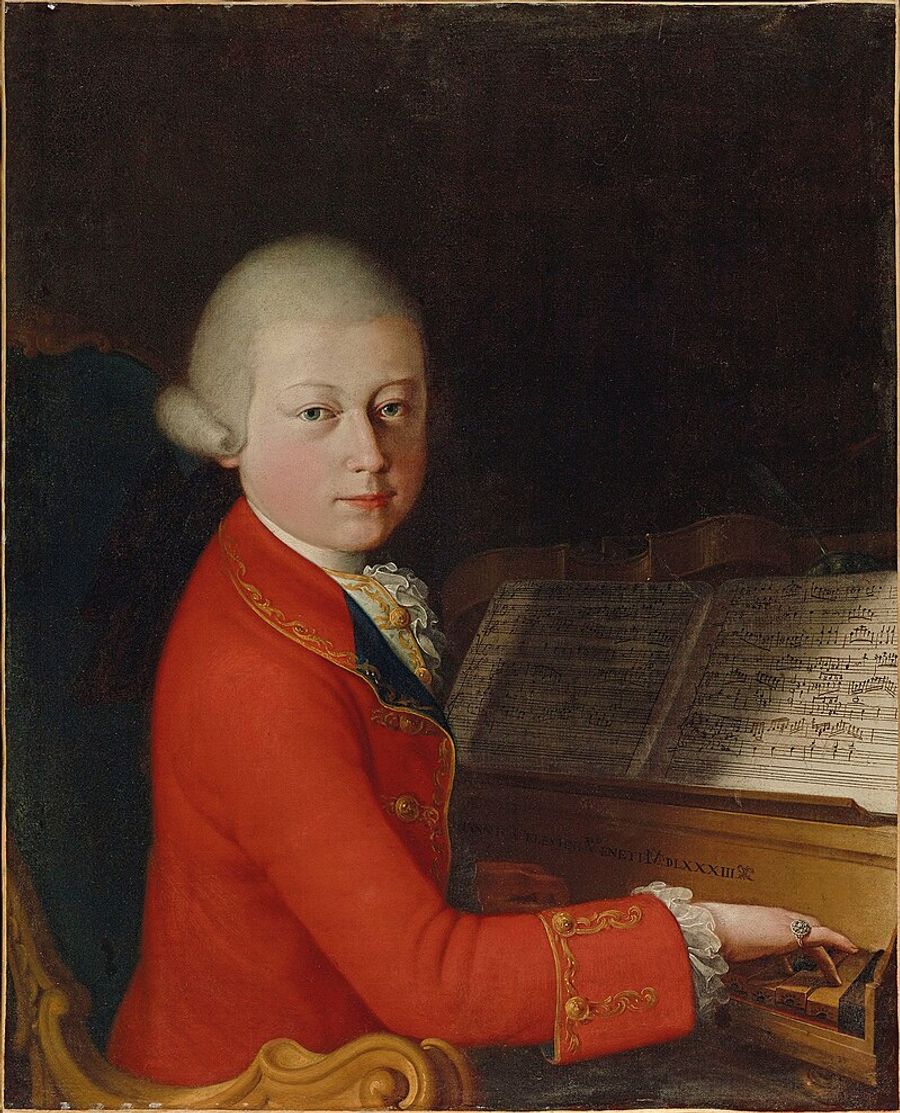
Mozart’s Missa brevis in D minor (K. 65), completed in Salzburg on 14 January 1769, is one of the most strikingly serious sacred works of his early teens. Written for the practical Salzburg liturgy yet cast in the unusually weighty key of D minor, it offers a concise, clear-eyed view of how the 13-year-old composer could marry restraint with genuine expressive purpose.
Mozart's Life at the Time
In January 1769, Wolfgang Amadeus Mozart (1756–1791) was back in Salzburg, still formally employed in the court musical establishment and writing music that could serve immediate church needs. The missa brevis (“short Mass”) was a functional genre in this environment: compact settings of the Ordinary suitable for regular services and shaped by local expectations of brevity and clarity.[1]
What makes K. 65 stand out within this practical world is the choice of key. D minor carries an unmistakable rhetorical gravity in eighteenth-century style, and in Mozart’s own catalogue it is comparatively rare for liturgical works. Modern editors and publishers repeatedly point out that Mozart set only a small number of Masses in a minor mode, which makes K. 65 an early and telling example of his attraction to darker tonal colors even in “service” music.[2]
Composition and Manuscript
The Mass is catalogued as K. 65 (also transmitted as K. 61a in older cataloguing traditions) and is dated to 14 January 1769.[3] The Köchel catalogue entry identifies it as a Salzburg Missa in D minor and preserves its traditional designation Missa brevis.[1]
Its scoring is modest by design: SATB voices with strings and organ continuo, with three trombones available ad libitum (a Salzburg practice connected to strengthening choral lines, especially in church acoustics).[4] Modern practical materials and digitized sources reflect this compact, liturgy-centered layout and make clear that the work was conceived for flexible church performance rather than concert display.[5]
Musical Character
K. 65 follows the customary Ordinary movements of a concise Salzburg Mass:
- Kyrie
- Gloria
- Credo
- Sanctus
- Benedictus
- Agnus Dei[3]
The distinctive impression of the work comes less from grand scale than from concentration. In a typical missa brevis, Mozart must keep the long texts (especially Gloria and Credo) moving—often through brisk tempos, compact motivic writing, and efficient alternation between choral declamation and shorter, more lyrical passages. Yet D minor shades this efficiency with a sober profile: the music tends toward lean, purposeful gesture rather than sheer brightness.
Why does this relatively obscure juvenile Mass deserve attention today? Precisely because it shows Mozart learning how to be expressive under constraint. Later Salzburg church works—including the celebrated “short but festive” hybrid type sometimes described as brevis et solemnis—could expand the orchestral palette and rhetorical breadth.[6] K. 65, by contrast, reveals the teenage Mozart compressing the essentials into a serviceable frame while still letting a “serious” key inflect the whole. Heard alongside his later sacred masterpieces, it functions as an early study in dramatic tone within liturgical economy: not yet the splendor of the Great Mass in C minor, but already a clear sign that sacred text and musical affect mattered to him even at thirteen.
Sources
[1] Köchel Verzeichnis (Mozarteum): work entry for KV 65, Missa in D minor “Missa brevis”.
[2] Carus-Verlag: edition page with contextual note on the rarity of Mozart’s minor-key Masses and information on KV 65.
[3] Wikipedia: Mass in D minor, K. 65 — date, movements, basic overview (used as secondary reference).
[4] Bärenreiter US: product page listing instrumentation/forces for K. 65/61a and Salzburg church-music context note.
[5] IMSLP: score page for Missa brevis in D minor, K. 65/61a (access to sources and parts information).
[6] Wikipedia: List of masses by Mozart — overview of Salzburg Mass types (brevis / brevis et solemnis) and contextual framing.