- Köchel Number
- K9 63 | K6 63
- Genre
- Orchestral Music
- Form
- Serenades, Cassations & Divertimenti
- Key
- G Major
- Date
- Summer 1769
- Place
- Salzburg
- Age
- 13
Mozart’s Cassation in G major, K. 63 is an early orchestral work associated with Salzburg outdoor festivities and thought to have been intended for a “Finalmusik” occasion. This article outlines the cassation genre, the scoring for two oboes, two horns and strings, and the piece’s seven-movement design and character.
Composition & Context
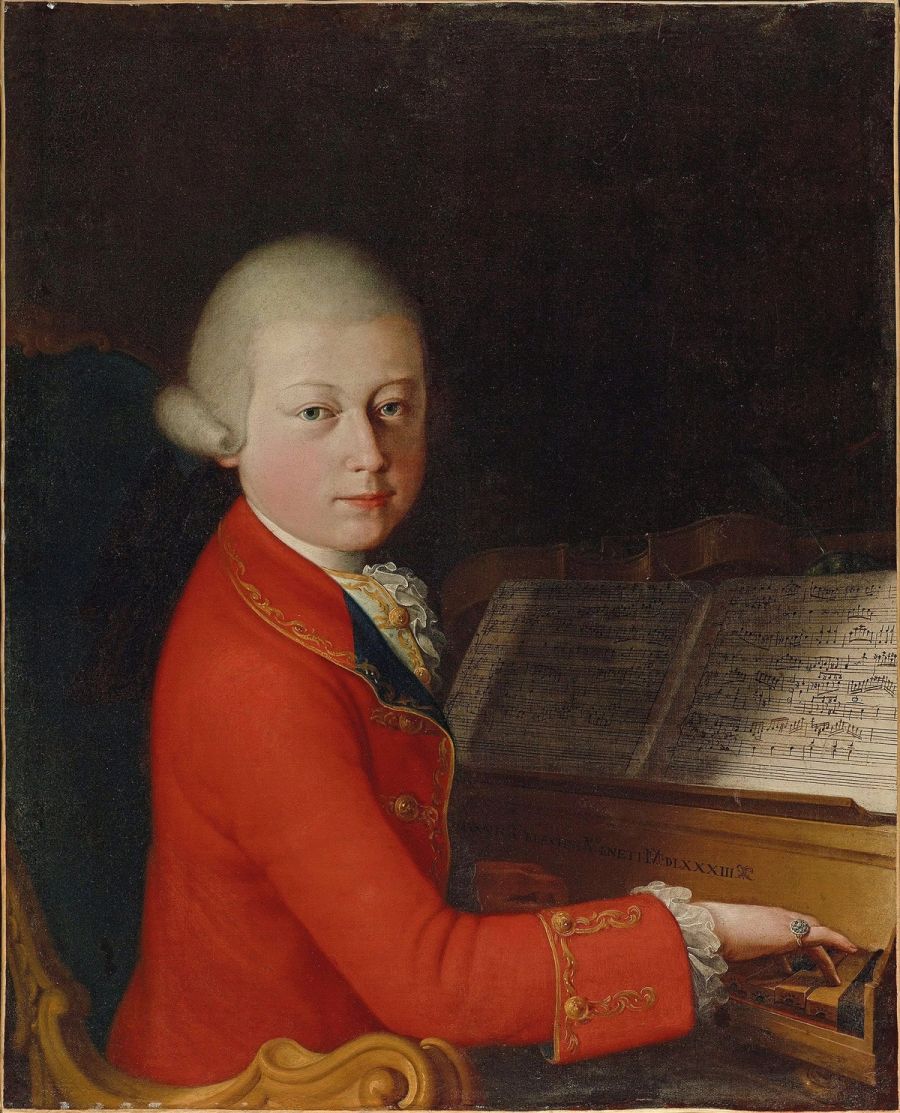
The Cassation in G major, K. 63 (sometimes labelled Cassation No. 1) was composed by Wolfgang Amadeus Mozart around the summer of 1769 in Salzburg, when the composer was thirteen years old. The work is believed to have been intended for a “Finalmusik” occasion—a festive outdoor ceremony marking the conclusion of the academic year for students of logic or physics at the University of Salzburg. As part of Mozart’s early orchestral output, it falls within his series of cassations and serenades for Salzburg’s summer social occasions.
Instrumentation & What Is a Cassation?
The Cassation is scored for two oboes, two horns, and the string section (first violins, second violins, violas, cellos/basses). It omits trumpets and timpani, giving a lighter-toned orchestration compared to Mozart’s later festive symphonies.
The term cassation (also spelled “cassatio” or “cassazione”) refers to a genre of instrumental music prevalent in southern German- and Austrian-speaking lands in the mid- to late-18th century. It is closely related to the serenade or divertimento—typically composed for outdoor performance, often multi-movement, and designed for social or ceremonial functions rather than strictly concert-hall display.
Form & Musical Character
The piece comprises seven movements:
Marche (G major)
Allegro (G major)
Andante (C major, strings only, muted violins/pizzicato bass)
Menuetto (G major) – Trio (G minor, strings only)
Adagio (D major, strings only, muted)
Menuetto (G major) – Trio (C major, strings only)
Finale: Allegro assai (G major, “hunting-rhythm” in 6/8)
The opening march provides a ceremonial prelude, suitable for a procession or outdoor event. The alternating large-ensemble and strings-only movements create contrast: the Andante and Adagio showcase delicate textures and muted strings, while the minuets and finale bring festive momentum. The finale’s hunting-rhythm character and lively rondo-like design reflect the outdoor, celebratory nature of the genre. Moreover, Mozart includes canonic techniques (notably in the first minuet) and soloistic first-violin writing (in the Adagio) hinting at his growing orchestral sophistication.
Reception & Legacy
While the Cassation in G major, K. 63 is not among the concert-hall staples of Mozart’s later symphonies, it remains valuable for scholars and performers studying his early orchestral style. The autograph and early transmissions are preserved (sheet-music editions are available via IMSLP). Modern editions, such as the Neue Mozart-Ausgabe (NMA IV/12/1), include K. 63 among Mozart’s cassations, serenades and divertimenti. Performers and historians highlight the work as a window into Salzburg’s musical-social environment and Mozart’s youthful mastery of orchestral colour and structure. The mixture of ceremonial, processional, festive, and intimate movements reflects the dual nature of these works: both background music for social occasion and display of emerging compositional skill. Modern recordings, though fewer than for mainstream symphonies, keep K. 63 alive as part of the corpus of Mozart’s early orchestral output.