- Köchel Number
- K9 647 | K6
- Genre
- Opera & Stage Music
- Form
- Arias, Scenes, Ensembles & Choirs
- Key
- D Major
- Date
- 1769
- Age
- 13
Mozart’s Aria in D for soprano and orchestra (fragment), K. 647, is a surviving glimpse of his stage-minded writing from 1769, when he was 13. With its provenance and dramatic context now unknown, the fragment nonetheless shows a young composer already thinking in operatic phrases and orchestral answers.
Mozart's Life at the Time
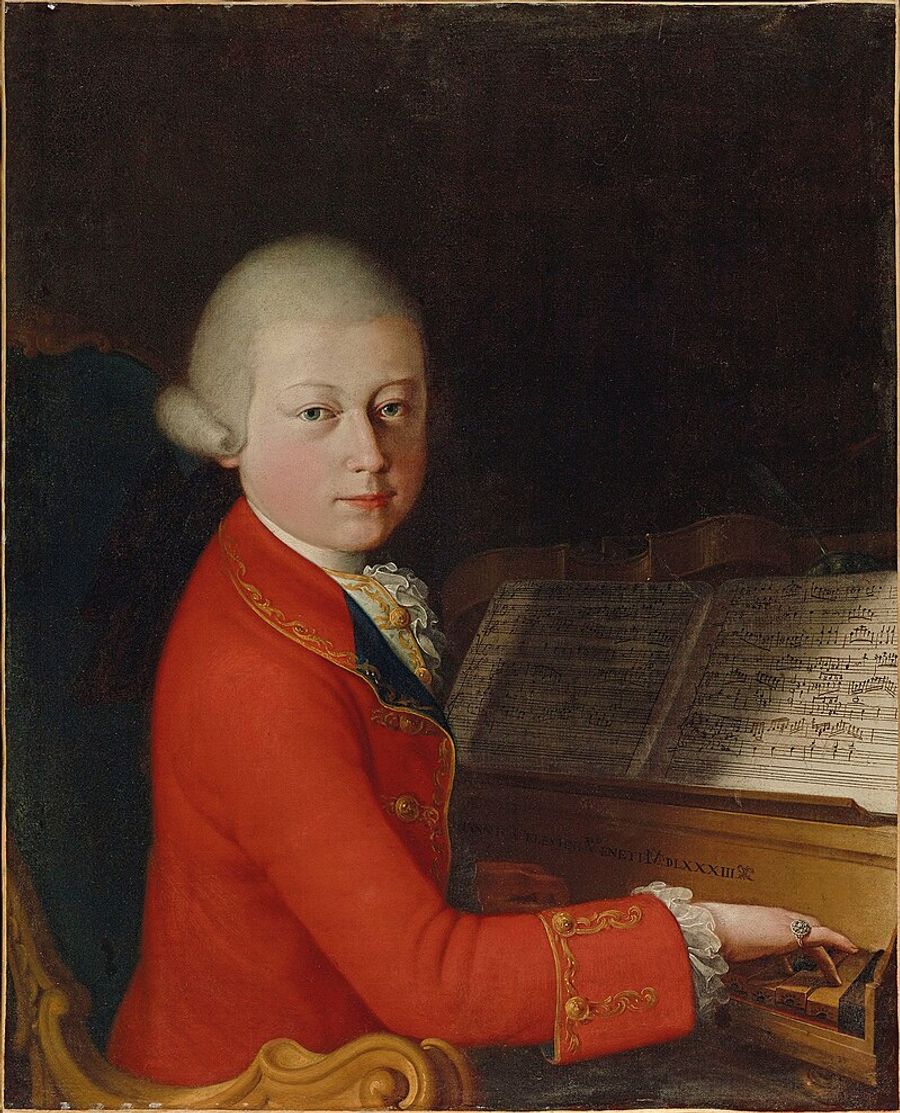
In 1769, Wolfgang Amadeus Mozart (1756–1791) was 13—fresh from the intense apprenticeship years of the family’s European tours, and on the verge of his first major Italian operatic commissions. The Aria in D (K. 647) belongs to this threshold moment: a period when Mozart was rapidly expanding his Italianate vocal style, even when the occasion, text, and destination of a piece were not firmly anchored to a documented production.12
Musical Character
What survives is only a fragment of a soprano aria with orchestral accompaniment, in D major.1 Even in incomplete form, the choice of key is suggestive: D major was Mozart’s bright, outward-facing “theatrical” tonality, often favored for music that benefits from brilliance and rhythmic clarity.
At a basic level, the fragment implies the familiar late-baroque/early-classical operatic logic of the aria as a set-piece: the singer leads with a shaped, singable line, while the orchestra frames it with punctuation, harmonic grounding, and short interjections. Although the full scoring and the text underlay are not securely documented in commonly available summaries, the very designation “for soprano and orchestra” points beyond domestic song toward the public language of the theater—one more small step on the road to Mitridate, re di Ponto (premiered in Milan in December 1770), Mozart’s first fully fledged opera seria success.3
Sources
[1] Köchel Verzeichnis (Mozarteum Foundation Salzburg): entry for KV 647, 'Aria in D' for soprano and orchestra (fragment).
[2] Köchel Verzeichnis (Mozarteum Foundation Salzburg): overview note on Mozart’s early aria output and travel periods (context for juvenile arias).
[3] Encyclopaedia Britannica: 'Mitridate, re di Ponto' (Mozart’s early Italian opera; premiere date and context).