- Köchel Number
- K9 648 | K6
- Genre
- Chamber Music
- Form
- Duos & Trios for Strings & Winds
- Key
- C Major
- Date
- 1766–1769
- Age
- 10
Mozart’s Serenade in C (“Ganz kleine Nachtmusik”), K. 648, is a compact seven-movement serenade for two violins and bass (often realized by cello), likely composed in the mid-to-late 1760s—traditionally dated to 1766—when he was about ten. Rediscovered in Leipzig and only premiered in modern times in 2024, it offers a rare glimpse of Mozart thinking in miniature dance forms at the very start of his chamber-music path.[1][2]
Mozart's Life at the Time
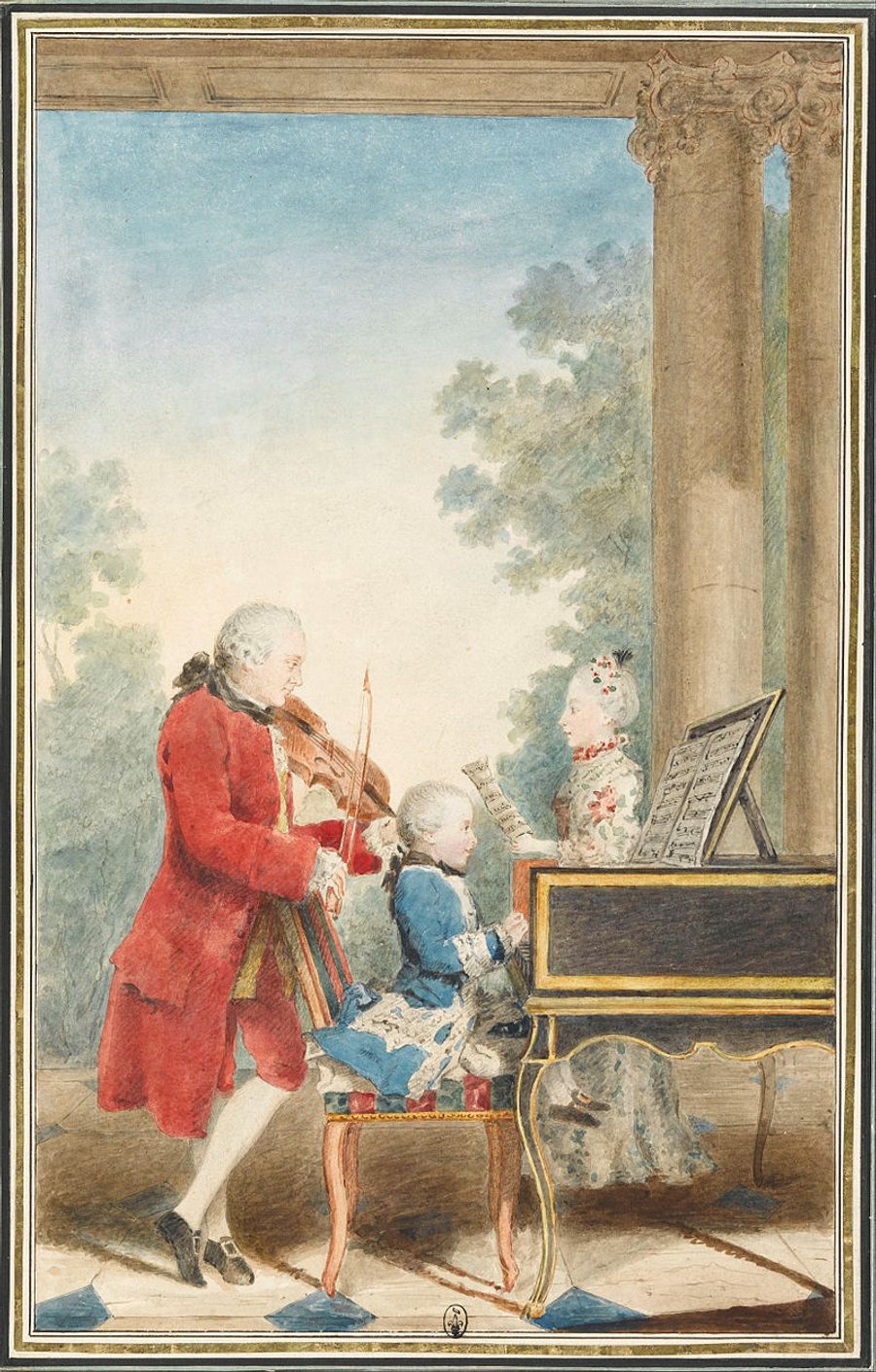
In 1766 Mozart was ten years old, already celebrated as a child prodigy and frequently on the move with his family for performances and patronage. For K. 648, however, the place and exact occasion remain unknown; the work survives in a single source that attributes it to “Wolfgang Mozart,” and his authorship is considered very likely.[1]
Musical Character
K. 648 is a serenade in C major for strings—two violins above a bass line (often played by cello)—laid out as seven concise movements, closer to a sequence of social dances than to a concert work.[2] Its plan is:
- I. Marche (C major)
- II. Allegro (C major)
- III. Menuet I (C major) — Trio (F major)
- IV. Polonese (C major)
- V. Adagio (F major)
- VI. Menuet II (C major) — Trio (F major)
- VII. Finale: Allegro (C major)[2]
What is striking is the piece’s childlike clarity of tonal layout (C major anchored by repeated excursions to the subdominant, F major) and its pragmatic, “on-the-page” craftsmanship: short spans, neat cadences, and idiomatic violin writing that suggests music meant to be played easily and enjoyed immediately—an apprentice Mozart practicing genre and gesture in miniature rather than striving for depth.