- Köchel Number
- K9 646 | K6
- Genre
- Opera & Stage Music
- Form
- Arias, Scenes, Ensembles & Choirs
- Key
- C Major
- Date
- 1769
- Age
- 13
Mozart’s Italian aria “Cara, se le mie pene” (K. 646) is a compact soprano showpiece from his early Salzburg years, written when he was about 13. Although its original dramatic context is unclear, the surviving score preserves a glimpse of the young composer’s feel for vocal line and simple orchestral support.
Mozart's Life at the Time
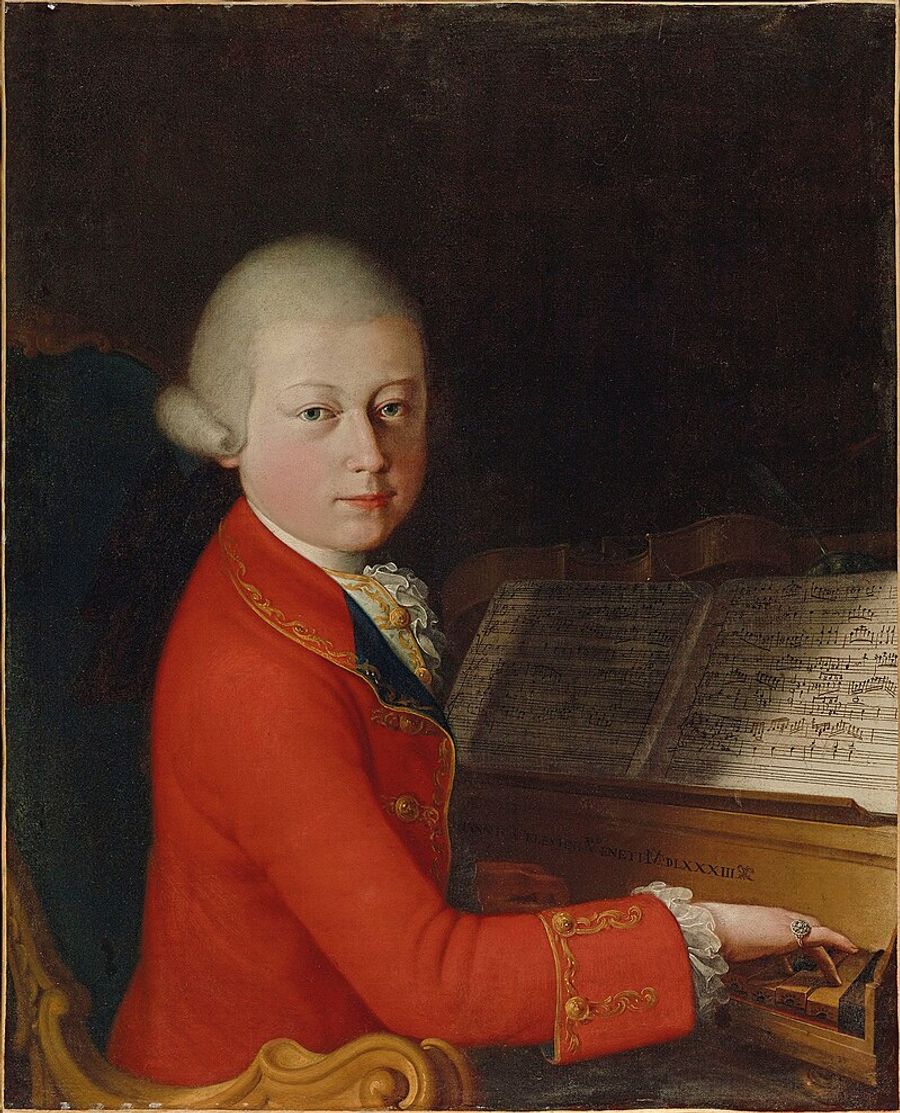
In 1769, Wolfgang Amadeus Mozart (1756–1791) was 13 and newly back in Salzburg after the long childhood tours that had made his name as a performer-composer. The aria “Cara, se le mie pene” (K. 646) is generally placed in this Salzburg period, though its exact occasion and intended singer are not securely known; even its authenticity has been treated with caution in modern cataloguing.[1]
Musical Character
Set in C major, the piece is scored for soprano with a notably lean orchestra: two horns, violin, viola, and basso continuo.[1] The texture suggests an intimate, chamber-sized aria rather than a full-scale opera number, with the horns adding warmth and ceremonial color while the strings and continuo carry the harmonic and rhythmic frame. Within this restrained palette, Mozart’s writing aims above all at vocal clarity—phrases that sit gratefully for the voice, and orchestral gestures that underline rather than compete with the singer—qualities that anticipate the more confident Italian arias he would produce on the first Italian journey soon afterwards.[2]