- Köchel Number
- K9 638 | K6
- Genre
- Orchestral Music
- Form
- Serenades, Cassations & Divertimenti
- Key
- G Sharp Minor
- Date
- 1766
- Age
- 10
The Unidentified Orchestral Piece in G♯ minor (K. 638) is a tiny, enigmatic sketch associated with Wolfgang Amadeus Mozart (1756–1791) and generally dated to around 1765–66, when he was about ten. Preserved only in fragmentary form, it is notable above all for its extraordinary tonal world: G♯ minor is a vanishingly rare key in Mozart’s output.
Mozart's Life at the Time
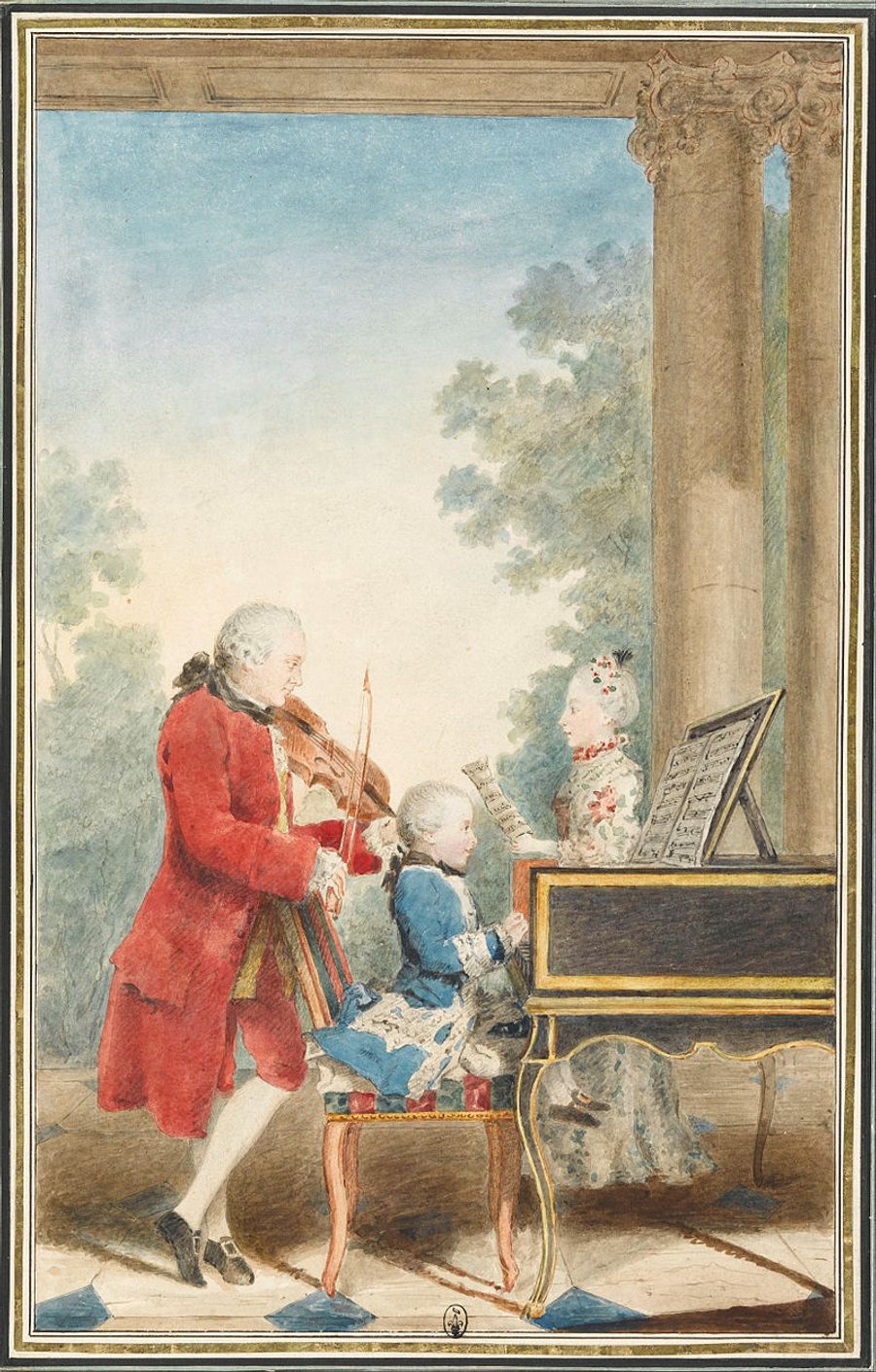
In 1766, Mozart was ten years old and in the midst of the family’s long “grand tour” years, moving between major musical centers and absorbing a wide range of orchestral styles. The precise place of origin for K. 638 is unknown, and the surviving material does not allow a secure occasion or destination to be identified [1].
Musical Character
What survives is not a complete serenade or divertimento but a brief orchestral draft (only a handful of bars), linked to a reused manuscript leaf; modern scholarship has treated it as an unbezeichnetes Orchesterstück (unidentified orchestral piece) [1]. The sketch appears to imply a minor-mode Andante and has been discussed in relation to Mozart’s early difficulty notating complex key signatures and accidentals—an issue that becomes especially acute if the music is heard in a remote key such as G♯ minor (or its enharmonic equivalents) [1]. Even in this truncated state, the fragment suggests a young composer already reaching for expressive gravity rather than the outdoor brilliance typical of Salzburg-style serenade music.
Sources
[1] Wikipedia: "Symphony, K. Anh. C 11.18" — includes discussion of the short orchestral draft assigned K. 638 in Köchel^9 (Zaslaw), its fragmentary state, dating around 1765–66, and notation/key issues.