- Köchel Number
- K9 637 | K6
- Genre
- Vocal Music
- Form
- Lieder
- Date
- 1766
- Age
- 10
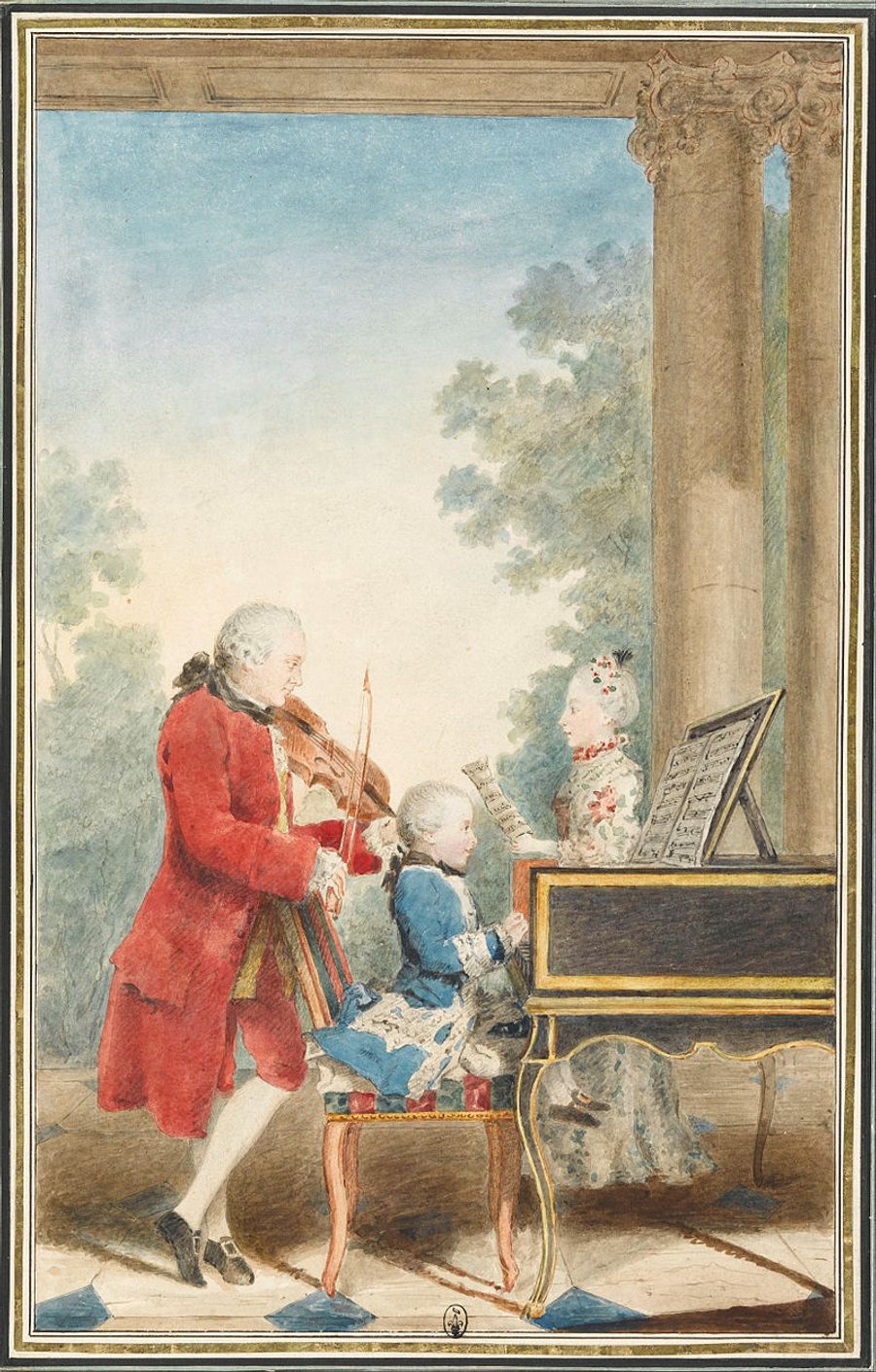
Mozart’s tiny vocal fragment “Oragna figata fa marina gamina fa” (K. 637) is a surviving incipit—just enough music to preserve a glimpse of the composer at about age ten. An early source links it to a bedtime ritual in which the young Mozart sang the melody and Leopold Mozart supplied a second voice.
What Is Known
K. 637 survives as an uncompleted juvenile song for one or two voices; the Internationale Stiftung Mozarteum lists it as authentic and extant, with C major given as the musical key and dating placed in 1767 (place unknown).[1] The same catalogue record notes an autograph among the sources (dated 1766) and points to the work’s early appearance in print via Georg Nikolaus von Nissen’s Biographie W. A. Mozarts (1828).[1]
A particularly evocative transmission note preserves a contemporaneous claim: the melody was “composed by the boy Mozart” and sung nightly before bedtime until his tenth year—after which Leopold “had to sing the second part.”[1] The text itself reads like playful, quasi-Italian nonsense syllables; beyond the incipit, no secure continuation can be assumed from the surviving material.
Musical Content
Because the piece is preserved only as a brief melodic fragment, K. 637 is best understood as a simple singable tune—the kind of compact, memorable line that could readily support an improvised or ad libitum “second” voice (whether a true duet part, a parallel line, or a plain harmonic support).[1] Even in this minimal form, it fits persuasively within Mozart’s childhood world: music made at home, tied to voice and memory, and already conceived in a way that invites rudimentary counterpoint or harmony through a second singer.
Sources
[1] Internationale Stiftung Mozarteum, Köchel-Verzeichnis entry for K. 637 (status, dating, key, and transmission/source notes).